THALIDOMIDE AND LENALIDOMIDE
Few drugs have garnered such notoriety as has thalidomide. Originally introduced in Europe during the 1950s as a sedative/hypnotic, it was commonly used to control morning sickness during pregnancy and thus was prescribed to thousands of pregnant women with tragic results. By 1961, thalidomide was withdrawn worldwide after being linked to thousands of babies born with phocomelia (severe under-development of the extremities). At the time of withdrawal, thalidomide had never received FDA approval for use in the US. Renewed interest in the drug ensued in the mid-1960s with reports that thalidomide provided significant relief from symptoms of erythema nodosum leprosum (ENL). Thalidomide (Thalomid®) received FDA approval for treatment of ENL in 1997 and has since been successfully employed for various inflammatory skin conditions. Lenalidomide (Revlimid®), a second-generation thalidomide analogue, has been used to treat skin disorders such as refractory cutaneous LE since its release in 2006.
In the US, both the prescribing physician and the dispensing pharmacist must be enrolled in the FDA-mandated THALOMID REMS® program (www.thalomidrems.com) or REVLIMID REMS® program (www.revlimidrems.com). Standardized informed consent forms, patient education packets, and monitoring requirements are included in these programs.
Thalidomide is a lipophilic, non-polar piperidine-dione that is poorly absorbed and highly protein-bound. Peak plasma levels are attained 2–6 hours after ingestion and absorption is not affected by food intake. The half-life of thalidomide is 9 hours. Although the major degradative pathway is non-enzymatic hydrolysis, the drug is also metabolized by CYP enzymes. The precise method of excretion is unknown but non-renal.
Both thalidomide and lenalidomide possess immunomodulatory, antiangiogenic, and antitumor properties. Lenalidomide produces a greater effect on T cells as well as IL-2 and IFN-γ production compared to thalidomide. There is a minimal risk of neuropathy with lenalidomide, and sedation and constipation are much less common.
There is significantly less hypertrichosis as compared to cyclosporine. Everolimus is an immunosuppressant with a mechanism of action similar to sirolimus that also has anti-tumor effects (e.g. tuberous sclerosis complexassociated tumors, Kaposi sarcoma); additional side effects include mucositis, diarrhea, and pulmonary toxicity. ACE, angiotensin converting enzyme; CSA, cyclosporine; siro, sirolimus; tacro, tacrolimus.
Mechanism of Action
The precise mechanism of actions of thalidomide and lenalidomide are unknown. However, the anti-inflammatory and immunomodulatory effects on dermatologic diseases are thought to be largely through inhibition of TNF release and activity.
Dosages
A major emphasis of the THALOMID REMS® and REVLAMID REMS® programs is pregnancy prevention. Prior to therapy, women of childbearing potential must be on birth control for 1 month and have a negative serum pregnancy test within 24 hours of the first dose. If initial history or physical examination indicates peripheral nervous system disease, neurologic consultation should be sought. Monitoring guidelines are listed in Table 130.3.
Thalidomide is available in 50, 100, 150 and 200 mg capsules. Dosing regimens will vary according to the particular disease and severity. Used in combination with anti-leprosy chemotherapy, the dose for ENL ranges from 100 to 400 mg/day (see package insert for details). Dosages for HIV-associated oral aphthae and neutrophilic dermatoses are generally 100 mg/day. Sedation is the most common dose-limiting side effect, being fairly common at even 50 mg/day. Lenalidomide is available in 2.5, 5, 10, 15, 20, and 25 mg capsules. Dosages to treat skin diseases typically range from 5 to 10 mg daily.
Patients with recalcitrant discoid or SCLE lesions experience 75%–90% clearance rates with thalidomide (Fig. 130.9). The initial dose of 50–100 mg/day is subsequently tapered to 25–50 mg/day after a clinical effect is seen, usually within 2 weeks. Acute cutaneous lesions of SLE have up to a 90% resolution rate, but require higher doses and longer treatment periods before results are noted. For some patients, intermittent courses of thalidomide (for 2–3 months) can be used to clear lesions, with antimalarials given concomitantly and as maintenance therapy.
Major Side Effects
A single dose of thalidomide during the first 21–36 days of gestation yields a 100% incidence of birth defects (see Table 130.5). Sedation is by far the most common adverse side effect and may necessitate night-time dosing and gradual titration of the dose. Constipation is also common. Permanent nerve damage (primarily sensory neuropathy) can develop and is more common with long-term therapy. Measurements of sensory nerve action potential amplitudes (SNAP) may be indicated before and/ or during therapy. Amenorrhea and primary ovarian failure may occur.
Severe leukopenia, exfoliative erythroderma, and TEN are rare consequences of thalidomide treatment. A hypersensitivity reaction specific to HIV-positive patients has been described. Common dermatologic side effects include brittle fingernails, xerosis, pruritus, and red palms. Peripheral edema can develop occasionally. Vascular thromboses are unusual unless the patient is receiving concomitant corticosteroids.
In addition to teratogenicity, lenalidomide can cause significant neutropenia and thrombocytopenia, requiring close monitoring as outlined in Table 130.3. Hepatotoxicity has also been observed. While neuropathy is typically not seen with lenalidomide, venous and arterial thromboembolism can occur, consisting predominately of deep venous thrombosis and pulmonary embolus. Thromboprophylaxis is recommended with the choice (e.g. low-dose ASA, directly acting oral anticoagulant) based upon the patient’s risk factors. Severe drug eruptions including Stevens–Johnson syndrome have also been reported.
Indications
Thalidomide is FDA-approved and 99% effective for ENL (type II leprosy reaction) although it has no effect on type I leprosy reactions. A variety of off-label uses of thalidomide have emerged over the years including cutaneous LE (see above), prurigo nodularis, actinic prurigo, and aphthous stomatitis,. Although HIV-associated mucosal ulceration, as well as aphthae associated with neutrophilic dermatoses (including Behçet disease), respond rapidly to thalidomide, ulcerations relapse quickly when the drug is discontinued. Curiously, the highest rate of peripheral neuropathy has been observed in prurigo nodularis patients.
Lenalidomide is currently FDA approved for follicular or mantle cell lymphoma, multiple myeloma, and deletion 5q myelodysplastic syndrome. Taking advantage of the reduced risk of neuropathy, lenalidomide has been used to treat a similar group of skin diseases as thalidomide including severe refractory cutaneous LE, chronic actinic dermatitis, and prurigo nodularis. Because of its association with a monoclonal gammopathy, lenalidomide has also been used to treat scleromyxedema.
Contraindications
Absolute contraindications to thalidomide and lenalidomide therapy include sensitivity to the drug, pregnancy and, for thalidomide, a pre-existing peripheral neuropathy. Women of childbearing potential
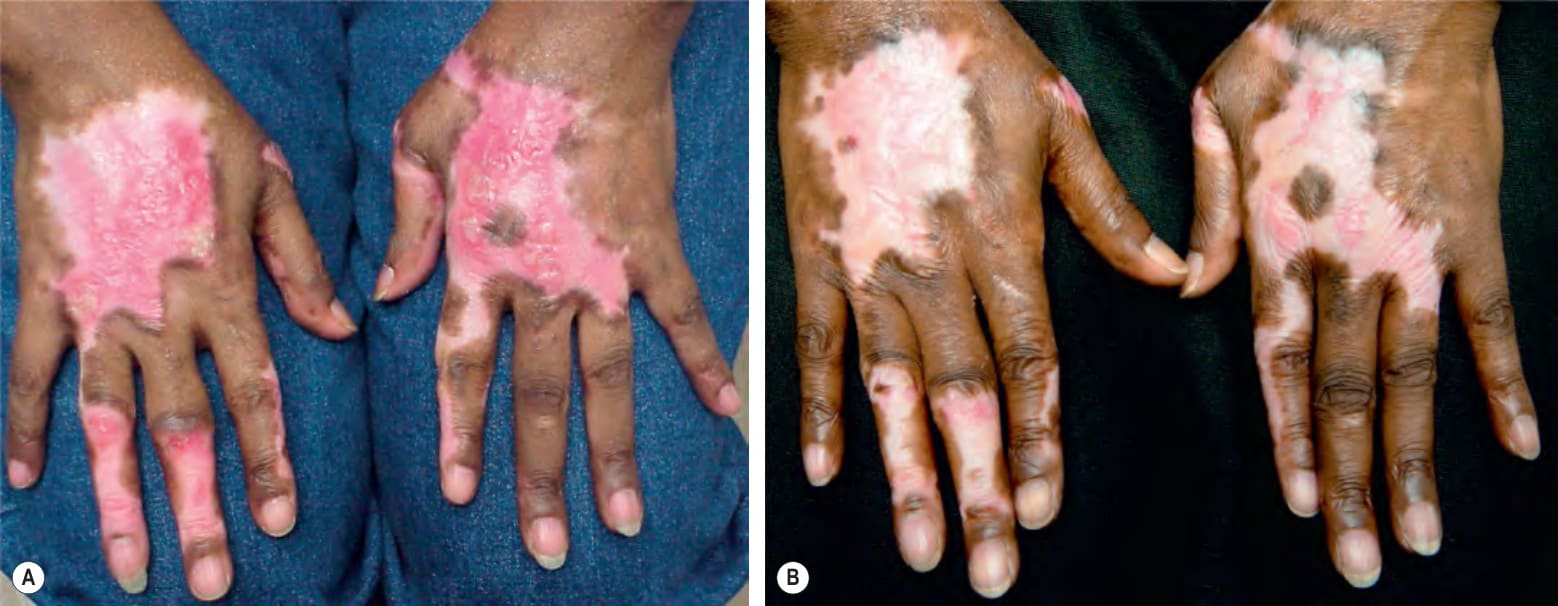
Fig. 130.9 Improvement of discoid lupus erythematosus with thalidomide.A Baseline. B Following therapy with a marked reduction in erythema and scale-crust. Courtesy Jeffrey Callen, MD.

Table 130.3 Monitoring guidelines for systemic medications, as recommended by the authors.
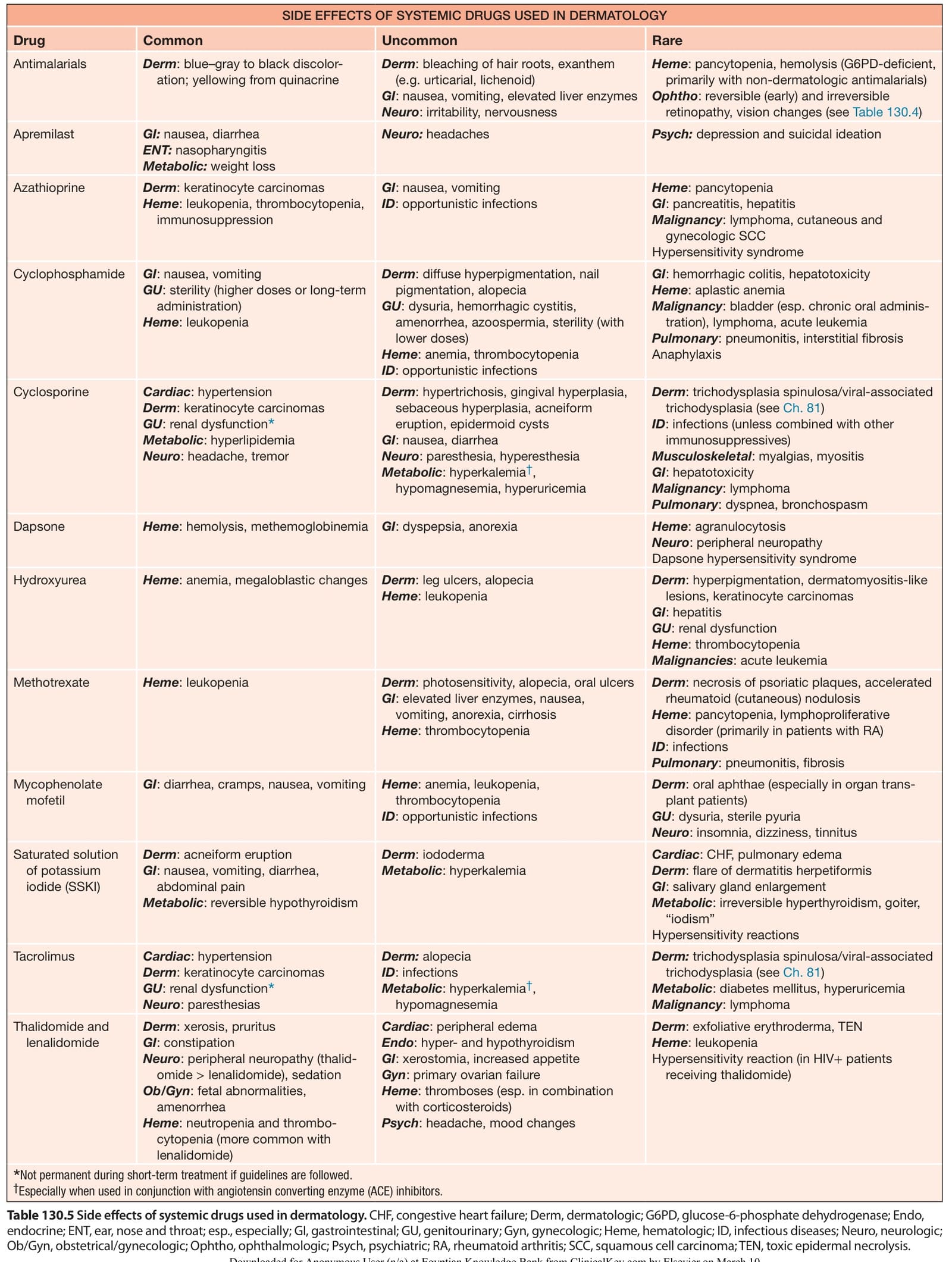
Table 130.5 Side effects of systemic drugs used in dermatology. CHF, congestive heart failure; Derm, dermatologic; G6PD, glucose-6-phosphate dehydrogenase; Endo, endocrine; ENT, ear, nose and throat; esp., especially; GI, gastrointestinal; GU, genitourinary; Gyn, gynecologic; Heme, hematologic; ID, infectious diseases; Neuro, neurologic; Ob/Gyn, obstetrical/gynecologic; Ophtho, ophthalmologic; Psych, psychiatric; RA, rheumatoid arthritis; SCC, squamous cell carcinoma; TEN, toxic epidermal necrolysis.
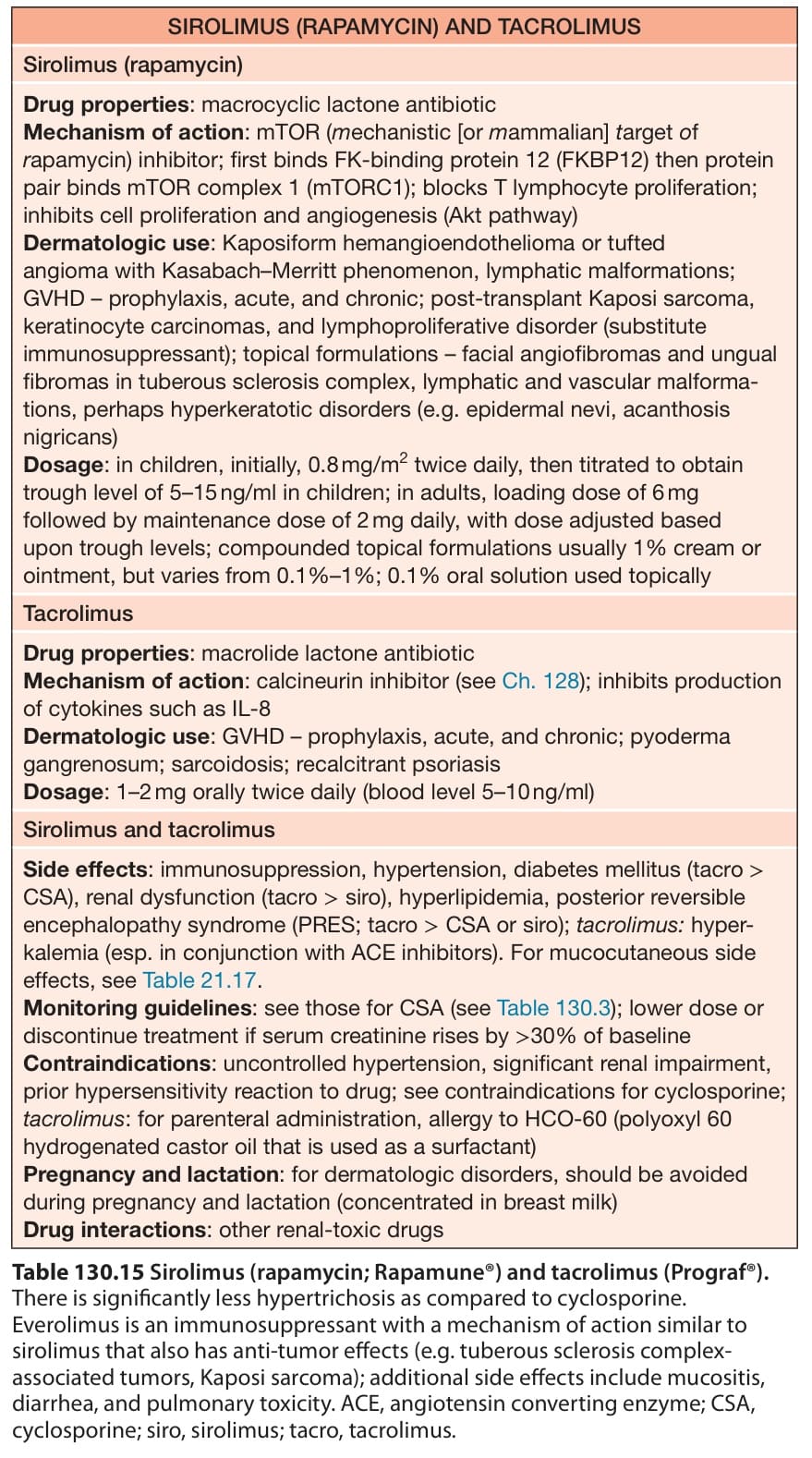
Table 130.15 Sirolimus (rapamycin; Rapamune®) and tacrolimus (Prograf®).
must agree to use highly effective methods of birth control with both thalidomide and lenalidomide (e.g. two reliable forms of contraception simultaneously). Men taking these medications who have female partners of childbearing potential must wear condoms (even if they have had a vasectomy) while their partners use an additional form of birth control (either oral or barrier). Relative contraindications for both medications include significant hepatic or renal disease, a history of neurologic disease, congestive heart failure, hypertension, constipation, and hypothyroidism. In patients with a predisposing condition (e.g. antiphospholipid antibodies, myeloma), there can be an increased risk of thromboses, especially with lenalidomide. Individuals receiving antimalarials should continue to do so, because these drugs have been reported to inhibit platelet aggregation and adhesion.
Thalidomide and lenalidomide should not be used in pregnant women. It is also wise to avoid both drugs in nursing mothers. There are limited data regarding male fertility, but animal studies have reported testicular degeneration. To date, no adverse effects have been observed in animal studies of female fertility.
Thalidomide may amplify the sedative effects of alcohol, barbiturates, chlorpromazine, and reserpine. Any drug that significantly induces the CYP3A4 enzymes may decrease the effectiveness of hormonal contraception, increasing the potential of pregnancy and, thus, teratogenicity. Lenalidomide may increase the level of digoxin, thus monitoring of plasma levels is recommended. Patients receiving concomitant prothrombotic agents, e.g. estrogen, IVIg, erythropoietin, along with lenalidomide may have an increased risk of thromboembolism.
Additional figures and tables on Select cutaneous disorders that can be treated with specific systemic drugs, and Methotrexate – counseling for patients of childbearing potential, available in our eBook (see inside front cover for access code).