DISTRIBUTION
Drugs that are highly protein-bound (>90%) may cause interactions based on alterations in distribution. When one drug displaces another from plasma protein-binding sites, the free serum concentration of the displaced drug is increased, and its pharmacologic effect increases. However, the unbound fraction of the drug is not only more available to sites of action but is also more readily eliminated. Any enhanced pharmacologic effect occurs only transiently because of a compensatory increase in elimination, and the effect of displacement interactions is then negligible. Therefore, interactions involving drug displacement from binding proteins tend to be self-limiting. Typically, the pharmacologic activity of the displaced drug is increased for a few days. This is followed by a return of the pharmacologic response back to the previous unbound serum concentration, even if the concomitant therapy is continued. Therefore, it is safe to say that if a patient does not manifest an adverse event from the combination therapy in the first week or so of administration, an adverse event probably will not occur.
In practice, protein-binding displacement interactions do not produce clinically significant changes in drug response unless the drug also has a limited distribution in the body, is slowly eliminated, or has a low therapeutic index. For this reason, protein-binding displacement interactions may assume greater importance when the displacing drug also reduces the elimination of the substrate drug. Good examples of this principle are the interactions between NSAIDs and methotrexate (Table 131.5).
Medications that are most susceptible to interactions based on changes in drug distribution involving displacement from binding proteins include warfarin, sulfonamides, and phenytoin.
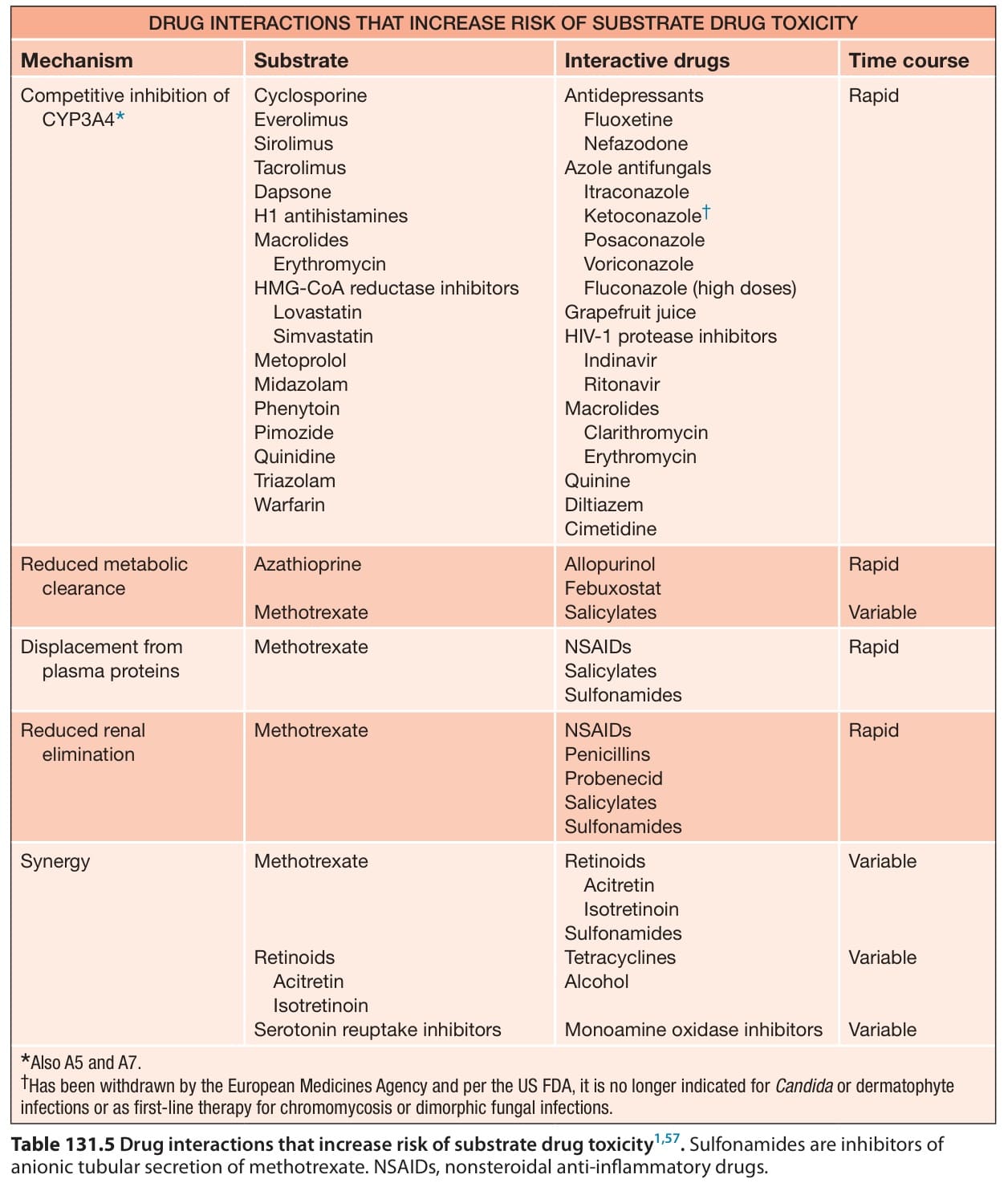
Table 131.5 Drug interactions that increase risk of substrate drug toxicity. Sulfonamides are inhibitors of anionic tubular secretion of methotrexate. NSAIDs, nonsteroidal anti-inflammatory drugs.