DRUG BIOTRANSFORMATION
Cytochrome P450 Enzymes
After their administration, drugs are metabolized through a series of reactions to enhance their hydrophilicity and to facilitate excretion. These drug biotransformation reactions are broadly grouped into two phases, I and II. Phase I reactions involve intramolecular changes such as oxidation, reduction, and hydrolysis that make the drug more polar and therefore more readily eliminated. Phase II reactions are conjugation reactions in which an endogenous substance combines with the functional group derived from phase I reactions to produce a highly polar drug conjugate that can be even more readily eliminated. These reactions involve glucuronidation and sulfation.
The cytochrome P450 (CYP) enzymes are the major drug-metabolizing enzymes (Fig. 131.3). They are present in the endoplasmic reticulum of many cells, but their highest concentrations are found in hepatocytes. CYP enzymes are also present in the crypt cells of the GI tract, with the highest concentrations found in the enterocytes at the tips of the villi; their presence accounts for the first-pass metabolism of many drugs. These heme-containing proteins are encoded by a gene superfamily, with the encoded isoforms exhibiting distinct but overlapping substrate specificities and isoform-specific regulatory and pharmacogenetic properties.
The nomenclature employs a three-tier classification consisting of the family (40% homology in amino acid sequence), the subfamily (~75% homology), and the individual protein (e.g. CYP2D6).
An increased understanding of CYP drug metabolism has solved much of the mystery behind drug interactions. While there are ~60 genes that encode CYP isoforms, over 90% of drug oxidation can be attributed to six main cytochromes: CYP1A2, 2C9, 2C19, 2D6, 2E1 and 3A4 (see Fig. 131.3); with regard to systemic dermatologic therapies, CYP3A subfamily is the most important. The metabolism of a drug by a specific isoenzyme indicates that it is a substrate for that enzyme. Whether enzyme inhibition or induction occurs is an entirely separate issue. Many drugs serve only as substrates and produce no significant enzyme inhibition or induction. It is entirely possible for a drug to be a substrate for one enzyme and inhibit or induce another enzyme that is not involved with its own metabolism. Therefore, drug interactions are more aptly termed drug–protein–drug (food) interactions. These are affected by: genetics (polymorphic genes cause particular enzymes to be less effective, 2D6 being an example); drugs (a drug may inhibit or induce a cytochrome, or interfere in the chemical pathway of another drug, e.g. itraconazole reduces cyclosporine metabolism by inhibiting CYP3A4); chemicals (dioxin is an inducer of CYP3A4 while a food such as grapefruit juice is an inhibitor of CYP3A4); and the environment
(cigarette smoke is an inducer of CYP1A2). Deciding what is clinically relevant is a challenging, relatively new field of investigation.
Drug metabolism is investigated even before human exposure. With recombinant human CYP enzymes, it is possible to determine the metabolic pathways, potential genetic polymorphisms, ability to induce or inhibit drug metabolism, and possible drug interactions. Although there are limitations to the information gleaned from in vitro studies, nonetheless this information can be used to guide more expensive in vivo studies.
However, using in vitro tests that focus on cytochrome enzymes alone to predict clinical interactions may not always be reliable for a variety of reasons. First, it is not always possible to know the therapeutic concentration of a new drug and its primary metabolites in specific tissues. Second, there are a large number of pathways and interactions, and it is impossible to test them all even in an in vitro system. Third, the demonstration of an in vitro effect does not tell physicians whether that effect is likely to occur in clinical practice, i.e. the clinical significance of an in vitro interaction is unknown. Fourth, the underlying disease state may contribute to the development of a drug interaction and this would be unaccounted for by in vitro studies alone. Until clinical data demonstrate the presence or absence of a clinically significant inter-action, dosage adjustments based on in vitro tests are premature.
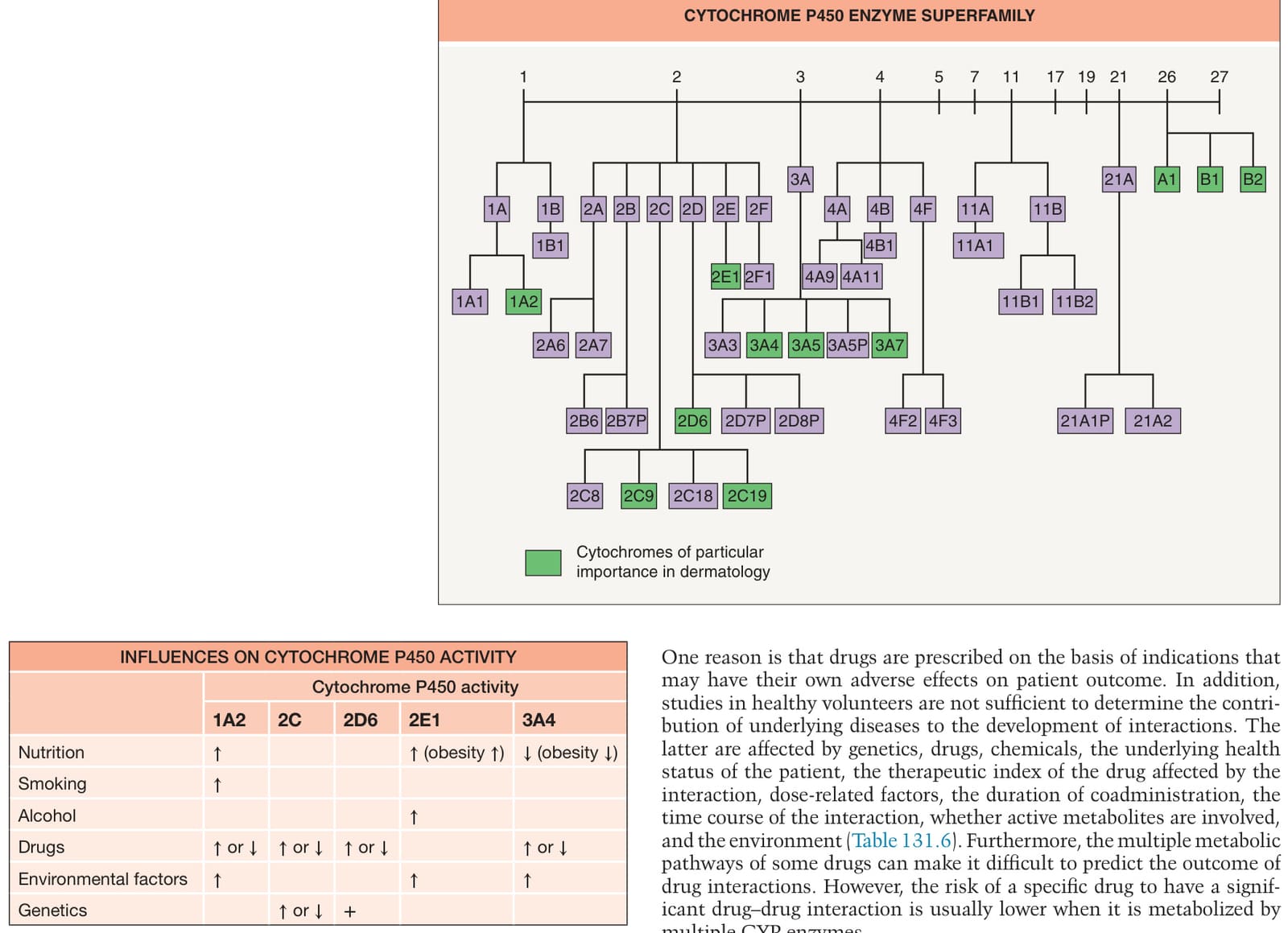
Fig. 131.3 Cytochrome P450 enzyme superfamily.
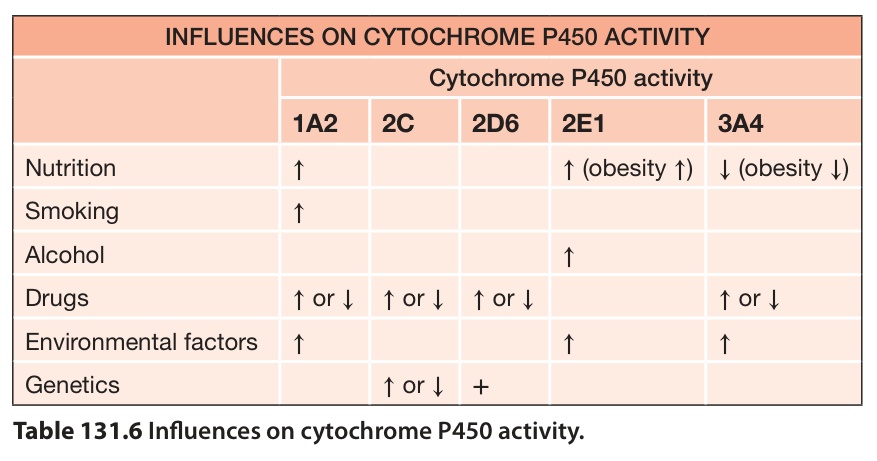
Table 131.6 Influences on cytochrome P450 activity.