SUNSCREEN REGULATION
Globally, the manufacturing and regulation of sunscreens vary, including efficacy testing and labeling (Table 132.1). Since sunscreens alter the structure or function of skin, they are considered over-thecounter (OTC) drugs in the US and are regulated by the Food and Drug Administration (FDA). FDA regulations include the maximum concentration of active ingredients, safety labeling, and the methodology for determining the sun protection factor (SPF).
Sun Protection Factor (SPF)
Sunscreen efficacy is assessed based upon its SPF, which is determined by cutaneous phototesting utilizing artificial sunlight (Table 132.2). The methodology for measuring SPF, which predominantly represents UVB protection, has been standardized. If properly tested and applied, a product with an SPF of 15 would allow 15 times as much time in the sun with the same resultant level of erythema as without the product in a given individual (by attenuating 93.3% of the UV reaching the skin). Similarly, an SPF 50 product would allow 50 times as much exposure with the same result (via 98% UV blockage). Since the SPF is calculated as a ratio, the theoretical percentage of UV filtering basically levels off at SPF 30 and above (Fig. 132.2).
Testing for UVA Protection
Since scientists became aware of the damage that can be caused by photons longer than 315–320 nm, many attempts have been made to develop a standard method of testing for protecting against long-wave or UVA radiation. Because there is no easily reproducible cutaneous biologic endpoint that is relatively specific for UVA radiation (as erythema is for UVB), photobiologists have suggested a number of assays, including both in vivo and in vitro methodologies, to determine the UVA protection factor (UVA-PF).
The most commonly utilized human skin-based assays include immediate pigment darkening (IPD) and persistent pigment darkening (PPD), each with endpoints that measure a different aspect of the skin’s tanning response to UVA radiation. The former, as discussed in Chapter 86, is dependent upon radiation-induced darkening of pre-existing melanin, while the latter is a more complex response which involves de novo synthesis and transfer of melanin. Both endpoints can be produced with relatively small amounts of UVA radiation, making them reasonable for human phototesting. In Japan, the assay for PPD is favored.
The most commonly accepted in vitro method for assessing UVA protection is the critical wavelength (CW) determination, which is utilized in the European Union, Australia, and the US. This is a relatively simple assay in which the sunscreen is dissolved in solvent and the absorption spectrum is determined by a spectrophotometer. The CW for the product represents the wavelength at which the cumulative absorption of solar-simulated radiation above 290 nm is 90% (Fig. 132.3).
Evolution of FDA Sunscreen Standards
In 1999, the FDA published sunscreen regulations for 16 approved active ingredients that included: (1) limiting the maximum allowable SPF value on the label; and (2) changing the terminology for rating substantivity. As a result, manufacturers had to limit their labeling and marketing of efficacy claims regarding protection from sunburn. Methods for testing and labeling UVA protection were not addressed.
Based upon additional input from industry, dermatologists, and photobiologists, the FDA published its Final Rule for “Labeling and Effectiveness Testing: Sunscreen Drug Products for Over-the-Counter Human Use” in 2011. The major label on each product consisted of the SPF value and, if efficacy in the UVA range was deemed sufficient, the term “Broad Spectrum”. UVA testing was limited to an in vitro CW determination (see Fig. 132.3 & Table 132.1), with a CW ≥370 nm meriting the broad spectrum designation. Substantivity ratings were limited to “Water Resistant (40)” and “Water Resistant (80)”, with the number reflecting minutes. The maximum SPF was capped at 50+.
In 2019, the FDA released a proposed rule for a final sunscreen monograph, notable for its provisions regarding evaluation of safety data (Table 132.3). In order to determine that an active ingredient is generally recognized as safe and effective (GRASE), there is a requirement to conduct trials under maximal usage conditions to assess systemic absorption of active ingredients. If an appropriately conducted maximal usage trial detects a steady-state plasma level >0.5 ng/ml, further studies of carcinogenicity as well as reproductive and developmental toxicity may be required. Each of the 16 approved active ingredients was assigned to one of three categories (see Table 132.3): (1) GRASE; (2) not GRASE; or (3) insufficient data to support positive GRASE determination. Currently, the only GRASE ingredients are inorganic zinc oxide and titanium dioxide. The two non-GRASE ingredients, PABA and trolamine salicylate, are no longer marketed in the US. For the remaining 12 organic UV filters, while additional safety data are needed, this does not imply that they are unsafe.
The 2019 proposal also raised the maximum labeled SPF value from 50+ to 60+ (Table 132.4). To ensure sufficient UVA protection, broad spectrum sunscreens would need to possess a UVA1/UV ratio of ≥0.7 in addition to the CW ≥370 nm required in the 2011 monograph (see Fig. 132.3). Updated labeling requirements are designed to make it easier for consumers to locate a sunscreen’s active ingredients.
Per the Sunscreen Innovation Act (SIA; 2014), the FDA was required to issue a final sunscreen monograph by November 2019, but the deadline was postponed. Under the 2020 CARES Act, the OTC monograph process was to be reformed. In September 2021, the FDA released a proposed final order for sunscreens that was not substantially different from the 2019 proposal, but it was intended to aid in the transition to the new processes created by the CARES Act7a.
An additional issue in the US has been the limited number of active sunscreen ingredients approved by the FDA. A process for approval of new sunscreen agents, termed the Time and Extent Application (TEA), is available; studies of efficacy and safety conducted outside of the US are accepted in the application. The SIA mandates timelines for regulatory review of novel sunscreens, especially those that are already marketed in other countries. Nonetheless, to date, the FDA has not approved a new active sunscreen ingredient since 1999.
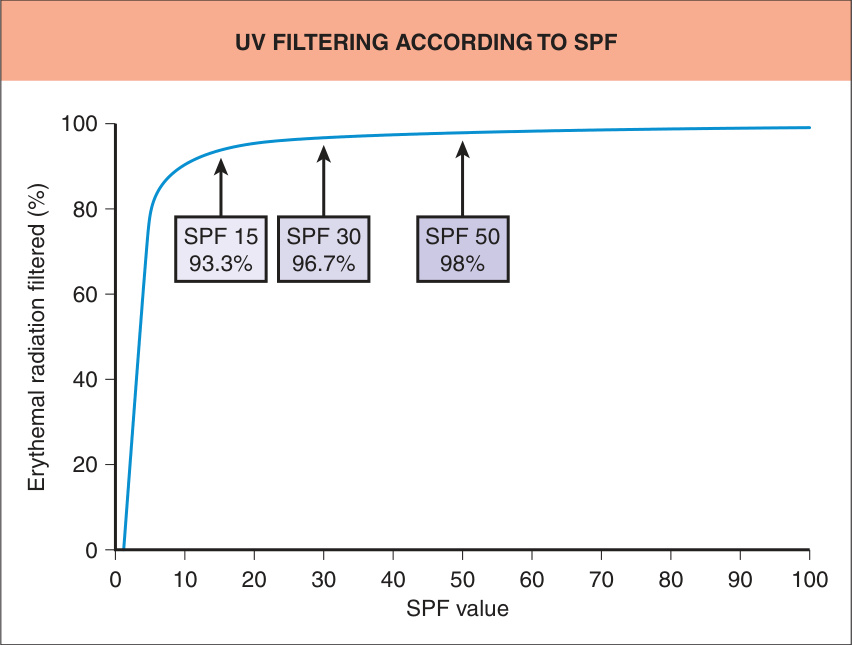
Fig. 132.2 Relationship between sun protection factor (SPF) and the amount of UV radiation that is filtered by a sunscreen. The percentage of UV blockage basically levels off above SPF 30.
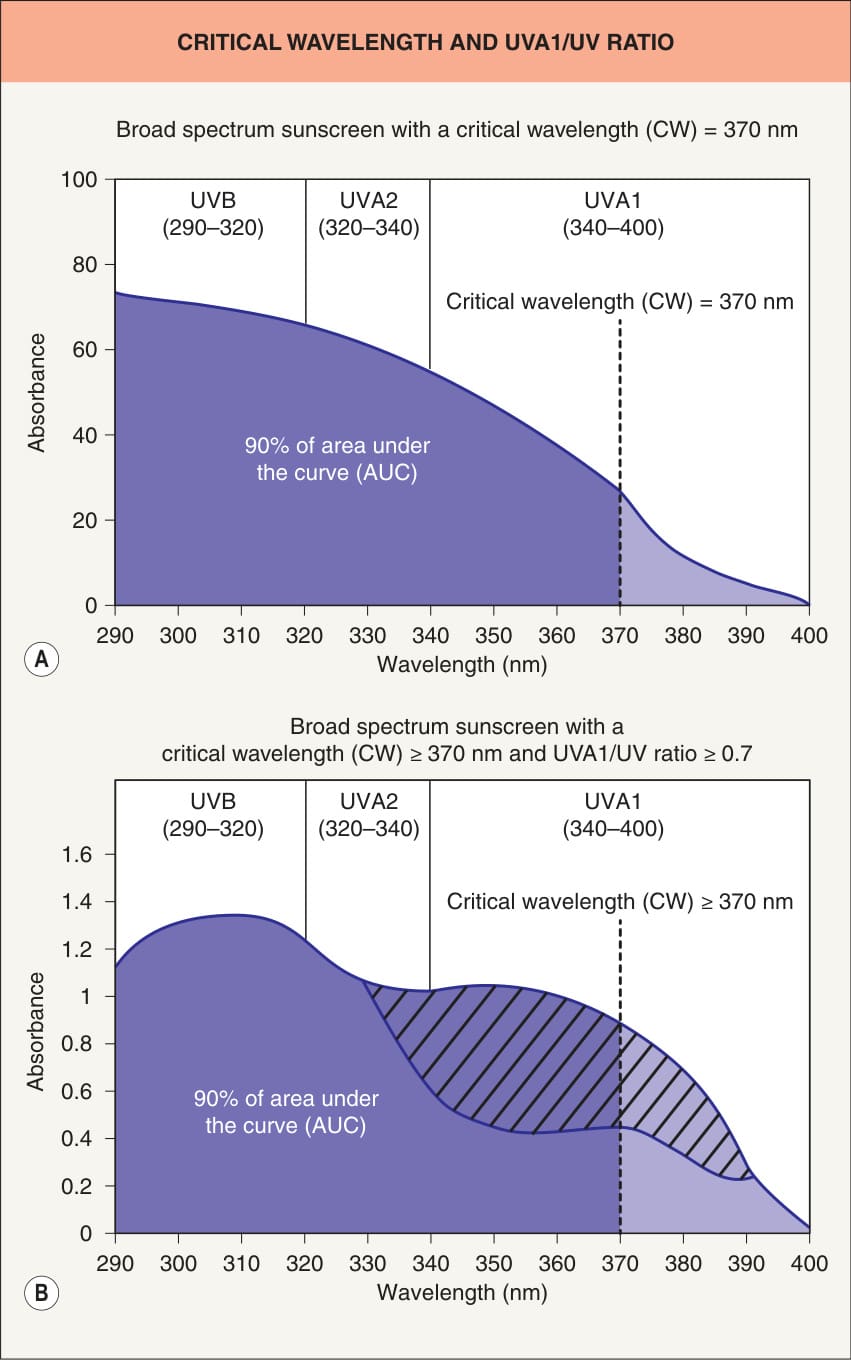
Fig. 132.3 Critical wavelength and UVA1/UV ratio. Critical wavelength (CW) represents the wavelength at which 90% of solar-simulated radiation above 290 nm is cumulatively absorbed by the sunscreen. A A broad spectrum sunscreen with CW = 370 nm. B A broad spectrum sunscreen with both a CW ≥370 nm and a UVA1/UV ratio of ≥0.7. The area with parallel lines represents the absorption needed for a sunscreen to have a UVA1/UV ratio of ≥0.7. Adapted from Diffey BL, Tanner PR, Matts PJ, et al. In vitro assessment of the broad spectrum ultraviolet protection of sunscreen products. J Am Acad Dermatol 2000;43:1024–35 and the Federal Register 2019;84:6204–75.
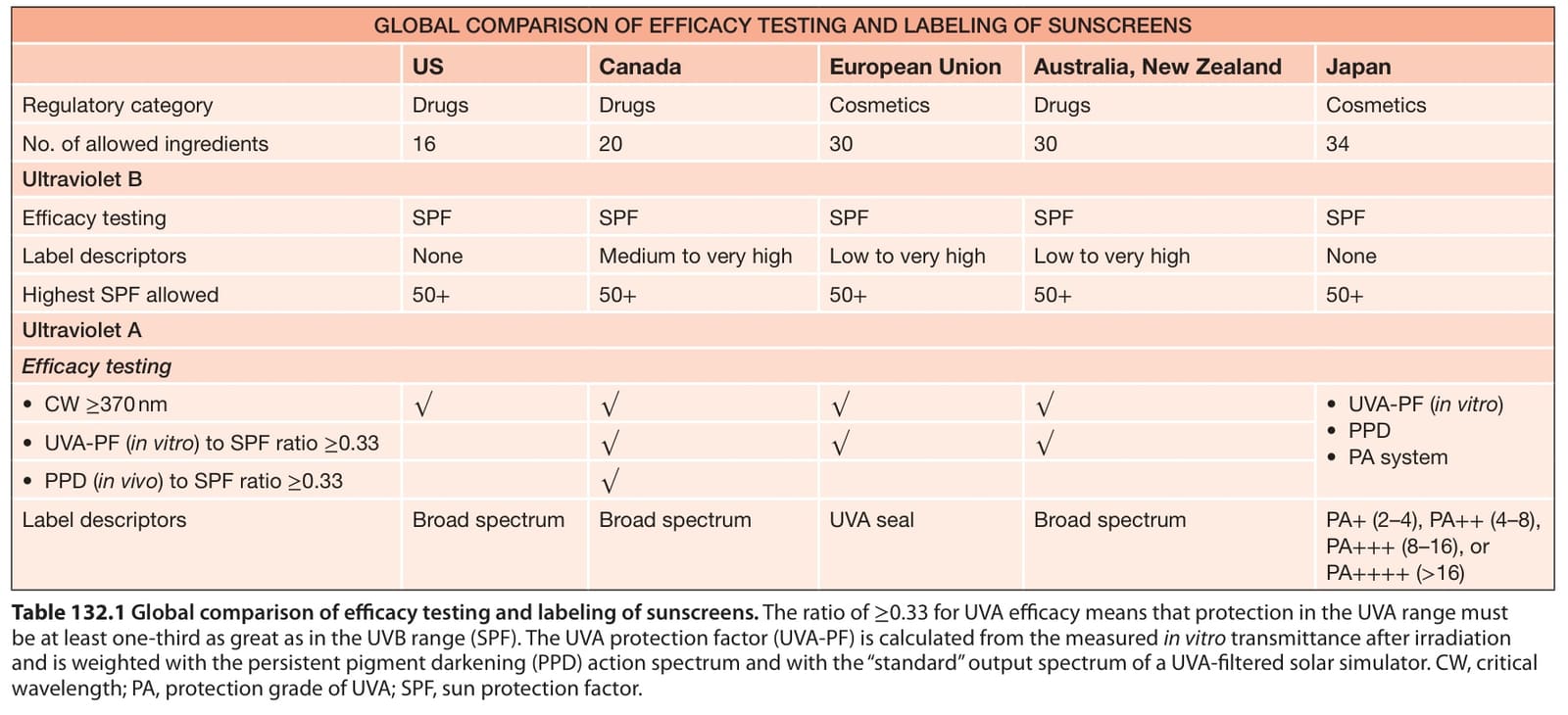
Table 132.1 Global comparison of efficacy testing and labeling of sunscreens. The ratio of ≥0.33 for UVA efficacy means that protection in the UVA range must be at least one-third as great as in the UVB range (SPF). The UVA protection factor (UVA-PF) is calculated from the measured in vitro transmittance after irradiation and is weighted with the persistent pigment darkening (PPD) action spectrum and with the “standard” output spectrum of a UVA-filtered solar simulator. CW, critical wavelength; PA, protection grade of UVA; SPF, sun protection factor.
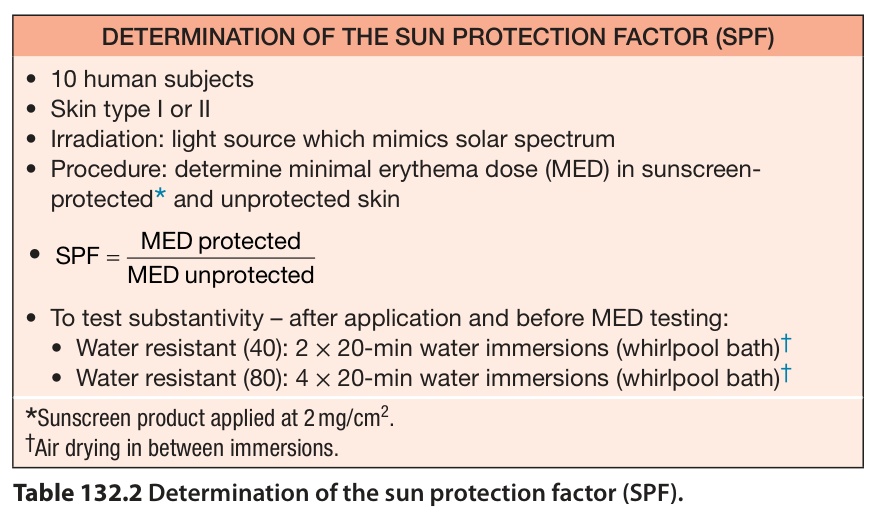
Table 132.2 Determination of the sun protection factor (SPF).
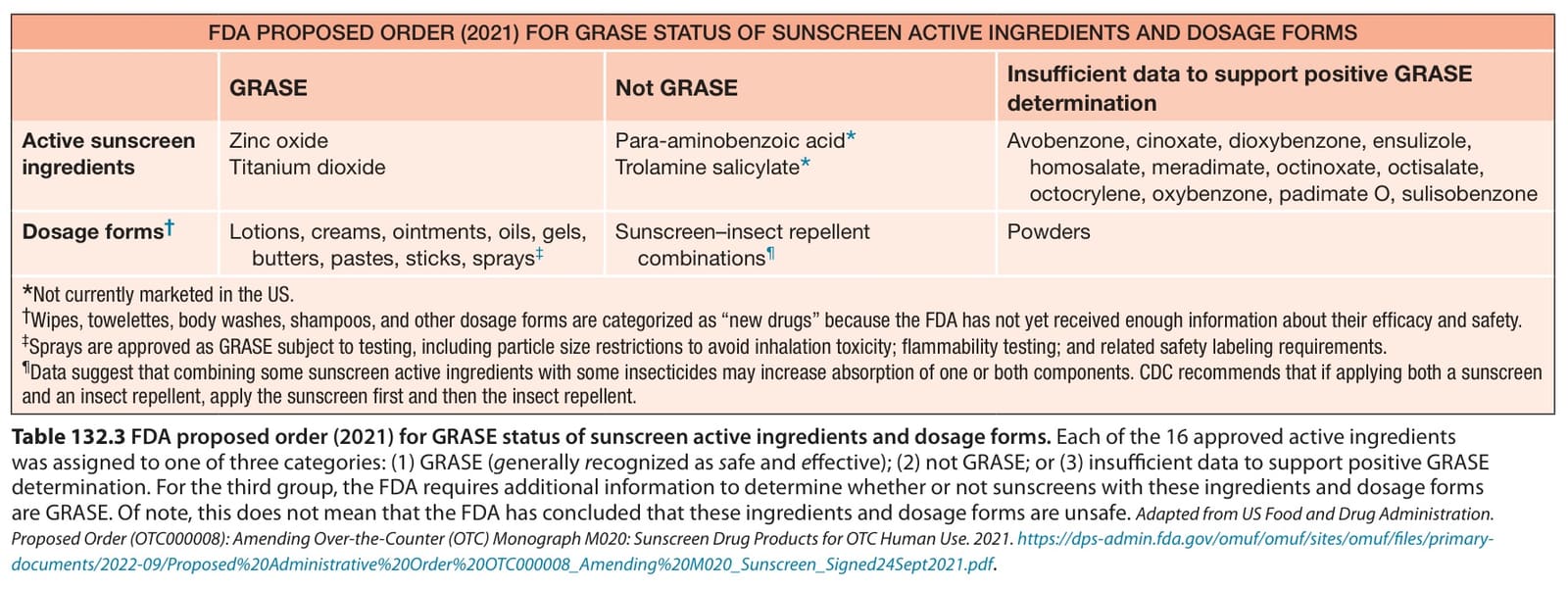
Table 132.3 FDA proposed order (2021) for GRASE status of sunscreen active ingredients and dosage forms. Each of the 16 approved active ingredients was assigned to one of three categories: (1) GRASE (generally recognized as safe and effective); (2) not GRASE; or (3) insufficient data to support positive GRASE determination. For the third group, the FDA requires additional information to determine whether or not sunscreens with these ingredients and dosage forms are GRASE. Of note, this does not mean that the FDA has concluded that these ingredients and dosage forms are unsafe. Adapted from US Food and Drug Administration. Proposed Order (OTC000008): Amending Over-the-Counter (OTC) Monograph M020: Sunscreen Drug Products for OTC Human Use. 2021. https://dps-admin.fda.gov/omuf/omuf/sites/omuf/files/primarydocuments/2022-09/Proposed%20Administrative%20Order%20OTC000008_Amending%20M020_Sunscreen_Signed24Sept2021.pdf.
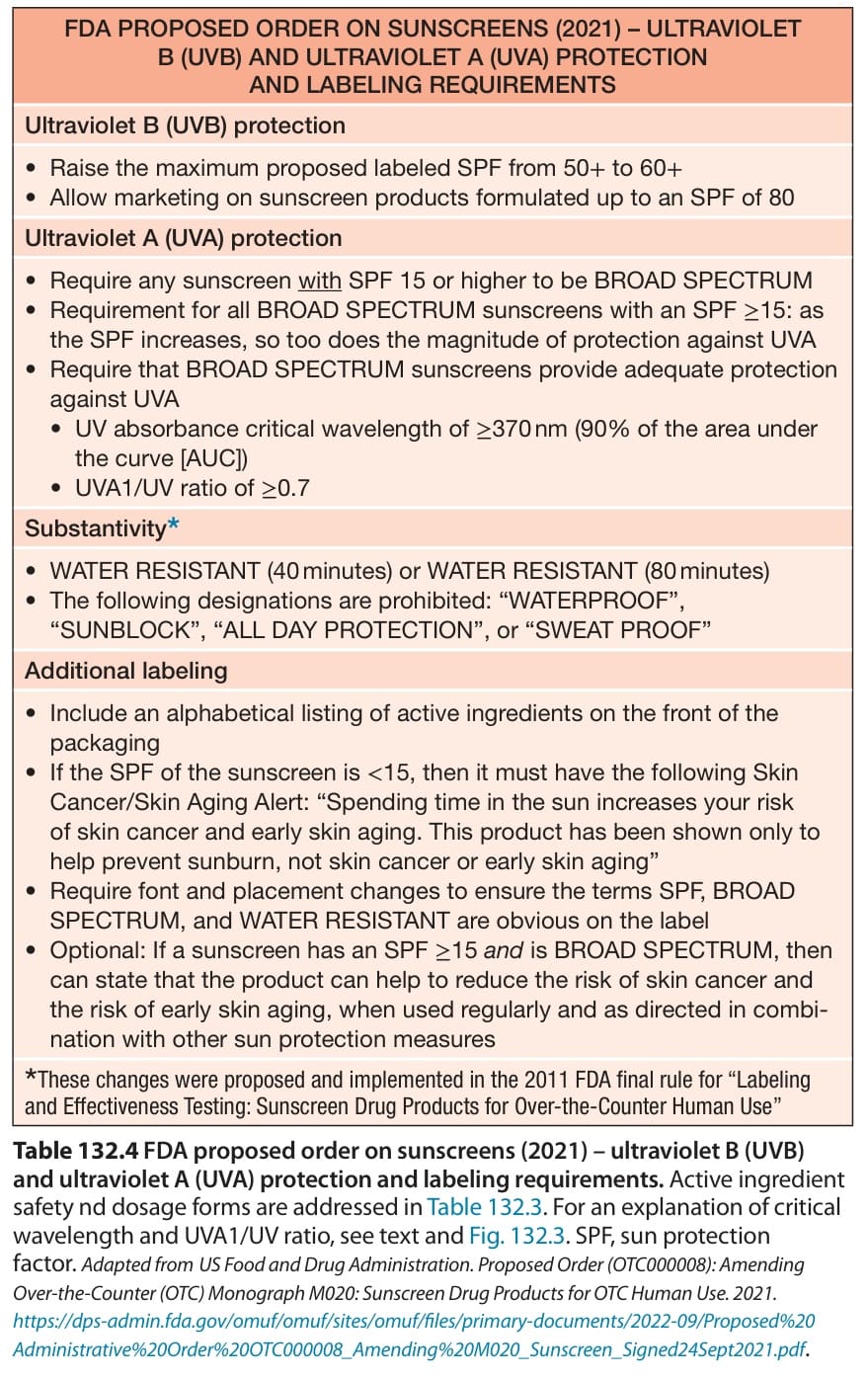
Table 132.4 FDA proposed order on sunscreens (2021) – ultraviolet B (UVB)