TRADITIONAL CHINESE MEDICINE
With a history spanning over 2000 years, traditional Chinese medicine (TCM) is a sophisticated system that encompasses health and disease. Diagnostic evaluation includes parameters such as pulse rate and appearance of the tongue as well as an assessment of tendencies and habits. An individualized TCM diagnosis is then rendered that is usually quite different from a conventional Western diagnosis. For example, patients sharing the Western diagnosis “acne” would not necessarily all be treated in the same manner because their underlying diagnoses could be vastly different, necessitating different approaches.
TCM encompasses a multitude of treatment modalities, including herbal medicine, acupuncture, massage, exercise, and dietary and lifestyle modifications (Table 133.4). For health to occur, balance and harmony must be achieved between two opposing and complementary forces, Yin and Yang. Additionally, normal flow patterns of qi, or lifeforce, are essential for health. Restoration of flow is the goal of therapy, often via acupuncture, moxibustion, and massage.
Treatment of Dermatologic Diseases
TCM has been employed for a number of dermatologic conditions. While a complete discussion is beyond the scope of this chapter, the next sections highlight some of the evidence for its use in atopic dermatitis and psoriasis.
Atopic dermatitis
A Cochrane systematic review analyzed 28 studies of Chinese herbal preparations for atopic dermatitis, both ingested and applied topically. They found that in most of the studies reviewed, Chinese herbal therapy was superior to placebo in terms of reducing eczema severity and decreasing pruritus. Nonetheless, the authors concluded that there is still insufficient evidence for efficacy as the quality of the studies was low. Even with the inclusion of additional studies, a similar conclusion was reached several years later – high quality randomized controlled trials were needed.
Herbal preparations are generally considered safe; side effects are rare and usually mild when they do occur. However, in addition to associated allergic reactions and photosensitivity, herbs may have pharmacologic effects and interact with other medications. They may also be adulterated with corticosteroids and contain arsenic or mercury.
Courtesy Amy Geng and Raymond G. Dufresne, Jr.
Acupuncture has been used anecdotally for a variety of skin conditions, including atopic dermatitis, lichen planus, psoriasis, alopecia areata, and verrucae. More support exists for the use of acupuncture for alleviation of symptoms associated with dermatologic disorders, such as pain or pruritus. A pilot study demonstrated decreased pruritus in patients with atopic dermatitis after applying acupressure to a single point on the arm. Acupuncture and acupressure may work via so-called “gate control” and/or by stimulating release of neuroactive substances including endorphins and enkephalins. By altering the release of neurotransmitters, acupuncture may exert anti-inflammatory and immunomodulatory effects.
Side effects of acupuncture include pruritus, petechiae, ecchymoses and subcutaneous hematomas, but are fairly rare. Infection and pneumothorax have also been reported.
Psoriasis
TCM herbs with anti-inflammatory effects, in particular indigo naturalis, Tripterygium wilfordii, Tripterygium hypoglaucum and Camptotheca acuminata, are used to treat psoriasis. In a study of 801 psoriatic patients, over half responded to a decoction of five herbs (Rhizoma sparganii, Rhizoma zedoariae, Herba serissae, Boswellia resin, and Commiphora myrrha). Herbs that contain furocoumarins, such as Radix angelicae dahuricae, have been used in conjunction with UVA phototherapy for a psoralen-like effect. Psoriasis clearance rates were similar for Radix angelicae dahuricae plus UVA versus PUVA (with 8-MOP), with fewer side effects. As with other botanicals, TCM herbs have biologically active components, and they may have serious side effects. TCM should be administered under the supervision of a licensed practitioner.
Acupuncture has not been well studied in psoriasis, but there are several reports of plaques appearing at sites of acupuncture needle insertions due to Koebner phenomenon.
Moxibustion, Cupping and Other Treatment Modalities
Moxibustion is the practice of burning dried moxa (Artemisia vulgaris), arranged in small cone-shaped piles, over acupuncture points. Side effects include first- and second-degree burns.
Cupping is another method used to stimulate acupuncture points. It is accomplished by igniting alcohol-soaked cotton, placing the burning cotton in a jar, and placing the jar on the skin. A vacuum is created, and circular areas of erythema and ecchymosis may result (Fig. 133.2). Nowadays, some practitioners use a vacuum device that negates the risk of fire.
Skin scraping, also known as coining or spooning, is commonly practiced in Southeast Asia to improve circulation. A tool is used to rub skin that has been treated with oil; symmetric, linear ecchymoses may result (Fig. 133.3).
Any patient with cutaneous lesions in patterns suggestive of external causes should be asked about traditional medicine before accusations of abuse arise.
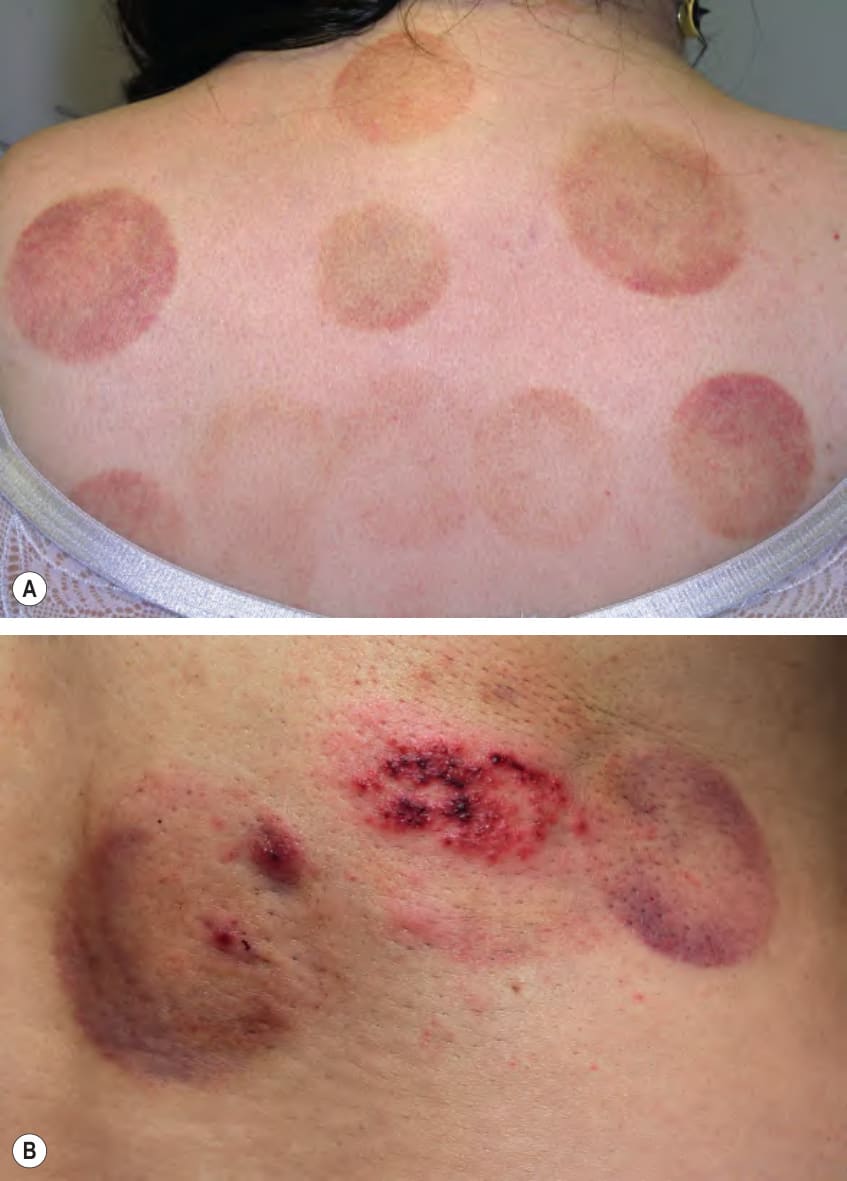
Fig. 133.2 Cupping.A Well-demarcated circular areas that are pink–purple and yellow in color and contain petechiae. B Circular purpura due to cupping done to relieve the pain that preceded the appearance of cutaneous lesions of herpes zoster. A, Courtesy Donald J. Baker, MD; B, Courtesy Kalman Watsky, MD.
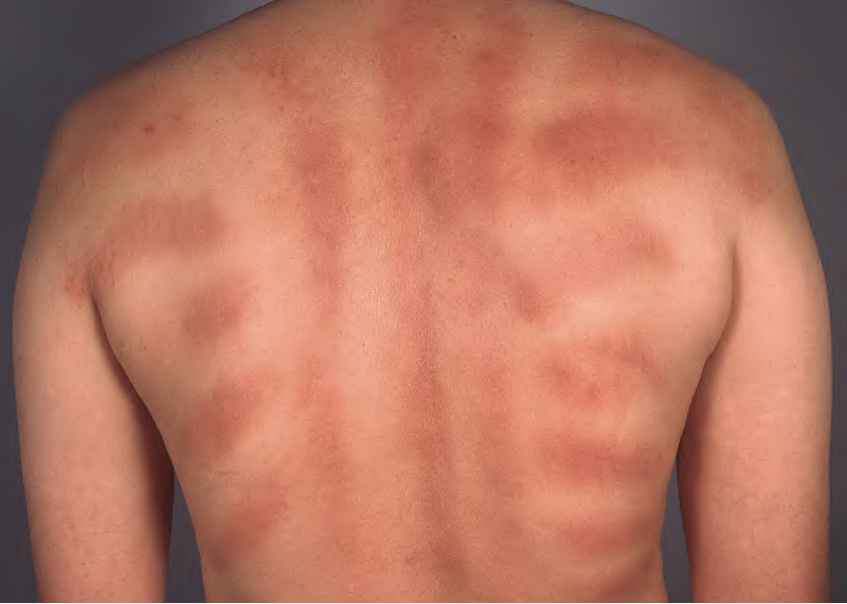
Fig. 133.3 Linear ecchymoses on the back due to coining.Courtesy Amy Geng and Raymond G. Dufresne, Jr.
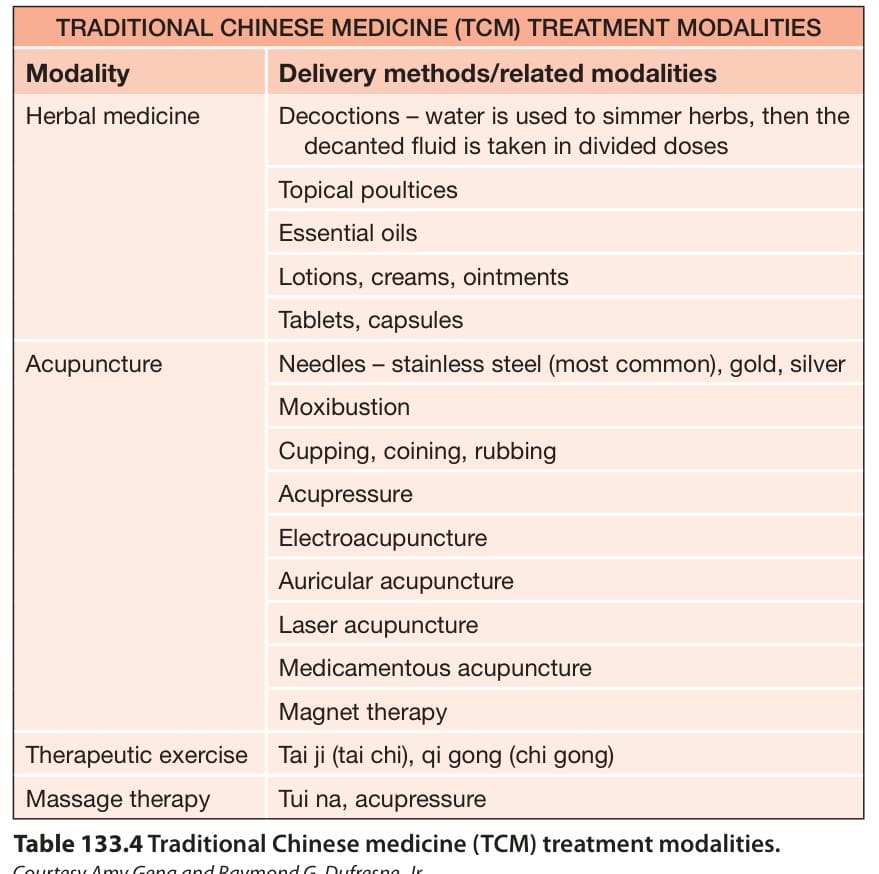
Table 133.4 Traditional Chinese medicine (TCM) treatment modalities.