AROMATHERAPY
During the early part of the 20th century, while studying the effects of essential oils on different disease states, the French chemist René-Maurice Gattefossé coined the term “aromatherapy”. The latter represents the therapeutic use of aromatic essential oils which can be made from any plant part, including leaves, stems, flowers, fruits, or roots. Essential oils are typically obtained via steam distillation or by cold pressing the plant.
Essential oils contain a mixture of various organic compounds, in particular alcohols, aldehydes, esters, ketones, terpenes, lactones, aromatic aldehydes, and phenols. Oils high in ketones are used for their wound healing properties, whereas oils high in alcohols are used for their antimicrobial properties. There is evidence that essential oils, when applied topically, can enter the bloodstream.
In aromatherapy, essential oils may be used externally or internally. The most common routes of administration are inhalation and massage, but compresses, creams, gels, sprays, and baths are also employed. Aromatherapy may be used directly to treat dermatologic conditions, or indirectly to treat the anxiety or other symptoms associated with cutaneous disorders. Aromatherapy has been used to treat many conditions including acne, alopecia areata, pruritus, and scarring as well as for analgesia and wound healing.
Tea tree oil (Melaleuca alternifolia) is one of the most commonly employed essential oils in aromatherapy of skin conditions. A singleblind trial in acne patients found similar efficacies for tea tree oil 5% gel and benzoyl peroxide 5% lotion; tea tree oil had a slower onset of action but fewer side effects. In a randomized, controlled, double-blind trial for alopecia areata, an aromatherapy essential oil blend of thyme, rosemary, lavender, and cedarwood led to significantly greater improvement than did the placebo (44% vs 15%).
It is important to note that essential oils have biologically active components and may be toxic. For example, oils with high concentrations of aldehydes and phenols may cause skin irritation. Phototoxicity can occur with oils derived from citrus plants due to the presence of psoralens or furocoumarins. Essential oils containing high concentrations of ketones should be used cautiously in pregnant women and infants, and a number of essential oils can cause allergic or irritant contact dermatitis (Table 133.5).
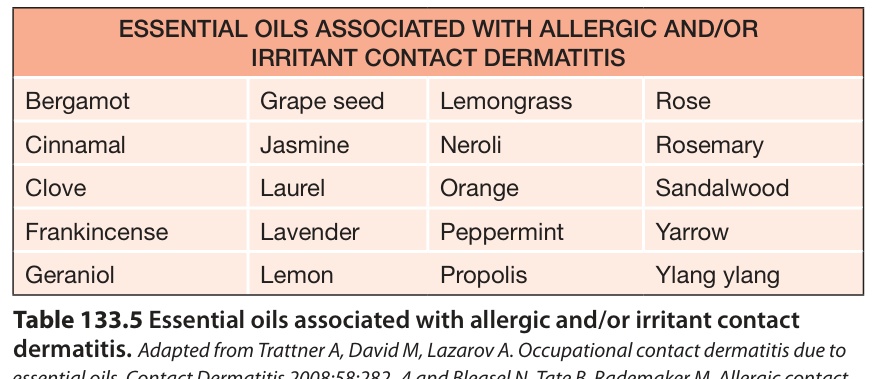
Table 133.5 Essential oils associated with allergic and/or irritant contact dermatitis.