PREOPERATIVE CONSIDERATIONS
Patients need to be aware of the relative advantages and disadvantages of cryosurgery compared to other therapies (Table 138.3). A disadvantage is the longer healing times (e.g. ~2–3 weeks for the trunk and arms, >1 month for the legs) while an advantage is the lack of preoperative requirements such that cryosurgery can be performed at the time of the initial office visit. In addition, the need for postoperative
care and potential side effects should be reviewed. Contraindications include cold urticaria, cold intolerance, cryoglobulinemia, and other cold-triggered conditions.
For certain clinical situations, skin preparation can improve the effectiveness of cryosurgery. Examples include: (1) removal of excess keratin (a poor conductor of cold) from verrucae via curettage, paring, or application of salicylic or lactic acid for 10–15 days prior to cryosurgery; (2) application of imiquimod to condylomata acuminata; and (3) pretreatment with topical 5-fluorouracil cream, diclofenac sodium gel, ingenol mebutate gel, imiquimod, or retinoic acid cream or gel to remove atrophic and mildly keratotic AKs, with the remaining hyperkeratotic AKs then treated with cryosurgery.
Cryoanesthesia
Cryogens applied for just a few seconds can be used as an anesthetic, e.g. prior to needle insertion or incision and drainage of an inflamed epidermoid cyst. This technique is helpful in needle-phobic patients and can also be used prior to removal of benign lesions (Fig. 138.2).
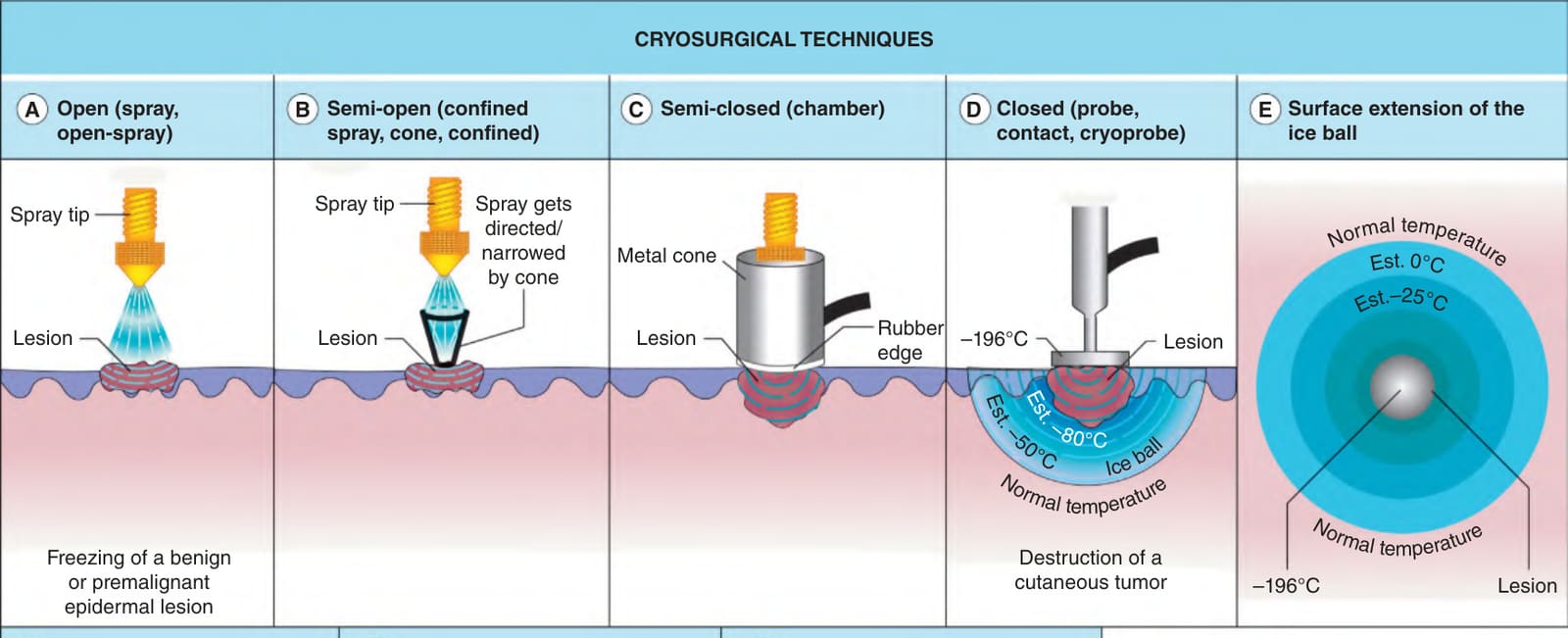
*Fig. 138.1 Cryosurgical techniques.A Open (spray, open-spray) technique. Superficial or deep freezing, depending upon time applied; often used to treat benign lesions and actinic keratoses. B Semi-open (confined spray, cone, confined) technique. Liquid nitrogen is confined to the lesion; the freezing rate is faster and there is sparing of normal surrounding skin. C Semi-closed (chamber) technique. This results in deeper freezing. D Closed (probe, contact, cryoprobe) technique. This method is best performed on relatively flat surfaces. In the −50°C isotherm, the most peripheral area shares the same temperature as the skin beneath the tumor. E Surface extension of the ice ball. As in D, cold spreads in isotherms, with the central area the coldest. F Frozen Teflon® tweezers are ideal for pedunculated lesions. G Intralesional technique in which one end of the needle is attached to the cryogen unit (screwed on or via a Luer lock) with LN released from the other end. H Dipstick technique that can be used for verrucae. Not recommended by the author due to the disadvantages listed in Table 138.2.
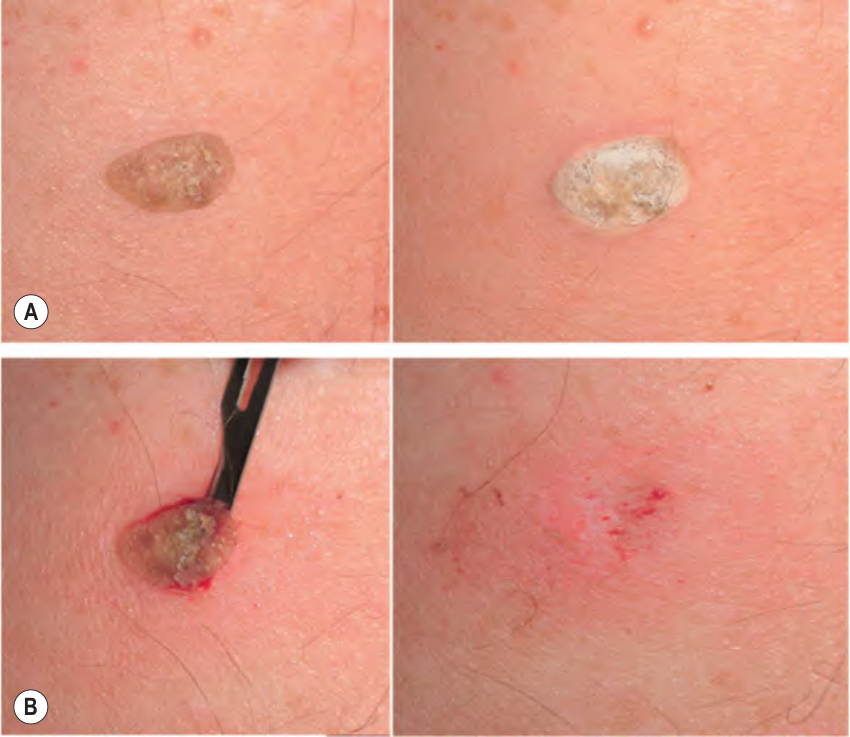
Fig. 138.2 Shave removal of a seborrheic keratosis following the use of liquid nitrogen as an anesthetic.A A seborrheic keratosis (SK) is frozen with a 2–3 mm margin. B Once the tissue starts thawing, a swift stroke with a curette or scalpel will make the SK “pop out”. A hemostatic solution (aluminum chloride) is applied before complete thawing.
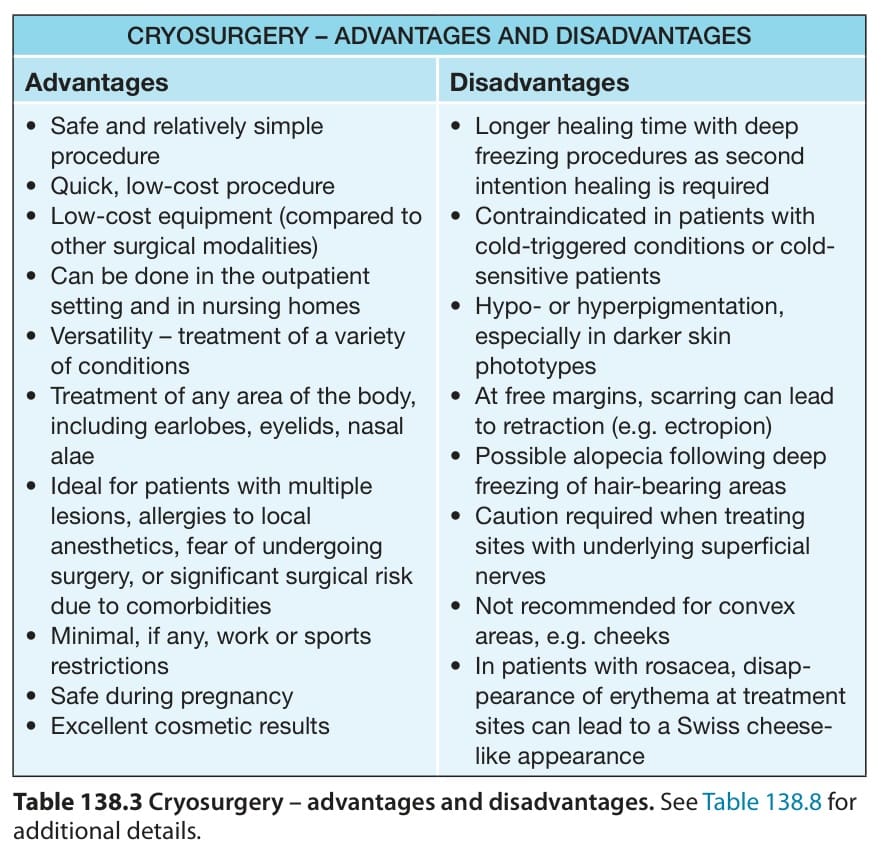
Table 138.3 Cryosurgery – advantages and disadvantages. See Table 138.8 for additional details.