PREOPERATIVE HISTORY AND CONSIDERATIONS
The preoperative assessment of patients undergoing electrosurgery should concentrate on potential hazards to either the patient or the treatment team. A patient history of previous allergic reactions to skin cleansers, anesthetics, or postoperative topicals and dressings should be sought. Electrosurgery should be used with care in patients with cardiac implantable electronic devices.
Smoke evacuation equipment should always be available to safely remove the smoke plume when extensive electrosurgery, particularly electrosection, is performed. In such procedures, the operator and assistants should wear masks and use eye protection to prevent exposure to smoke-borne microbes and noxious particles. Gloves should always be worn when electrosurgical procedures are performed.
Preparatory to electrosurgery, the lesion and surrounding skin should be cleansed with a non-alcoholic skin cleanser such as chlorhexidine or povidone iodine. There is a potential for alcohol to ignite with electrosurgery, so it should be avoided or allowed to thoroughly dry prior to therapy.
Local anesthesia, usually via 1% lidocaine with epinephrine (adrenaline), is almost always used when performing electrosurgery. The usual exception is in the treatment of small facial telangiectasias, in which anesthesia is omitted. Local infiltration is most often used for anesthetizing localized superficial lesions, whereas field blocks and/or nerve blocks should be considered when performing larger electrosurgical procedures such as rhinophyma repair. When a local anesthetic is used prior to treatment of a dome-shaped lesion, such as a large angioma, it is helpful to massage the swollen anesthetized treatment site prior to electrosurgery, in order to flatten it. This prevents the development of a depressed scar subsequent to the procedure.
Prior to activating the electrosurgery unit, the operator should determine that the appropriate current and power settings for the
particular procedure have been selected, that the dispersive electrode has been properly placed, and that the correct treatment electrode has been chosen. Disposable sleeves that slip over the handle of the wand and disposable electrode tips are often utilized. It is unacceptable to use the same electrode tip on multiple patients without sterilization, erroneously assuming that heat will destroy pathogens.
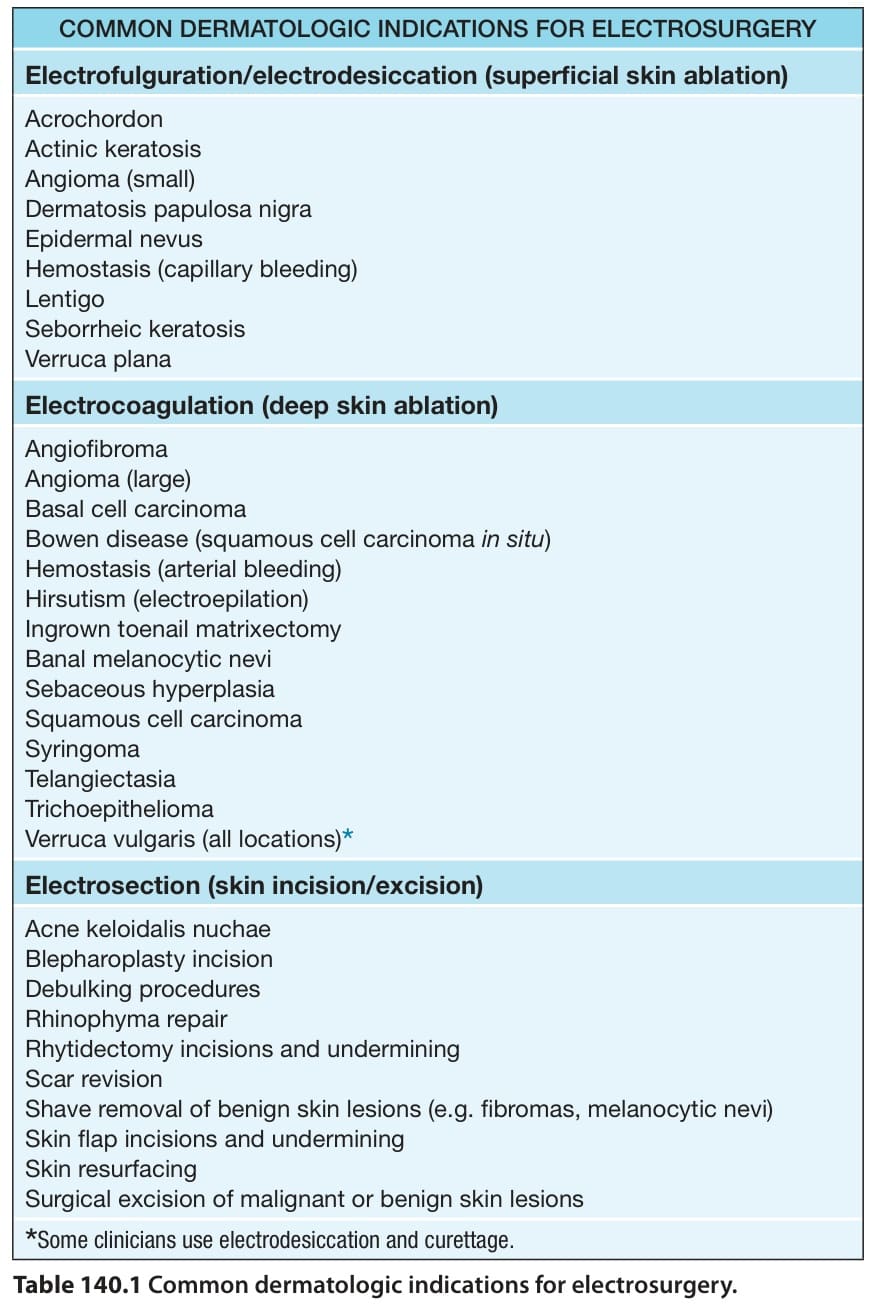
Table 140.1 Common dermatologic indications for electrosurgery.