TRADITIONAL WOUND DRESSINGS
Wound dressings can be categorized either by the dressing technique and how the dressing is utilized relative to the wound (see below) or by the composition and structure of the dressing. Naturally occurring materials such as cotton, silk, linen, or cellulose-based substances have a long history of use and have been produced in various combinations for maximum clinical usefulness.
The basic cotton gauze bandages in use today are frequently composed of cotton plus cellulose acetate (added for increased absorbency) and are manufactured with or without various substances incorporated into the fabric. Gauze bandages are inexpensive and easy to use but have limited moisture-retentive capacity and may adhere to the wound; the moisture retentive properties can be enhanced by impregnation with hydrophobic coatings. White petrolatum and other ointments such as soft paraffin wax (e.g. Vaseline® gauze, Aquaphor® gauze, Adaptic™ dressing), with or without antimicrobial agents such as povidone-iodine (Betadine®), sulfadiazine, bismuth tribromophenate (Xeroform™ dressing), framycetin or chlorhexidine, are examples of impregnated substances. Balsam of Peru is found in the tulle gras dressing used predominantly in Western Europe. These medicated dressings are often composites of rayon, nylon, or gauze and are used for malodorous wounds such as chronic ulcers. Activated charcoal cloths (with or without antibacterial silver salt) are also used to control odor.
Because these impregnated dressings have less adherence to the wound, they are placed directly against the wound bed. In addition, they are less painful to remove and can be molded into the depression of deeper wounds for the purpose of filling dead space and providing absorption. The disadvantage of this type of dressing is the potential for maceration of the wound and the surrounding skin, should the dressing remain in place for an extended period of time. While traditional dressings such as gauze are relatively inexpensive and readily available, they require frequent replacement, which is time-consuming and can be costly due to the expense of nursing care.
Primary dressings are those that are in contact with the wound whereas secondary dressings cover the primary dressing and/or secure the primary dressing in place. Most conventional dressings are “layered” and are constructed as either “pressure” or “non-pressure” dressings. A layered dressing is usually created in three parts: (1) the contact or interface layer, which is usually a non-adherent, fluid-permeable material that makes direct contact with the wound; (2) the absorbent layer, usually a cotton pad, gauze or other such material, which is placed on top of the contact layer to “wick in” and retain wound exudate and help the dressing mold to the shape of the wound; and (3) the outer layer or wrap, often tape or other banding material for retention of the underlying layers. Each layer is placed in close approximation to the prior one, without gaps or air pockets, and should increase in size and degree of overlap, from wound bed to outermost layer.
A “pressure” dressing has more bulk added to the absorbent layer and is used to assist in hemostasis and to act as a bolster. Usually applied immediately after a surgical procedure such as debridement or graft placement (enhances graft–wound bed interaction), a pressure dressing is changed to a lighter dressing within 24 hours. In addition to limiting bleeding, the pressure dressing also reduces local edema. However, it is important to be aware of the amount of pressure exerted upon the wound bed so as not to create localized ischemia, potentially resulting in tissue necrosis.
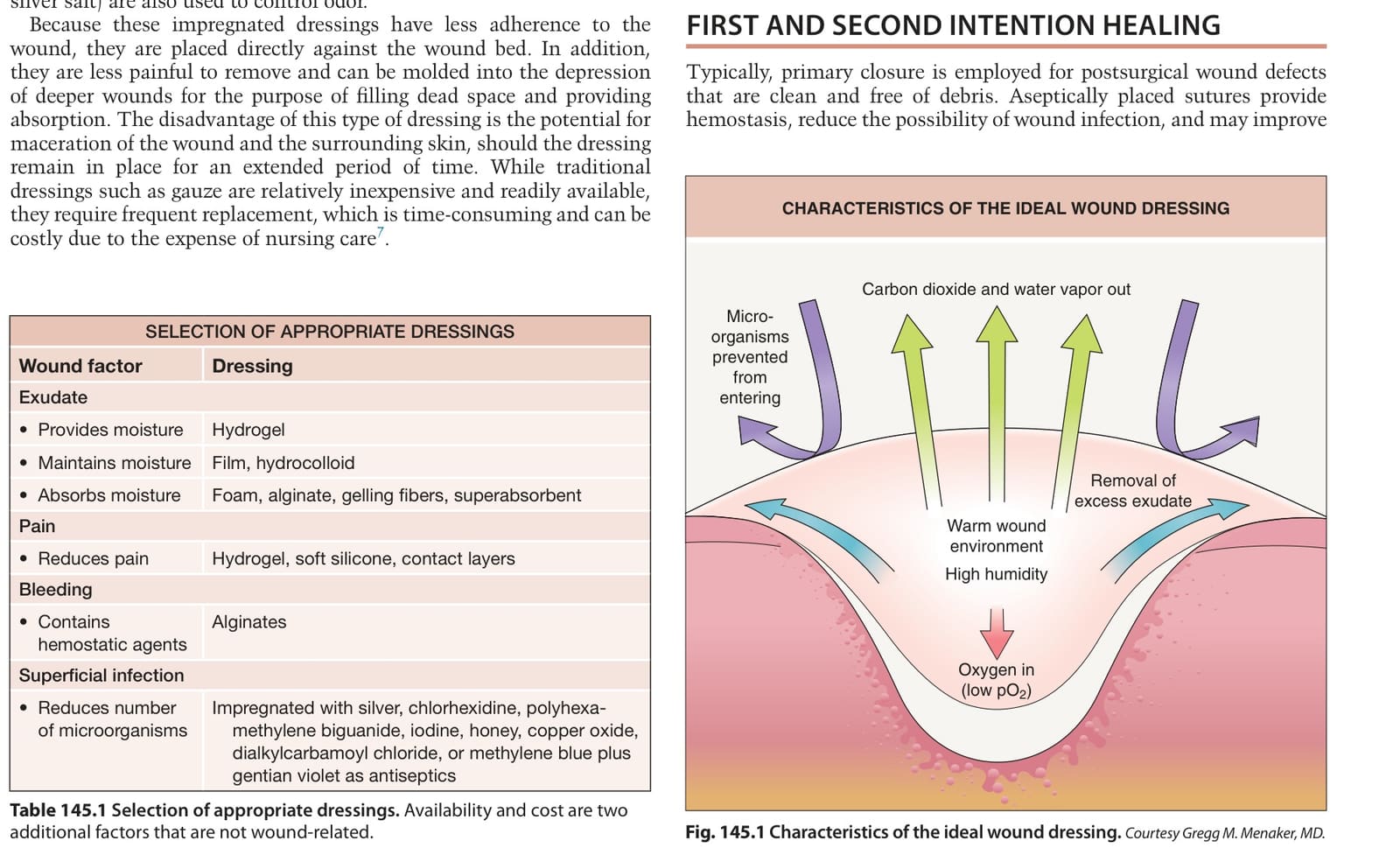
Table 145.1 Selection of appropriate dressings. Availability and cost are two additional factors that are not wound-related.