FIRST AND SECOND INTENTION HEALING
Typically, primary closure is employed for postsurgical wound defects that are clean and free of debris. Aseptically placed sutures provide hemostasis, reduce the possibility of wound infection, and may improve
the ultimate cosmetic result. After suture removal, the use of external splinting tape (e.g. Steri-Strips™) or tension-relieving dressings (e.g. embrace®) supports the tissues, enabling favorable collagen remodeling that may limit scar formation and hypertrophy. Use of an antimicrobial ointment under the dressing does not reduce the rate of infections but does increase the risk of contact dermatitis, while the use of any ointment did not reduce complications.
Second intention healing is often employed following cutaneous surgical techniques such as tangential biopsy, curettage, cryosurgery, laser surgery, and excision in concave sites (Fig. 145.2). In such cases, moisture in the wound bed is the key to optimal healing. A semi-occlusive dressing is the treatment of choice, with the topical application of ointment directly on the wound. Monitoring the wound for signs of infection and preventing the wound bed from drying until re-epithelialization has occurred are usually sufficient measures for the management of this type of surgical wound.
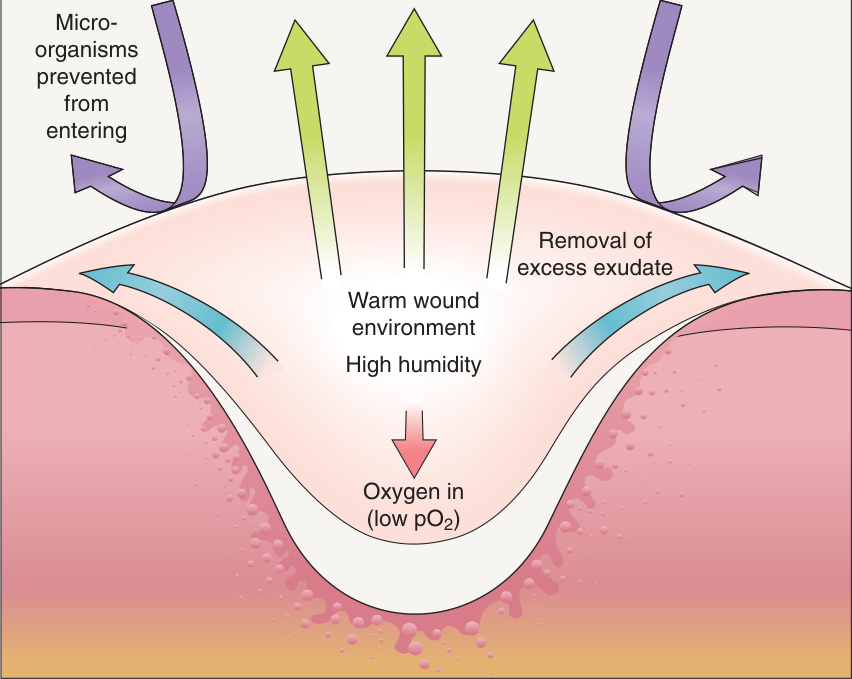
Fig. 145.1 Characteristics of the ideal wound dressing.Courtesy Gregg M. Menaker, MD.
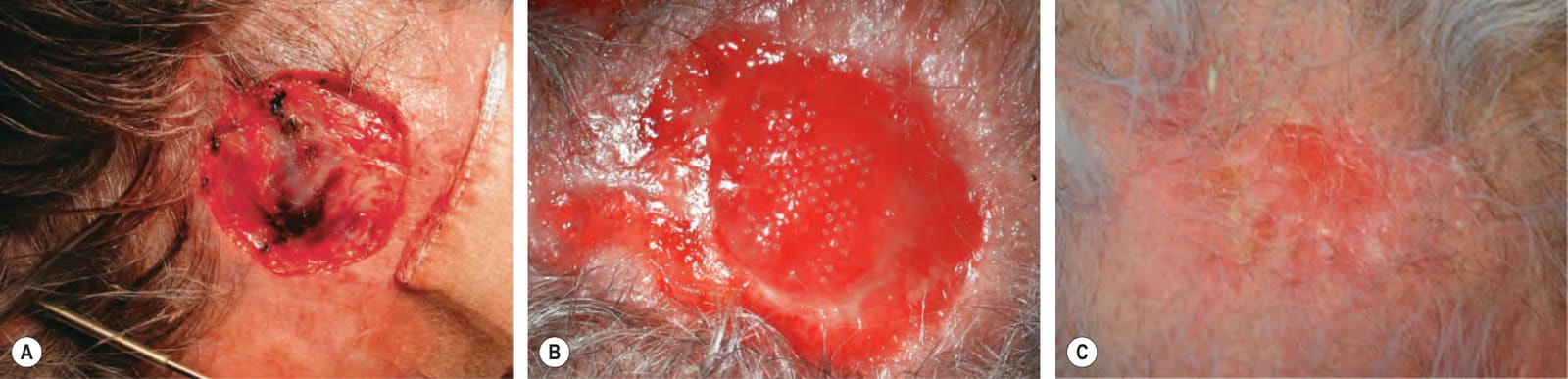
Fig. 145.2 Second intention healing.A Surgical wound immediately following Mohs micrographic surgery; a semi-occlusive dressing will be applied. B Three weeks following surgery. Note the abundance of pink–red granulation tissue. C Fully re-epithelialized wound six weeks following surgery. Courtesy Gregg M. Menaker, MD.

Table 145.2 Characteristics of an ideal dressing – comparison of moisture-retentive dressingse1.