COMPRESSION THERAPY
Based on substantial scientific and clinical evidence, compression therapy represents the mainstay of treatment for all cutaneous manifestations of chronic venous insufficiency, from varicose veins and edema to lipodermatosclerosis and venous leg ulcers. The physiologic effects of compression include acceleration of the velocity of venous flow, augmentation of venous return toward the heart, reduction of venous reflux and edema, promotion of oxygenation to the surrounding dermis, and stimulation of fibrinolysis. Compression therapy is also employed following lower extremity surgical procedures.
Types of Compression
There are several different methods of compression therapy, ranging from stockings and compression bandages to devices such as inter-mittent pneumatic compression systems (Table 145.7). Compression stockings are graded from Class I to IV based upon the pressure at the ankle (see Table 105.4) whereas compression bandages are classified as either long stretch (elastic with substantial extensibility) or short stretch (inelastic with limited extensibility). Multiple factors influence the sub-bandage pressure including: (1) the tension or amount of force that is used to stretch the bandage during application; (2) the width of the bandage – wider bandages are associated with decreased compression; (3) the size of the leg – a larger circumference leads to reduced pressure; and (4) the number of layers of compression – a higher number increases pressure. This is reflected in a modified Laplace law:
Sub-bandagepressure (mmHg)
tension (KgF) number of layers acon stant limb circumference (cm) bandagewidth (cm)
In addition to the type of bandage material and the method of wrapping, the amount of pressure also depends on muscle contraction.
Although the definitive optimal pressure required to prevent capillary leakage secondary to venous hypertension has not been delineated, an ankle pressure of 30–40 mmHg is recommended for leg ulcers. The higher compression pressure of 40 mmHg should be considered for persons with an ankle–brachial index (ABI) of 0.8 to 1.3, indicating adequate vascular supply (see Table 105.8). In patients with predominantly venous disease, but coexisting arterial compromise (ABI = 0.66–0.8), modifications in the form of inelastic (rather than elastic) compression and fewer layers of compression is recommended. Individuals with an ABI of 0.5 to 0.65 should have further modifications, e.g. one or two layers of a tubular bandage that can be easily removed. Inappropriate compression bandaging in patients with arterial disease can lead to ischemia and is therefore potentially harmful. Patients with congestive heart failure (CHF) may have difficulty tolerating compression therapy because compression of the lower extremities may increase preload volume and worsen CHF.
Compression stockings
With graduated compression stockings, the patient is afforded some independence in the application of the device. However, for arthritic
and/or elderly patients, application can be difficult unless the stockings have zippers or Velcro® fasteners. Although compression stockings are commonly used as maintenance therapy, recent studies have observed that they are comparable to bandaging systems for the treatment of venous leg ulcers, including producing similar healing rates. A systematic review found no significant differences between compression stockings and compression bandages with respect to ulcer healing, time to ulcer healing, or ulcer recurrence. In general, compression stockings are more tolerable, less costly, and less bulky. Patient education and demonstration can lead to increased compliance.
Compression bandages
In the 1880s, Paul Gerson Unna introduced a bandage, now referred to as the Unna boot, for the treatment of venous leg ulcers and selected eczematous dermatoses. It was originally a cotton bandage impregnated with zinc oxide, gelatin, and glycerin paste. Applied in a semi-rigid state, the Unna boot confers (semi-rigid) compression, along with the advantages of a moisture-retaining occlusive dressing (Fig. 145.14). It should be applied by a qualified medical professional and changed once a week unless heavy drainage from the wound necessitates more frequent replacement. Correct application of the Unna boot prevents excessive or abnormal pressure to the limb, compromised circulation, skin breakdown, additional ulcer formation, or further limb deterioration (Video 145.1). Over a century later, the Unna boot is still a frequently employed compression bandage for venous leg ulcers.
Medicated paste bandages such as the Unna boot can be used alone (inelastic) or underneath an additional layer of cohesive bandaging (e.g. Coban™ [elastic]), especially on the lower extremities. By creating an absorptive, protective contact layer, they can also address the stasis dermatitis often associated with leg ulcers. In addition to preservatives, these open-weave cotton bandages are impregnated with: (1) zinc oxide paste, calamine, or ichthammol, all of which have a soothing action on irritated skin; (2) coal tar, which has an anti-inflammatory effect; or (3) clioquinol, which has deodorizing and antibacterial actions. Preservative-free zinc
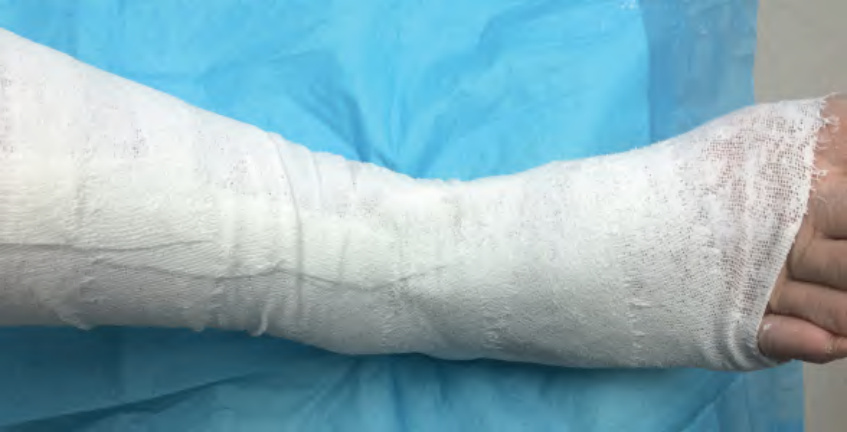
Fig. 145.14 Unna boot. Non-elastic compression therapy with a zinc-impregnated compression wrap.
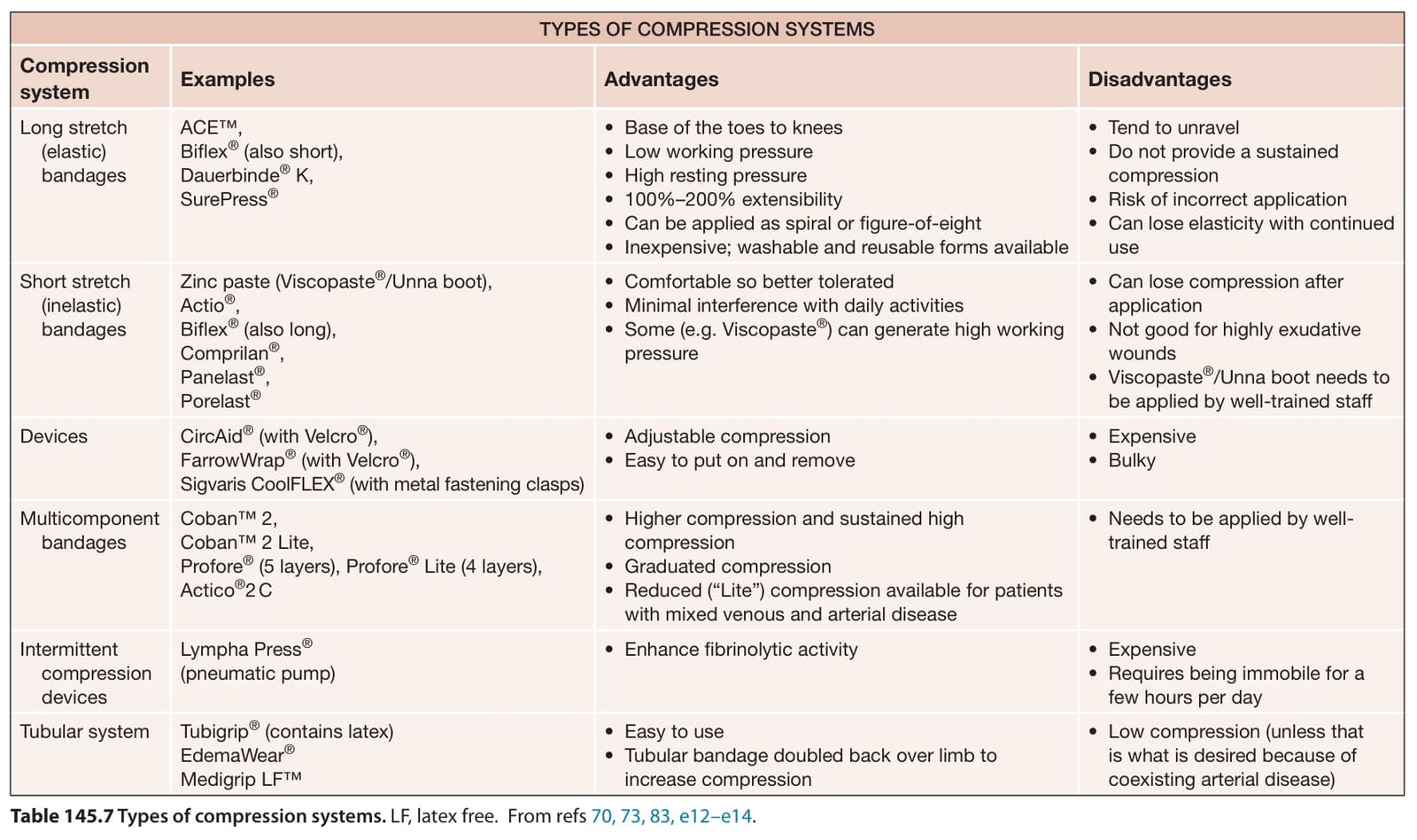
Table 145.7 Types of compression systems. LF, latex free.From refs 70, 73, 83, e12–e14.