COMPLICATIONS
Short-term complications of biopsies and excisions are few in number and engender limited morbidity (Table 146.14). In addition, the smaller the procedure, the fewer the complications, which explains why shave biopsies and snip biopsies are quite safe. Bleeding is the most common complication and may occur from the time of the procedure to after the patient has returned home, but usually within the first 24 hours. Taking care to achieve hemostasis during the procedure minimizes adverse bleeding events even for patients taking anticoagulants and antiplatelet medications.
Infection occurs rarely, i.e. in <1% of most procedures, in contrast to the development of irritant or allergic contact dermatitis which is more common. The latter is usually due to adhesives and less often topical antibiotics (see above). Dermatitis can frequently be managed with a change in the wound care regimen but if there are significant symptoms or risk of postinflammatory hyperpigmentation, topical corticosteroids may be applied. Biopsies performed on the lower limbs, limbs affected by lymphedema, intertriginous areas, and ears are most susceptible to infections. If an infection develops, culture and oral antibiotics may be required.
Pain is generally minimal. When it occurs 3–5 days after the procedure, infection is the most likely cause, even in the absence of erythema, tenderness, and purulence. Very rarely, paresthesias may result and can persist for several months, especially on the forehead and scalp. Wounds that are closed primarily may dehisce because of tension, hematoma formation, poor wound healing, or infection. These wounds are thereafter managed for second intention healing and a delayed reconstruction can be undertaken, if needed, once the attendant inflammation has resolved.
Long-term complications (see Table 146.14) generally consist of functionally or cosmetically adverse scarring. Depressed scars may occur if not enough subcutaneous tissue is brought into the line of closure. Atrophic and widened scars occur in areas where there is inter-mittent stretching of the scar as it overlies major muscle groups. Careful surgical technique that includes adequate undermining, minimization
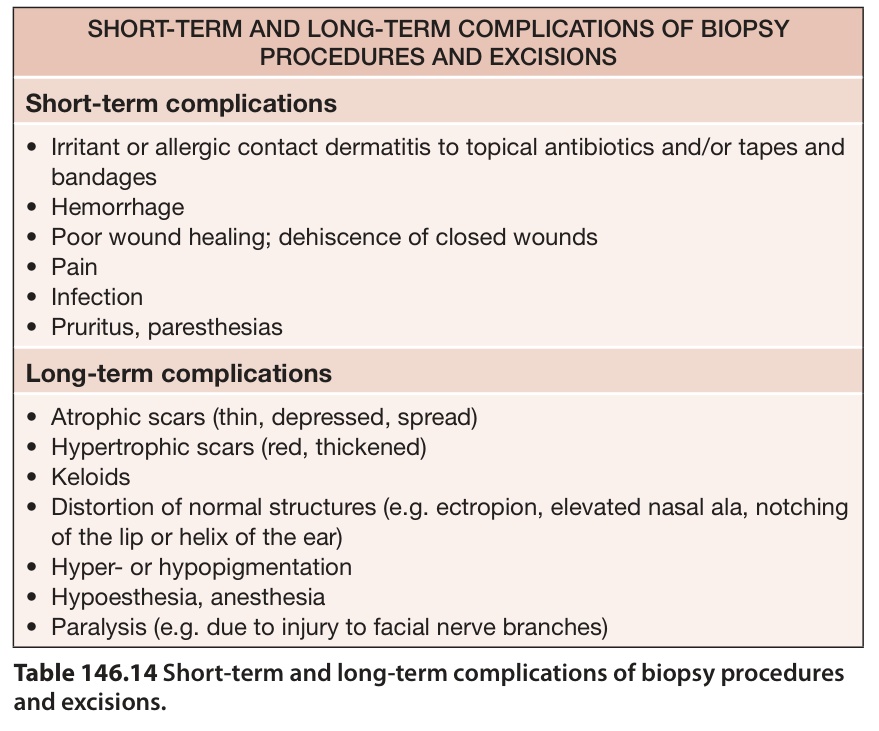
Table 146.14 Short-term and long-term complications of biopsy procedures and excisions.