PREOPERATIVE EVALUATION AND PATIENT PREPARATION
A thorough and efficient preoperative evaluation is required prior to nail surgery. Screening for underlying diseases, especially those that predispose to peripheral vascular disease (e.g. diabetes mellitus, Raynaud phenomenon, atherosclerosis), should be done, in addition to a review of medications, allergies (e.g. povidone–iodine, antibiotics, narcotics, anesthetics, latex), smoking history, and past surgical procedures, in particular the presence of prosthetic heart valves and joint
replacements (see Table 151.2). Diagnostic imaging can detect under-lying bony defects as well as define space-occupying lesions and their anatomic relationships prior to nail surgery. A full “procedure, alternatives, and risks” (PAR) discussion should include the possibility of bleeding, pain, infection, and permanent nail dystrophy. Information regarding work disruption should be provided. Premedication is not particularly useful, except in those who are very anxious. No systemic drugs, including anticoagulants and antiplatelet agents, should be discontinued. Prophylactic antibiotics are only indicated for individuals with high-risk cardiac conditions or prosthetic joint replacements at high risk for infection (see Tables 151.2 & 151.3). While not mandatory, clinical photographs of the preoperative nail may prove worthwhile. The digit is then prepped with alcohol, chlorhexidine, or povidone– iodine and sterilely draped.
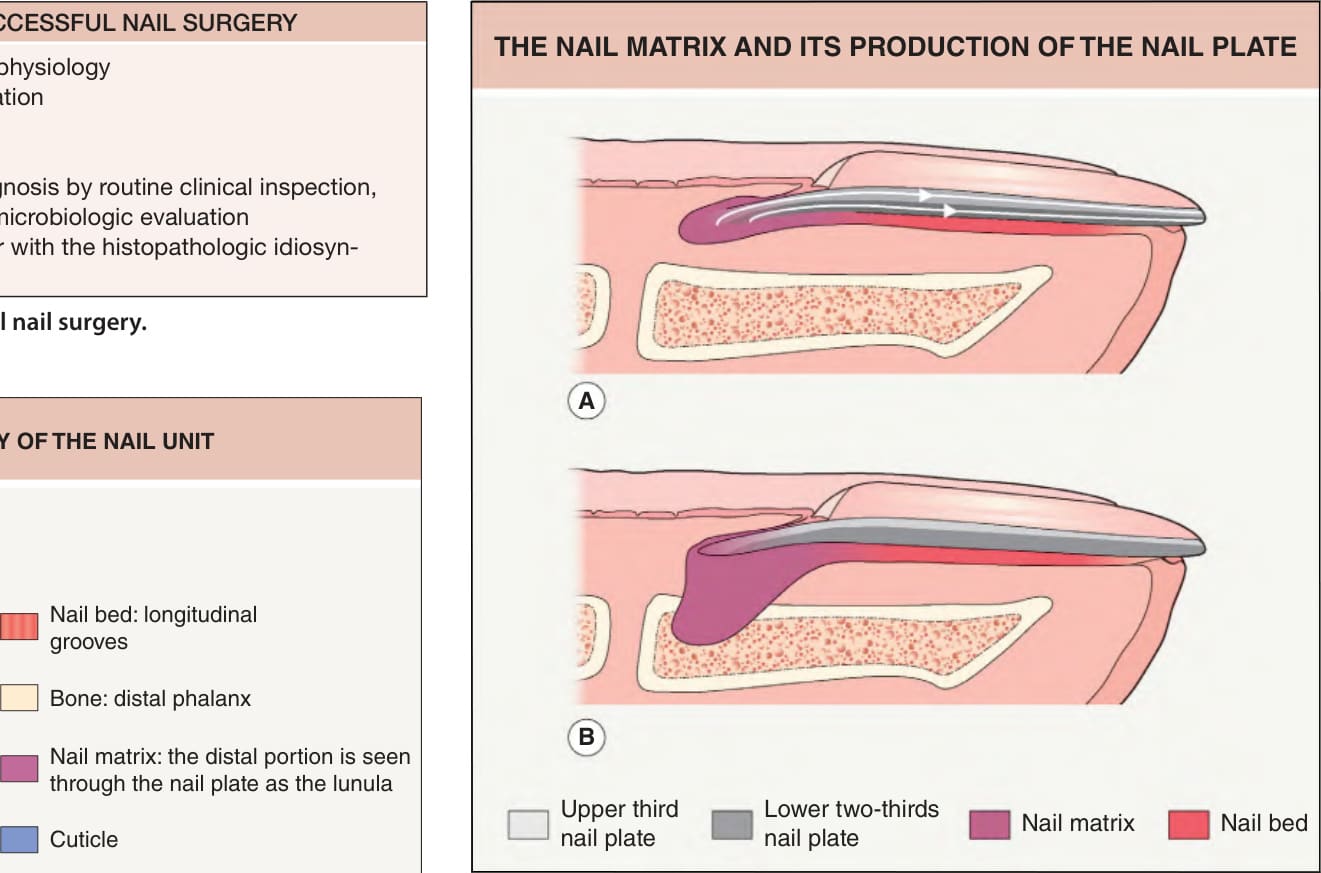
Fig. 149.2 The nail matrix and its production of the nail plate.A The proximal portion of the matrix produces the upper third of the nail plate (light gray) and its distal part the lower two-thirds (dark gray). B On the great toe, the lateral horns of the matrix can extend as far as the midline of the lateral aspect of the digit or even farther.