INSTRUMENTS FOR NAIL SURGERY
Most of the instruments used in nail surgery are standard instruments used in cutaneous surgery. A few specific instruments are needed in order to make nail surgery easier to perform. An elevator allows atraumatic detachment of the plate from the bed and several types are available, such as the Freer nail elevator or Locke elevator (Fig. 149.4). Nail nippers are essential for cutting the nail plate. When cutting thick nails, the dual-action nail nipper is invaluable. The English nail splitter is very popular but has a major drawback: its thicker lower jaw induces lateral onycholysis ahead of the cutting line. Straight nail nippers with their sharp, thinner, beveled jaws are less traumatic (Fig. 149.5).
As nail surgery requires a bloodless surgical field, a tourniquet, applied for a maximum of 20 minutes, is very useful. Several options are available. The Penrose drain, clamped with a sturdy hemostat, is commonly used but studies have shown that it delivers high and unreliable pressure that has the potential for lateral nerve damage, and thus it is not recommended for digits. A sterile glove, half a size smaller than the adequate size, can be employed; the corresponding fingertip of the glove is pierced with scissors and then rolled back to the base of the proximal phalanx (Fig. 149.6). This technique exsanguinates the digit and delivers an acceptable pressure around 500 mmHg. The remainder of the glove serves as a sterile field. T-Ring®, a digital tourniquet specifically designed to ensure hemostasis with the lowest efficient pressure (~150 mmHg), is commercially available. Its limitation is cost (currently $10 USD per unit).
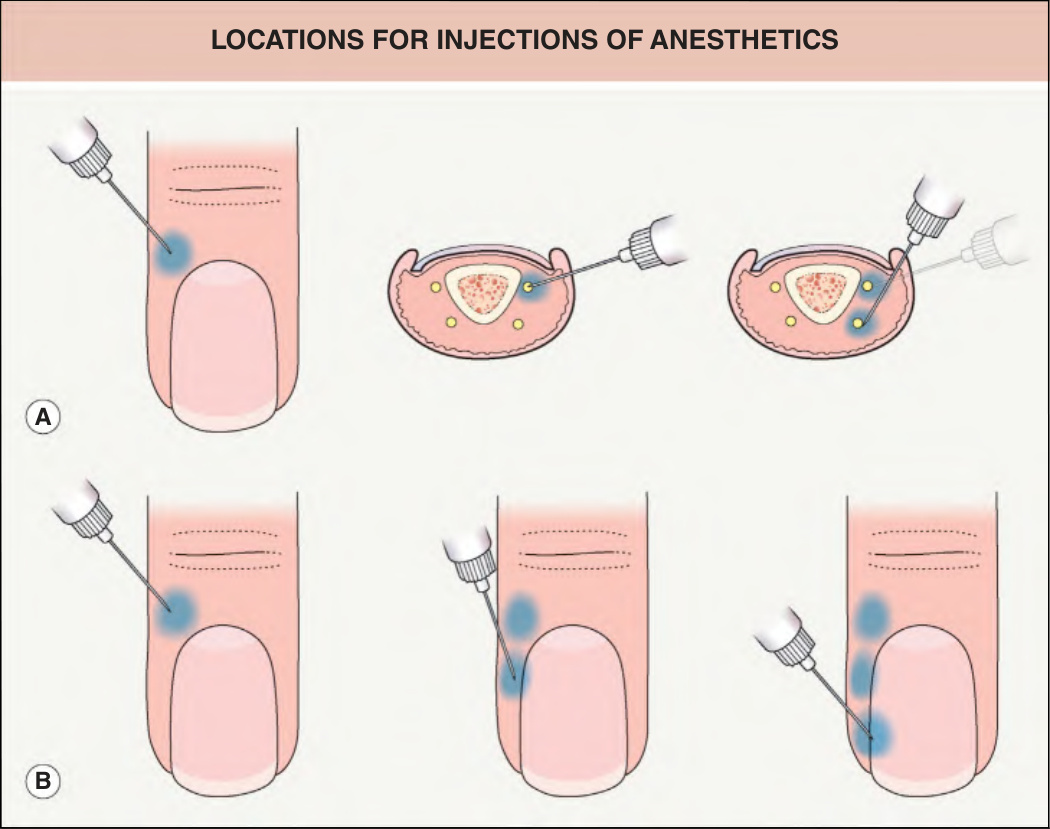
Fig. 149.3 Locations for injections of anesthetics.A Distal digital nerve block. B Infiltrative wing procedure.
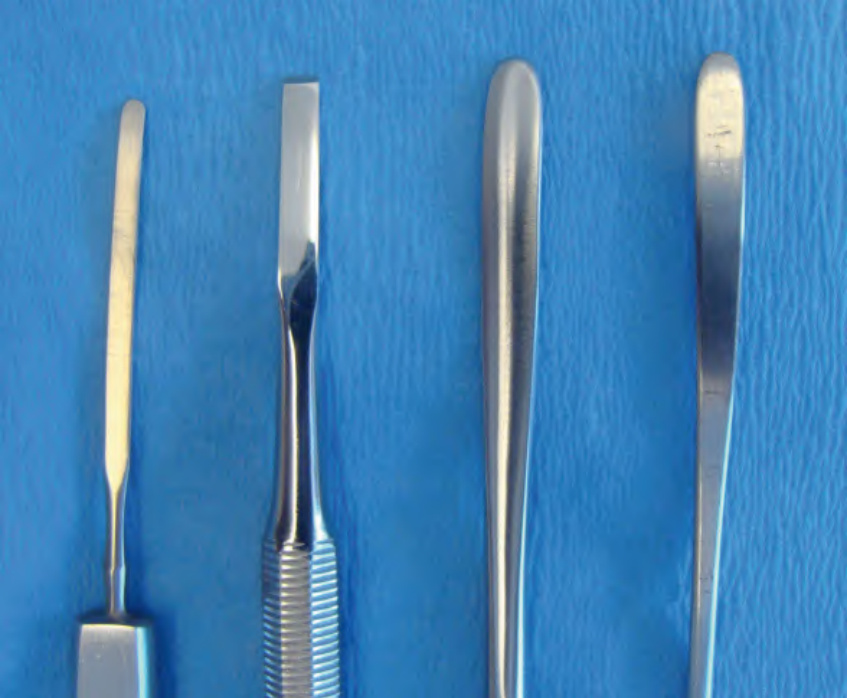
Fig. 149.4 Different types of nail elevators. From left to right, McKenty periosteal elevator, dental spatula, Freer nail elevator, and dura mater elevator.
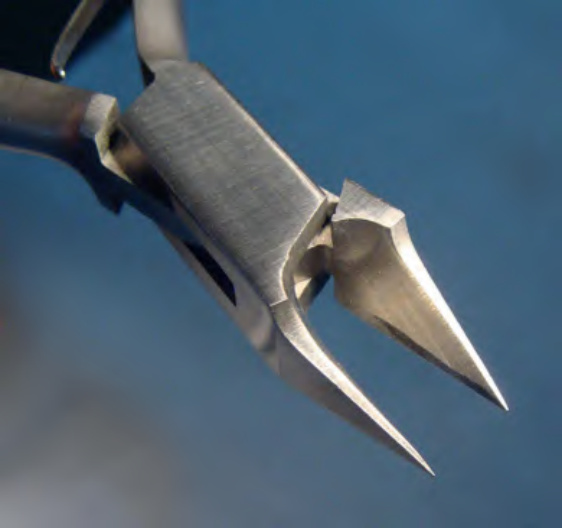
Fig. 149.5 Sharp-pointed and beveled nail nippers.
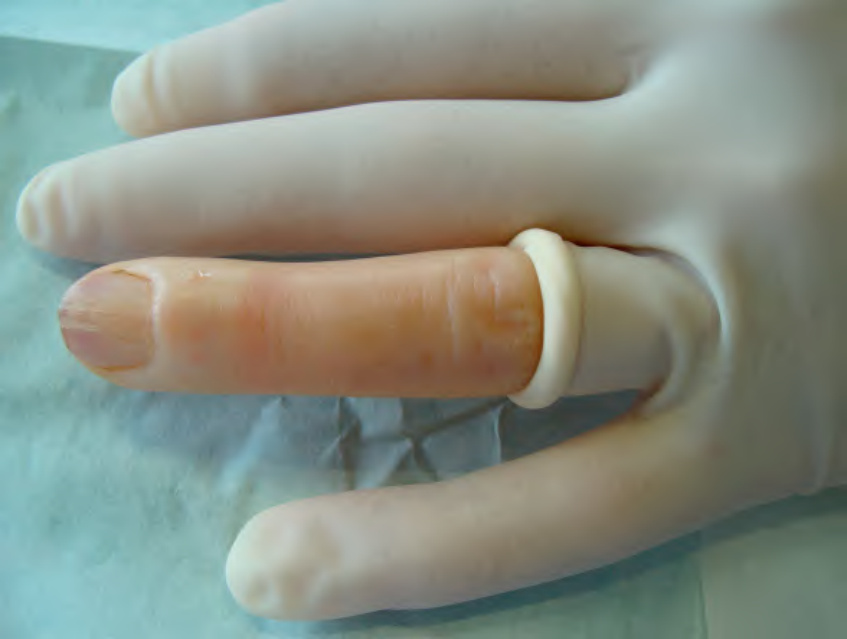
Fig. 149.6 Sterile glove used as a tourniquet and sterile field. One fingertip of the glove is pierced with scissors and rolled back to the base of the proximal phalanx.