PATHOGENESIS
ACD is a delayed-type hypersensitivity response. It is an allergen-specific reaction that requires prior sensitization of the individual to the chemical in question. The pathogenesis of ACD involves an initial sensitization phase when the patient first comes in contact with the chemical, which penetrates the skin and then elicits a cascade of events that results in sensitization (see Fig. 4.13 for details). The subsequent re-exposure of the skin leads to the presentation of the responsible allergen to an already primed T cell milieu, causing the release of multiple cytokines and chemotactic factors and resulting in the clinical picture of eczema (see Fig. 4.14). Once sensitized, all that is needed to elicit a reaction is contact with a low concentration of the causative chemical.
Extremely pruritic erythematous papules and papulovesicles appeared within days of wearing new sneakers; note the distribution pattern. B Pebbled and lichenified plaques with both hypo- and hyperpigmentation. The patient had a positive patch test to potassium dichromate. Courtesy Louis A. Fragola, Jr, MD.
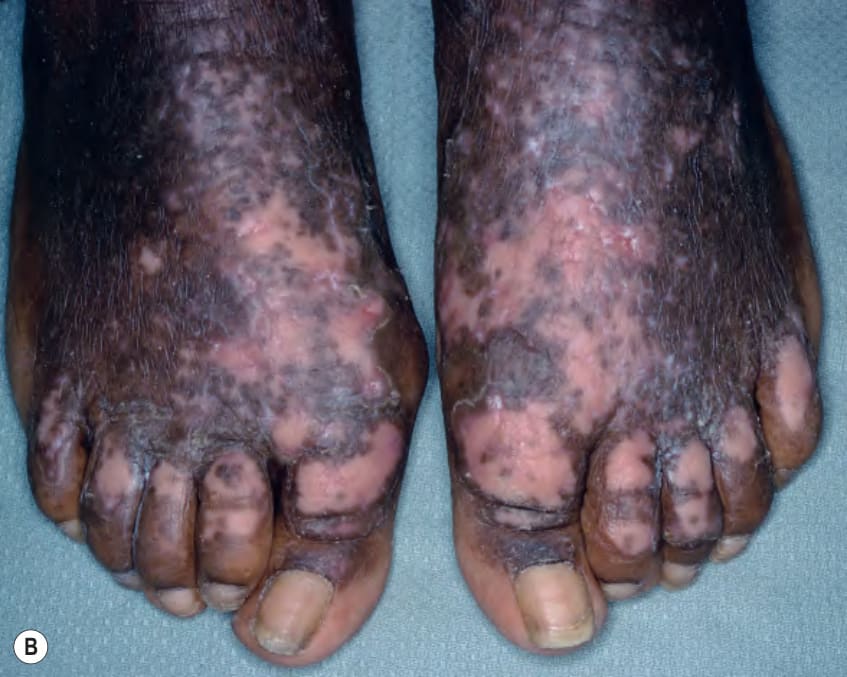
Fig. 14.4 Allergic contact dermatitis to shoes – acute versus chronic.A