TREATMENT AND PATIENT EDUCATION
Once allergens are positively identified, the patient should be given written information on all of these chemicals. The information sheets should contain data regarding the name of the chemical, possible synonyms, typical uses for the chemical, how to avoid exposure, and, when appropriate, substitutions. The sheets can be individually composed or obtained from books and copied for patient use. In addition, the American Contact Dermatitis Society website (www. contactderm.org) is an excellent resource for allergen and product information, including patient information sheets (Table 14.5). The Contact Allergen Management Program (CAMP) is another feature of the website (available to members of the society): this allows the user to input the known allergens and the database assembles a list of products free of the allergens entered. With this CAMP-generated list, the patients can then purchase products that lack the ingredients to which they are allergic. In addition, this website contains a Contact Dermatitis Alternatives Database which assists both patients and physicians with regard to appropriate substitutions for known allergens.
The patient should also be instructed on how to read the labels of any new or old products not reviewed, in order to avoid future exposure. Each time the patient considers buying a product, he or she should utilize updated information sheets, because ingredients in a given product can change over time. In addition, ingredients in a particular product can change from location to location (e.g. between countries, or between the East and West Coast of the US) without a change in the packaging.
After identifying the substances to which the patient is allergic, the most important step a physician can take is to educate the patient regarding the names of the allergens and how to avoid them. This empowers the individual and allows the physician to transfer to the patient the responsibility for avoiding said chemicals. When trying to identify allergens in the patient’s environment, one must also consider allergens transferred from other sources – so-called consort dermatitis (e.g. from spouse to spouse, such as the cologne on the husband causing a reaction on the face of his wife).
Treatment of ACD primarily involves identification of the causative allergens. Once the allergens have been identified, the physician should try to clear the dermatitis with appropriate treatments, such as topical or, if necessary, systemic corticosteroids. The educated patient then needs to be diligent in avoiding the identified allergens. It may take 6 weeks or more to see complete and prolonged clearing, even when allergens are being avoided (Fig. 14.15). If the ACD is superimposed upon another dermatosis (e.g. stasis dermatitis, atopic dermatitis, ICD), then the latter will also need to be addressed via appropriate skin care including avoidance of skin irritants and moisturizing creams.
If a patient is unable to undergo patch testing for some reason, or confirmation of patch test results is desired, a repeat open application test may be performed. This open use test, sometimes referred to as the “poor man’s patch test”, can prove useful. In an open use test, the patient applies the product in question to the same predetermined location (where there is no dermatitis) twice daily for 1–2 weeks; a common site is the antecubital fossa or flexor forearm. If dermatitis develops, it can be concluded that the patient is reacting to that product. Unfortunately, this type of testing does not allow the identification of individual ingredients. Repeat open application tests are also used to establish clinical relevance of the patch test results, e.g. a patient reacts to a fragrance, but the concentration of the fragrance in a particular product was so low that it did not react on initial patch testing.
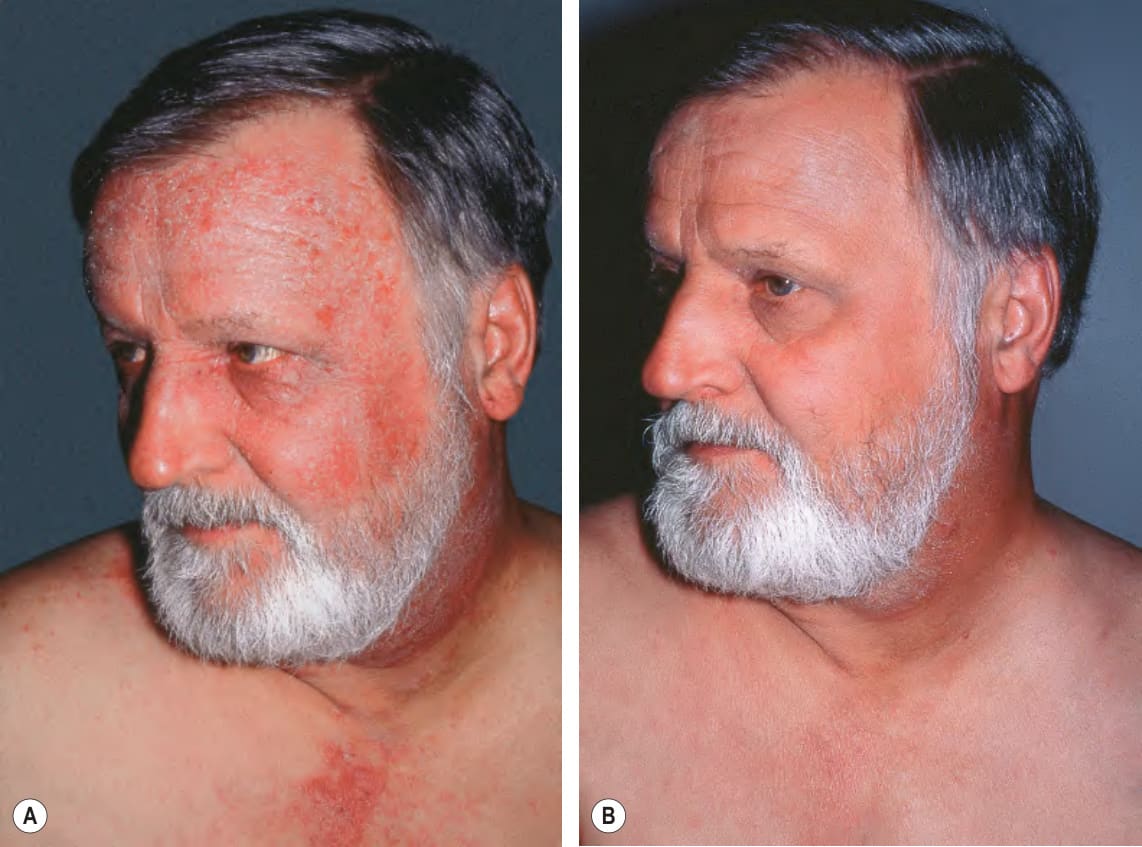
Fig. 14.15 Allergic contact dermatitis to fragrance found in cologne.A Patient at the time of diagnosis. B Patient after avoidance of fragrances and his cologne.
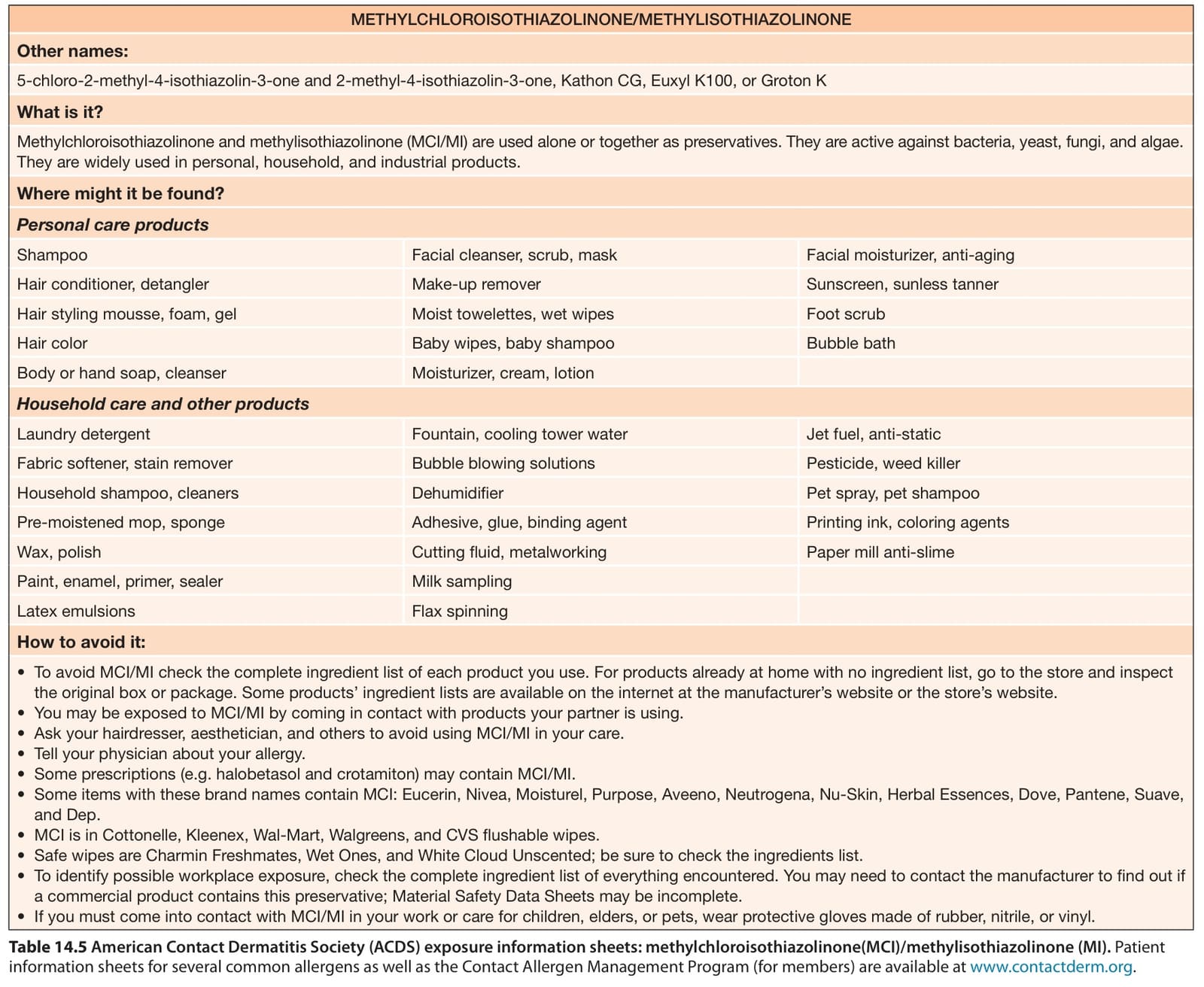
Table 14.5 American Contact Dermatitis Society (ACDS) exposure information sheets: methylchloroisothiazolinone(MCI)/methylisothiazolinone (MI). Patient information sheets for several common allergens as well as the Contact Allergen Management Program (for members) are available at www.contactderm.org.