AIRBORNE CONTACT DERMATITIS
When airborne allergens have contact with the skin, they may cause ACD or ICD, with a resemblance (or overlap) with photoallergic contact dermatitis and phototoxic contact dermatitis (see Fig. 87.15). Ragweed dermatitis, a good example of an airborne contact dermatitis, is most noticeable on the face (see Ch. 17). Prolonged and repetitive exposure to airborne allergens generally produces an ACD that is lichenified and dry and is predominantly located in the exposed portions of the skin: especially the eyelids, but also the face, V of the neck, arms, and legs. The most common causative agents are plants, especially Compositae, fragrances, woods, rubber, preservatives, glues, metals, epoxy resins, and acrylates (Fig. 14.21A,B).
While there are many common sources of airborne contact dermatitis, more obscure causes have been reported such as essential oils volatilized during aromatherapy or thyme dust in farmers. There has been an increasing number of reactions to paints, especially to those
containing MI or MCI, as well as to baby wipes. Occupationally induced reactions appear to be the most common cause of airborne contact dermatitis. Dermatoses in exposed areas should raise the possibility of a possible airborne contact allergy, leading to a series of questions regarding possible exposure sources and to appropriate patch testing when indicated (Fig. 14.21C).
Additional figures and tables, on Simple interventions prior to patch testing, ACDS-composed exposure information sheet, and Alternatives to p-phenylenediamine (PPD) in hair dyes, available in our eBook (see inside front cover for access code).
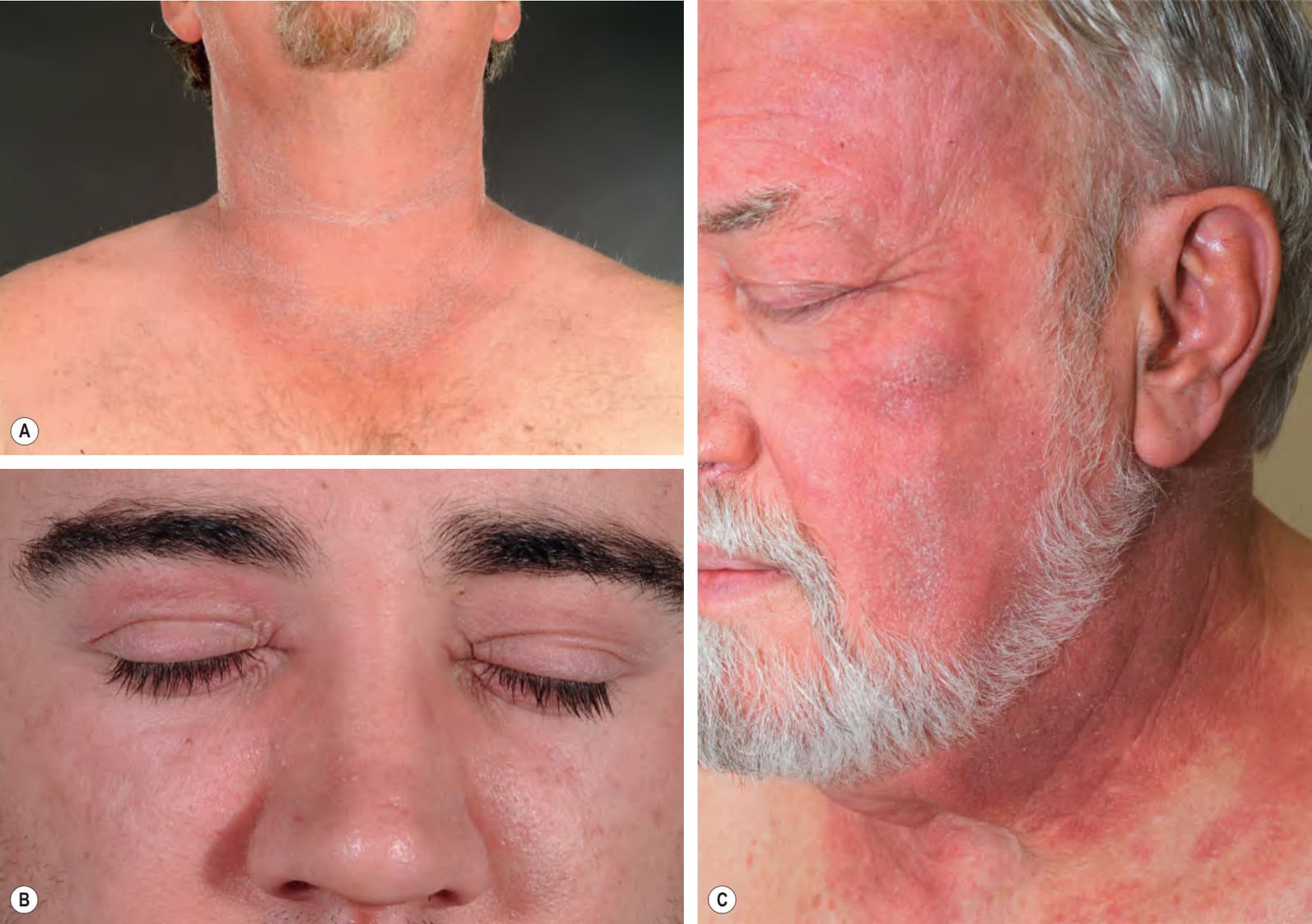
Fig. 14.21 Airborne contact dermatitis.A, B The allergen was an epoxy resin. Note the involvement of the eyelids. C The detected allergens were decyl glucoside, fragrance, thiuram, and carba mix.
Vehicles for 5200 Chemicals. 5th ed. Wapserveen: AC DeGroot; 2022.12. Adams RM, Fisher T. Diagnostic patch testing. In:
Adams RM, ed. Occupational Skin Disease. Philadelphia: Saunders; 1999:221–235.13. Bruze M. Seasonal influence on routine patch test