空氣傳播性接觸性皮膚炎(AIRBORNE CONTACT DERMATITIS)
當空氣傳播的過敏原與皮膚接觸時,可能引起 ACD 或 ICD,並與光過敏性接觸性皮膚炎(photoallergic contact dermatitis)及光毒性接觸性皮膚炎(phototoxic contact dermatitis)相似(或重疊)(見 Fig. 87.15)。Ragweed dermatitis 是空氣傳播性接觸性皮膚炎的一個良好例子,最明顯處在臉部(見第 17 章)。長期且重複暴露於空氣傳播的過敏原通常會產生一種苔癬化且乾燥的 ACD,主要位於皮膚的暴露部位:特別是眼瞼,但也包括臉部、頸部 V 形區、手臂與腿部。最常見的致病物質為植物(尤其是 Compositae)、香料(fragrances)、木材、橡膠、防腐劑、膠水、金屬、epoxy resins 與 acrylates(Fig. 14.21A,B)。
雖然空氣傳播性接觸性皮膚炎有許多常見來源,但也曾報告較不為人知的原因,例如芳香療法(aromatherapy)過程中揮發的精油,或農民接觸的 thyme 粉塵。對油漆的反應數目日益增加,尤其是含有 MI 或 MCI 者,以及對嬰兒濕紙巾的反應。職業所誘發的反應似乎是空氣傳播性接觸性皮膚炎最常見的原因。暴露部位的皮膚病變應提高對可能之空氣傳播性接觸過敏的懷疑,並引導出一系列關於可能暴露來源的詢問,以及在有指徵時進行適當的貼膚試驗(Fig. 14.21C)。
關於貼膚試驗前的簡單介入措施(Simple interventions prior to patch testing)、ACDS 編製的暴露資訊表(ACDS-composed exposure information sheet),以及染髮劑中 p-phenylenediamine(PPD)的替代品(Alternatives to p-phenylenediamine (PPD) in hair dyes)之額外圖表,可於我們的電子書中取得(存取碼見封面內頁)。
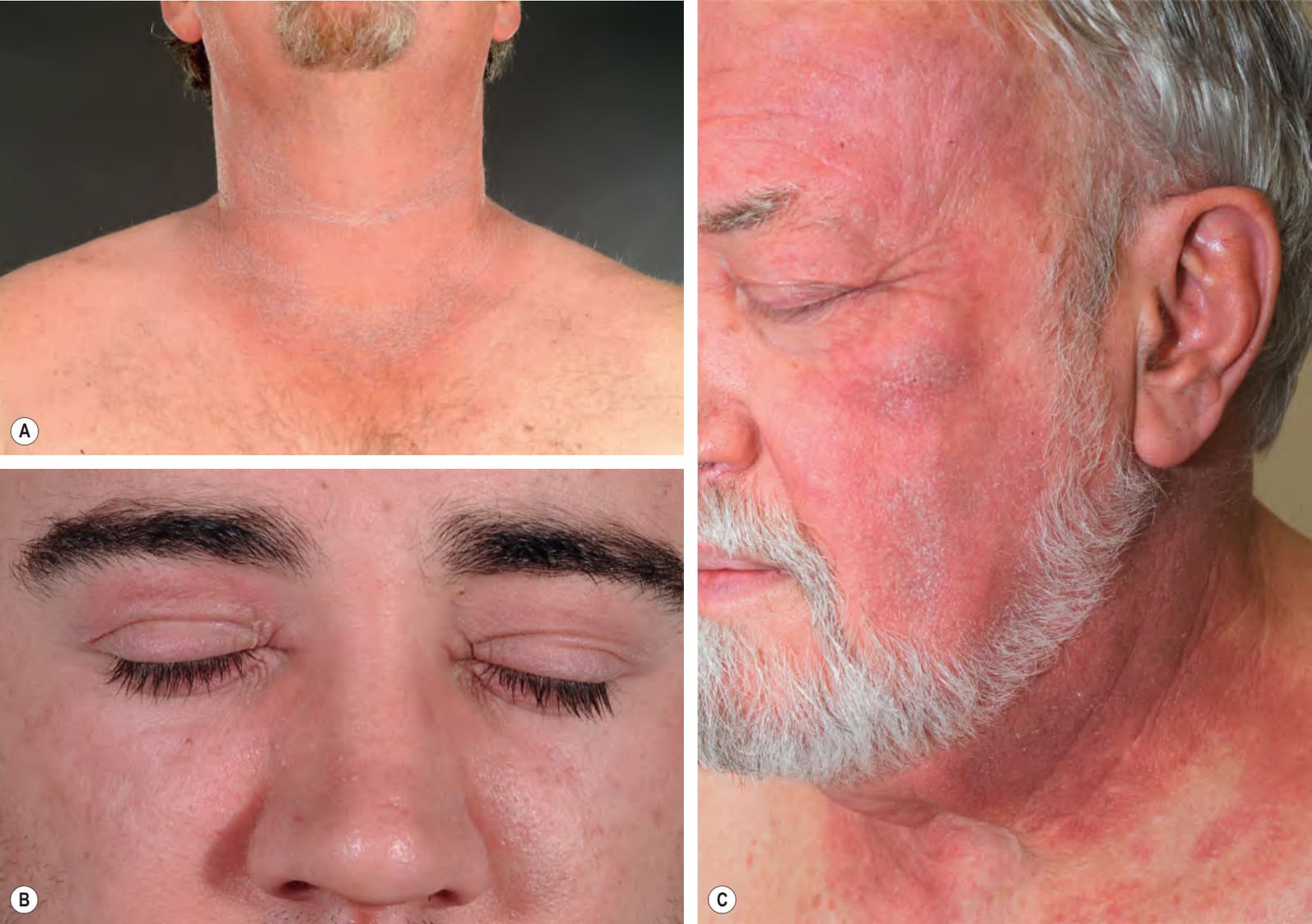
圖 14-21:空氣傳播性接觸性皮膚炎。A、B 過敏原為 epoxy resin,注意眼瞼受侵犯。C 所檢出的過敏原為 decyl glucoside、fragrance、thiuram 與 carba mix。
Fig. 14.21 Airborne contact dermatitis.A, B The allergen was an epoxy resin. Note the involvement of the eyelids. C The detected allergens were decyl glucoside, fragrance, thiuram, and carba mix.
Vehicles for 5200 Chemicals. 5th ed. Wapserveen: AC DeGroot; 2022.12. Adams RM, Fisher T. Diagnostic patch testing. In:
Adams RM, ed. Occupational Skin Disease. Philadelphia: Saunders; 1999:221–235.13. Bruze M. Seasonal influence on routine patch test