TCA CROSS
The “TCA CROSS” (TCA chemical reconstruction of skin scars) technique is an innovative approach to deep ice-pick and fibrotic acne scars (Fig. 154.10A). Rather than a peel or method of exfoliation, it is
the use of 90% TCA as a full-thickness destructive tool. When applied to an ice-pick scar, it destroys the epidermis and its deep dermal tunnel, creating a full-thickness skin wound which will heal with the formation of new collagen, thus filling the depressed scar. This method offers a simpler approach to these full-thickness depressions in which the alternatives are surgical: punch grafts, excision, and scar revision. The procedure is performed independently of other resurfacing procedures such as peeling, laser resurfacing or dermabrasion.
After the face is cleansed and degreased with acetone (see above), the ice-pick and depressed fibrotic scars to be treated are outlined with a skin marker and photographed. This serves as a guide for further
treatment sessions. The 90% TCA is applied to the interior of the ice-pick scar with a toothpick, being careful not to drip the acid onto normal skin as this could lead to additional scarring. Of note, this is a full-thickness destruction of skin and not a peel, so the TCA should be applied only to the interior of the scar itself. Each of the scars is treated until a brilliant white frosting appears (Fig. 154.10B). A topical antibiotic is then placed on each treated site. The procedure is performed with no anesthesia or sedation, as it only produces a brief stinging equivalent to the sensation of cryosurgery.
Healing occurs over the next 2 to 3 weeks, with granulation tissue, fibroplasia, and remodeling of new collagen, which will elevate and soften the depressed scars (Fig. 154.10C). The procedure is then repeated 3 to 6 times at 6-week intervals until substantial elevation has been achieved. This can be followed by a more superficial resurfacing procedure such as medium-depth peeling, laser resurfacing, or dermabrasion to smooth the more superficial scars and blend them with other treated areas.
The physician must warn the patient about potential dyschromia, especially in Fitzpatrick skin types III through VI, as skin destruction of this depth can depigment the treated areas. The multiple procedures may not be able to raise all the scars to the surface but they will surely provide improvement. The TCA CROSS technique does add another simple therapeutic option for treating scars.
Deep Chemical Peeling
Patients in Glogau groups III and IV may require deep chemical peeling, motorized dermabrasion, or laser resurfacing to improve their greater degree of skin damage. Deep chemical peeling leads to production of new collagen and ground substance down to a level in proportion to the depth of the peel. Deep chemical peels create an injury through the papillary dermis and into the superficial reticular dermis, which may extend into the mid-reticular dermis. For deep peeling, either TCA in concentrations >50% or a phenol-containing preparation is used. Because of the risk of scarring and other complications with such potent concentrations of TCA, this agent is not recommended for deep chemical peeling. Therefore, solutions containing phenol remain the preferred formulation for deep chemical peels.
A deep chemical peel is one of the most permanent cutaneous rejuvenation procedures (Table 154.5). Histologically, it leads to a dense neocollagenesis zone with new elastic fibers that increases over 6 weeks (Fig. 154.11). The classic Baker–Gordon formula is outlined
in Table 154.6. While it was originally thought that phenol was the active agent, in 1996 Hetter proposed, based upon careful data and animal studies, that croton oil was the active agent. Others have subsequently confirmed the correlation of croton oil concentration with depth of wounding and there are various formulas of the Hetter peel (Table 154.7). While the expanded range of phenol–croton oil peels has increased their clinical applications and safety, performance of deep chemical peels requires experience.
The deep peel is indicated for moderate to severe photodamage (Glogau IV) and extensive rhytides in patients with skin types I–III. Associated lightening is an unwanted side effect in darker skin phototypes. Care must be taken in choosing the appropriate patient given the prolonged recovery and need for close monitoring to ensure proper healing. In addition, sedation and pain control, including the use of opioids, nonsteroidal anti-inflammatory drugs (NSAIDs) and benzodiazepines, are required during and after the procedure. A dull to moderately severe discomfort begins during the procedure and extends for up to 4 hours afterwards.
The peel solution should be freshly mixed and it separates easily without agitation. The face is divided into 6 cosmetic units and
application time for each unit is 20 minutes such that the duration of a full-face treatment is 1½ to 2 hours. Because absorption occurs, this time spacing is required to limit serum phenol concentrations as it has both cardiac and renal toxicities. Intravenous hydration is administered prior to and during the procedure to assist in reducing phenol levels and the patient is monitored for cardiac arrhythmias.
After thorough cleansing with a detergent and acetone, the phenol– croton oil peel solution is applied with cotton-tip applicators, utilizing the correct number of passes and pressure to produce a visible solid white frosting. The latter appears very quickly after application and gradually resolves into a gray color with edema within an hour. While tape occlusion is the classic approach for creating deeper penetration, a lighter version is the untaped phenol–croton oil peel which heals faster and lessens the risk of overpenetration and scarring (Fig. 154.12). For the following 2 to 3 weeks, mild debriding soaks and ointments are
regularly applied. Prolonged postoperative care is required, along with medical supervision to assess for healing and early signs of potential complications (see below). Post-peel erythema may last as long as 6 weeks while collagen rejuvenation is occurring.
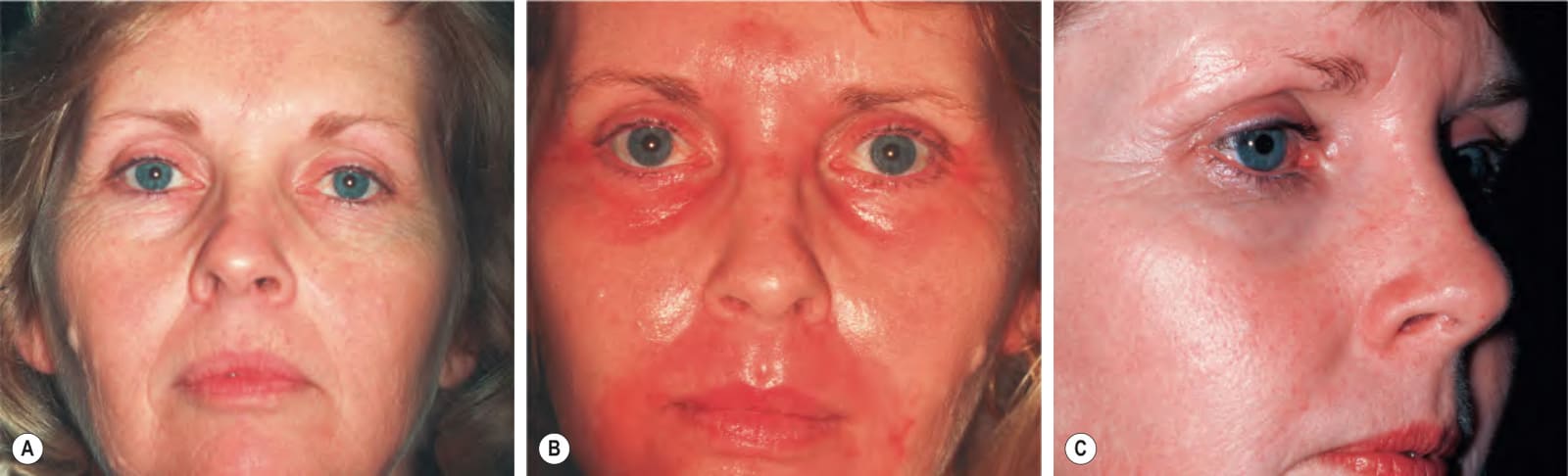
Fig. 154.8 Combination procedure utilizing perioral–periorbital CO laser resurfacing with Jessner’s–35% trichloroacetic acid (TCA) peel to the remainder of the face. The peel will blend the color and texture of the laser-treated areas. A Preoperative: the eyelids and lips need deeper resurfacing than do the cheeks, which require only medium-depth injury. B Four days postoperative: note difference in the rate of healing between laser- and peel-treated areas. C One year postoperative.
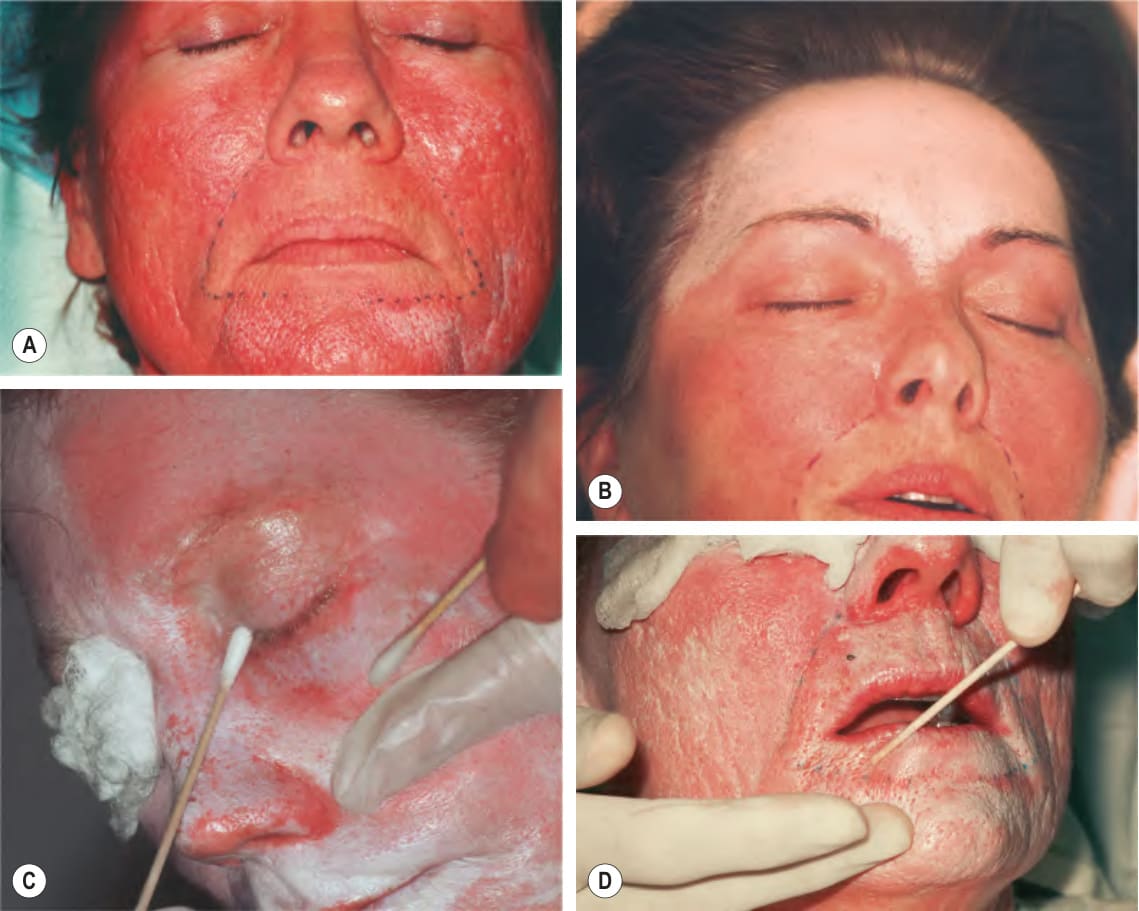
Fig. 154.9 Technical aspects of the Jessner’s–35% trichloroacetic acid (TCA) peel. A Appearance of level I frosting after application of Jessner’s solution – erythema with blotchy frosting. B 35% TCA applied, after Jessner’s solution dries, with an even application using cotton-tipped applicators (one to four). A level III or white enamel frosting is obtained. C Eyelids are treated with one cotton-tipped applicator moistened with 35% TCA. A dry applicator is used to absorb tears during eyelid peeling. D Lip rhytides are peeled with saturated cotton-tipped applicators. The wooden shaft is used to rub peel solution further into the lip rhytides.
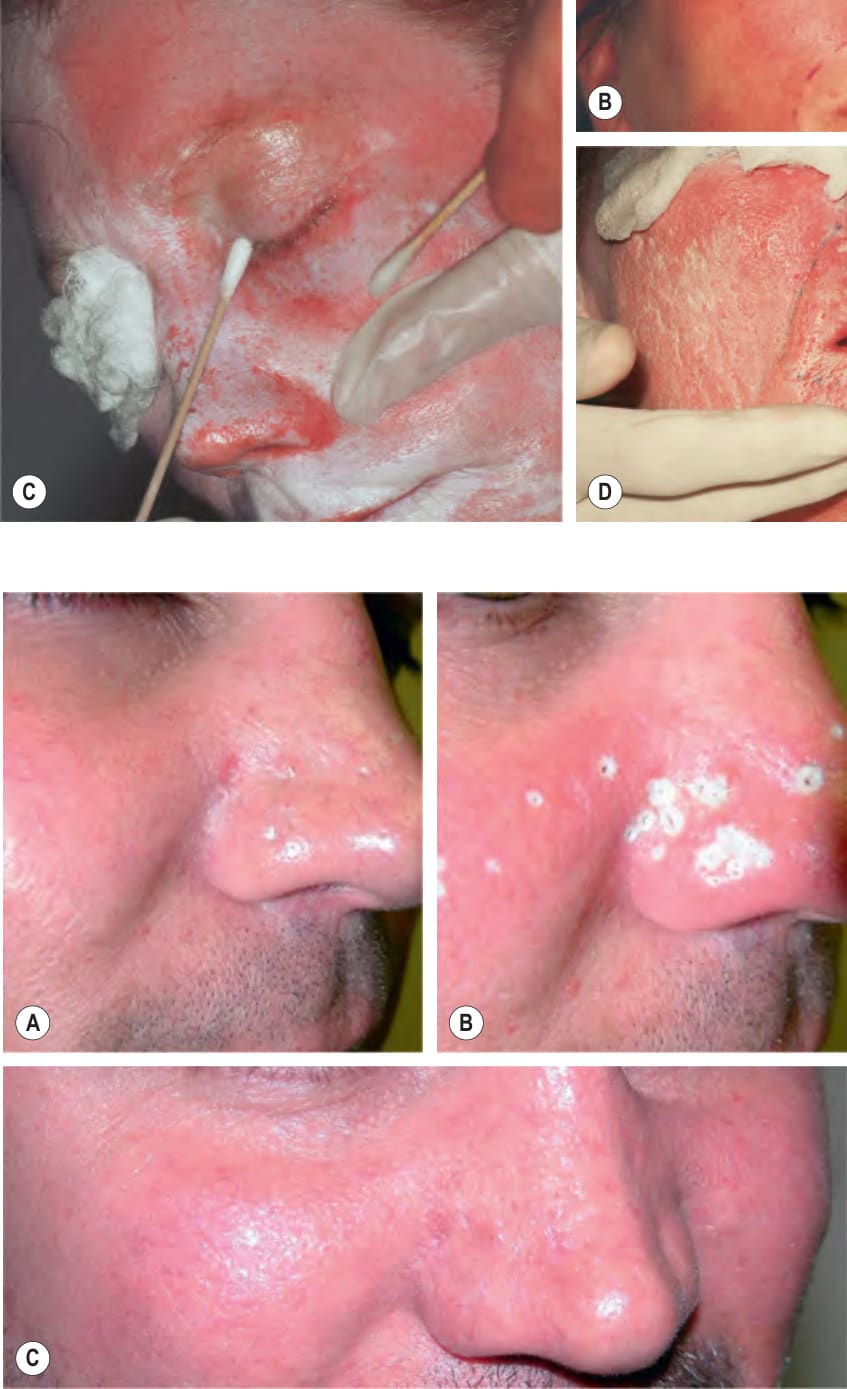
Fig. 154.10 “TCA CROSS” technique used as a destructive method for ice-pick scars. A Preoperative with ice-pick scars of the nose and cheek. B Frosting limited to just the ice-pick scars. C Postoperative.
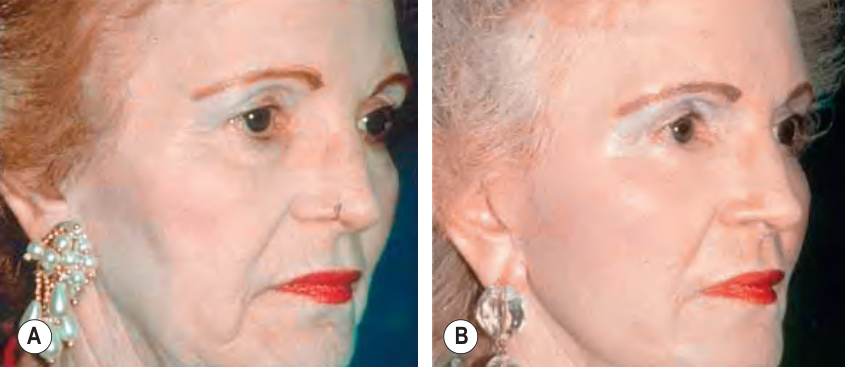
Fig. 154.11 Deep phenol–croton oil peel. A Before treatment. B 3 months after treatment with obvious reduction in rhytides.
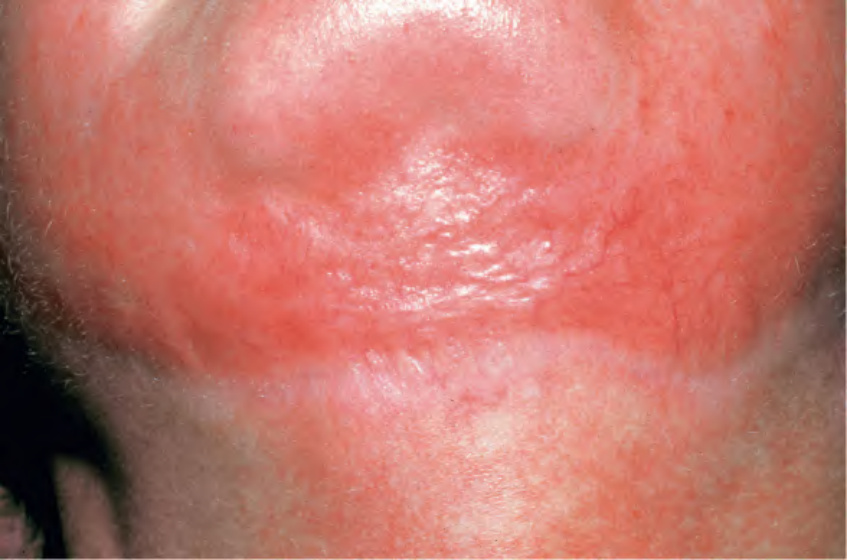
Fig. 154.12 Complications from a Baker–Gordon phenol peel. There was prolonged non-healing, resulting in hypopigmentation and marbled scarring.
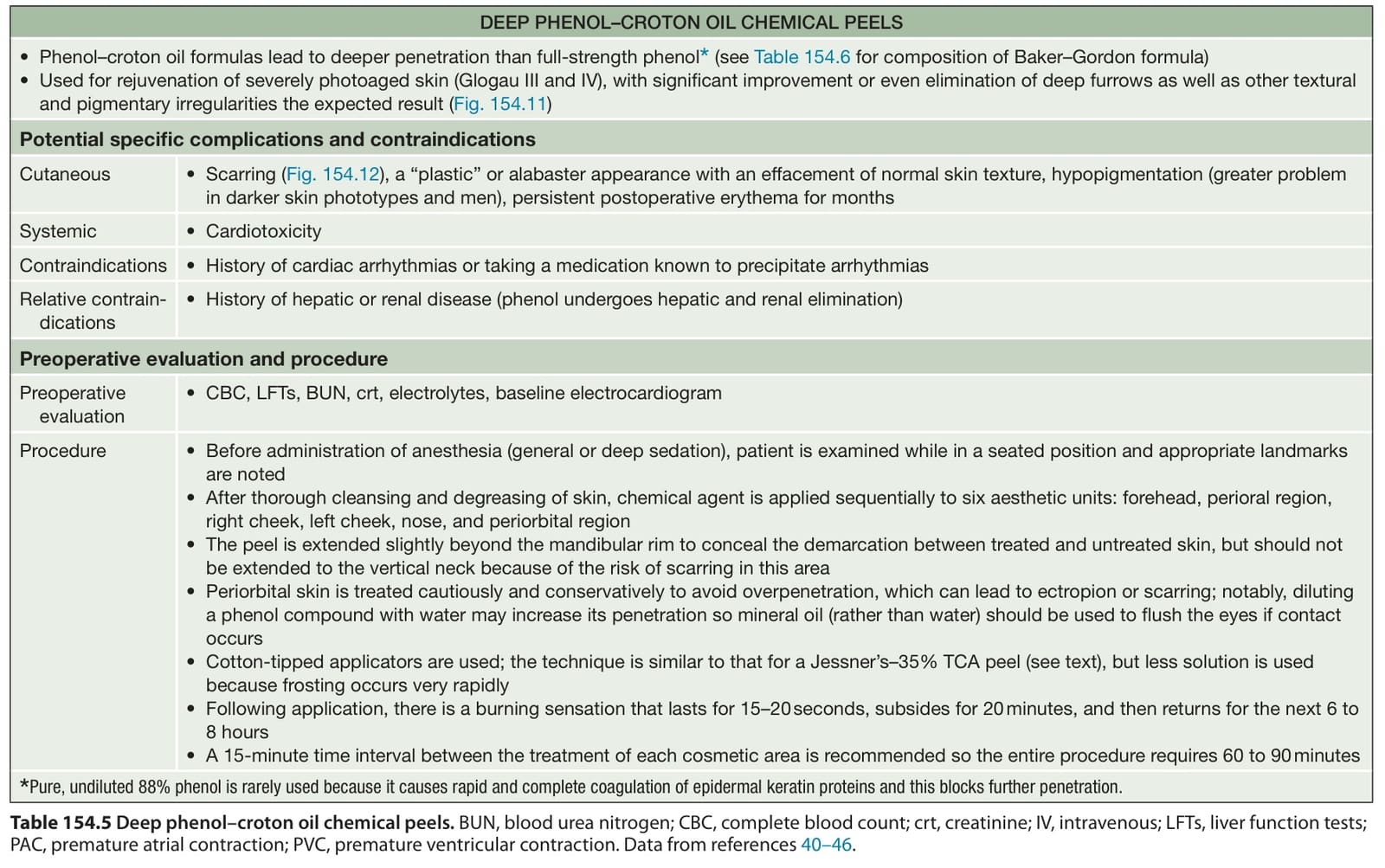
Table 154.5 Deep phenol–croton oil chemical peels. BUN, blood urea nitrogen; CBC, complete blood count; crt, creatinine; IV, intravenous; LFTs, liver function tests; PAC, premature atrial contraction; PVC, premature ventricular contraction. Data from references 40–46.
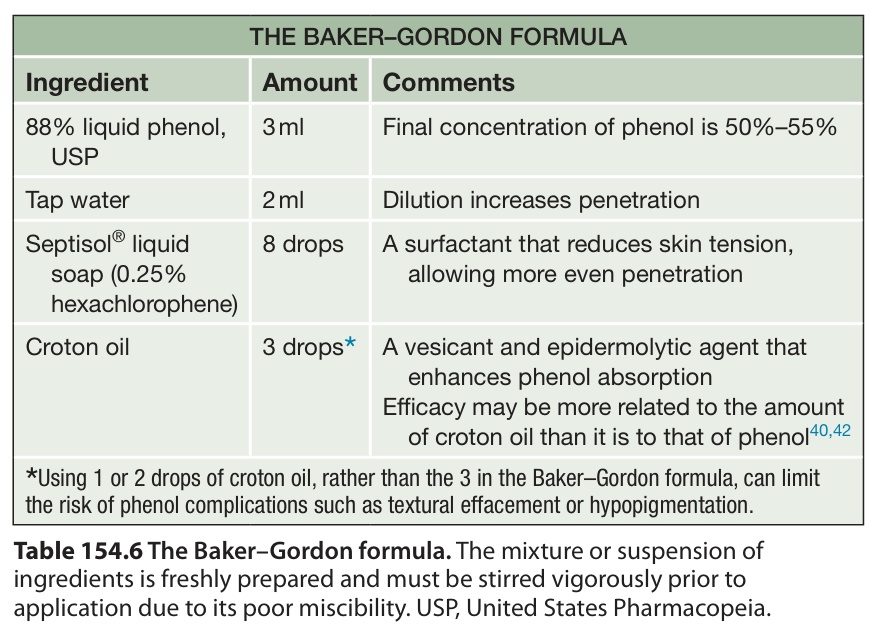
Table 154.6 The Baker–Gordon formula. The mixture or suspension of ingredients is freshly prepared and must be stirred vigorously prior to application due to its poor miscibility. USP, United States Pharmacopeia.
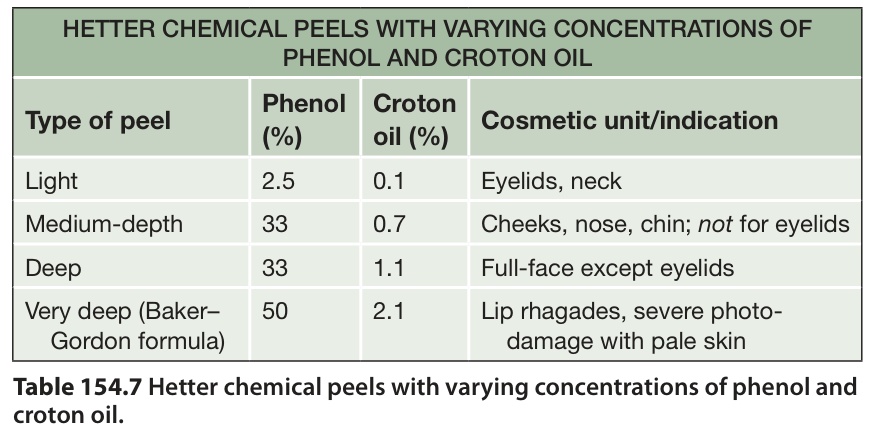
Table 154.7 Hetter chemical peels with varying concentrations of phenol and croton oil.