HISTORICAL PERSPECTIVE
Dating back to 1893, Neuber used blocks of autologous fat harvested from the arms for tissue augmentation of depressed facial defects. Eighteen years later, Brunings first described using the syringe technique to transfer free fat. Then, in 1953, Baronders published a review of permanent soft tissue augmentation with liquid silicone. Finally, in 1981, bovine collagen became the first US Food and Drug Administration (FDA)-approved xenogeneic agent for soft tissue augmentation, and it remained the standard filler for over 20 years (Table 158.3).
In 1981, Zyderm® I was the first bovine collagen filler, followed by Zyderm® II and Zyplast®. As a group, they have a long safety track record having been used in more than a million patients. All three were derived from a closed US cattle herd carefully monitored to prevent transmission of bovine spongiform encephalitis, a prionmediated disease. Cutaneous hypersensitivity reactions occurred in 3% of patients; therefore, pre-treatment skin testing became mandatory. The longevity of these bovine collagen fillers was ~2–3 months. Bovine collagen is historically important as it set the standard against which the next generation of soft tissue fillers was initially compared.
In an attempt to reduce the risk of hypersensitivity reactions, a series of dermal fillers were developed that did not require skin testing, some of which were longer lasting – CosmoDerm®/CosmoPlast® (bioengineered human collagen); Evolence® (porcine type I collagen, potentially lasting up to one year); and a family of injectables from preserved particulate cadaveric connective tissue (Dermalogen®, Cymetra®, and Fascian®). With the exception of Renuva®, an allograft adipose matrix, most are no longer commercially available due to high manufacturing costs and low demand.
In 2003, the FDA approved Restylane®, which ushered in a new era of agents made from hyaluronic acid (HA). Many of the HA formulations
US. This is due to discontinuation by the manufacturer or decreased demand because of popularity of other products.
proved to be superior in longevity compared to their collagen predecessors and had more feasible manufacturing. Globally, HA quickly became the most popular soft tissue filler. Currently available FDA-approved formulations of HA are outlined in Table 158.4. Historic HA formulations that are no longer available in the US are listed in Table 158.3.
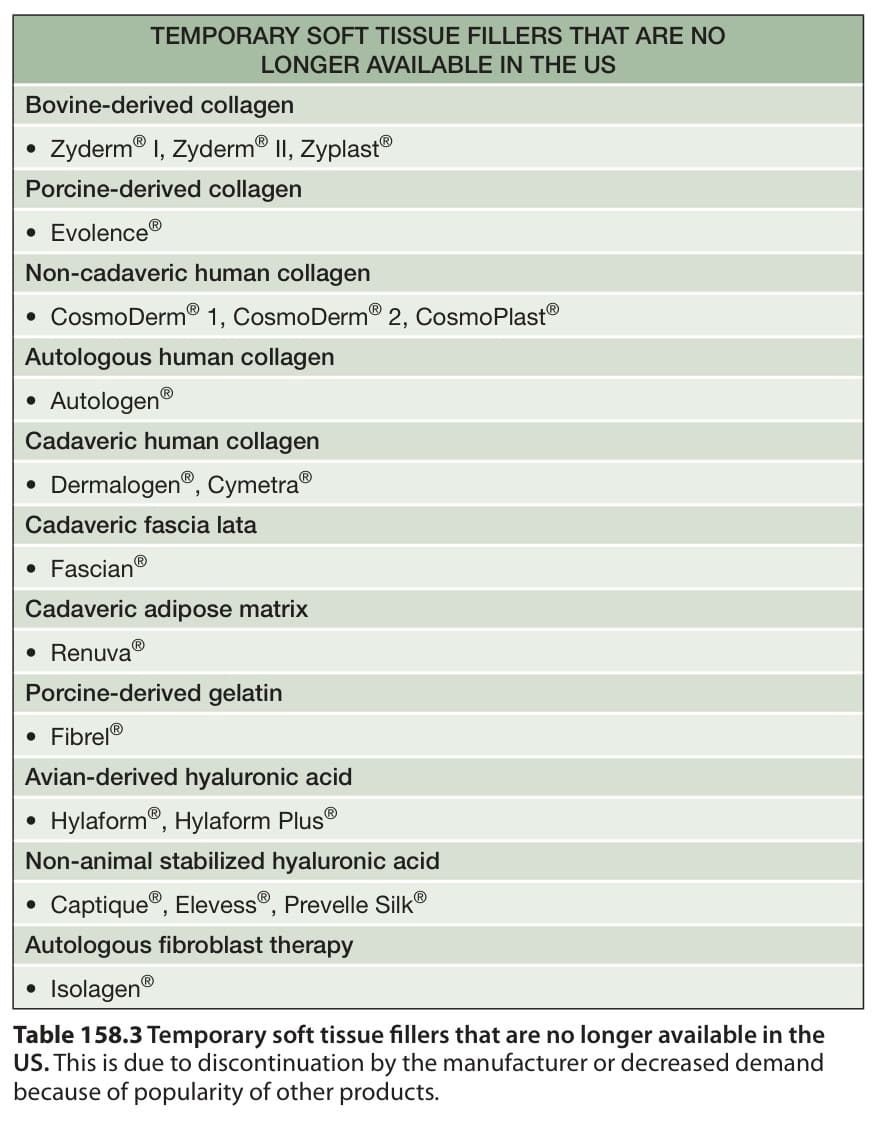
Table 158.3 Temporary soft tissue fillers that are no longer available in the
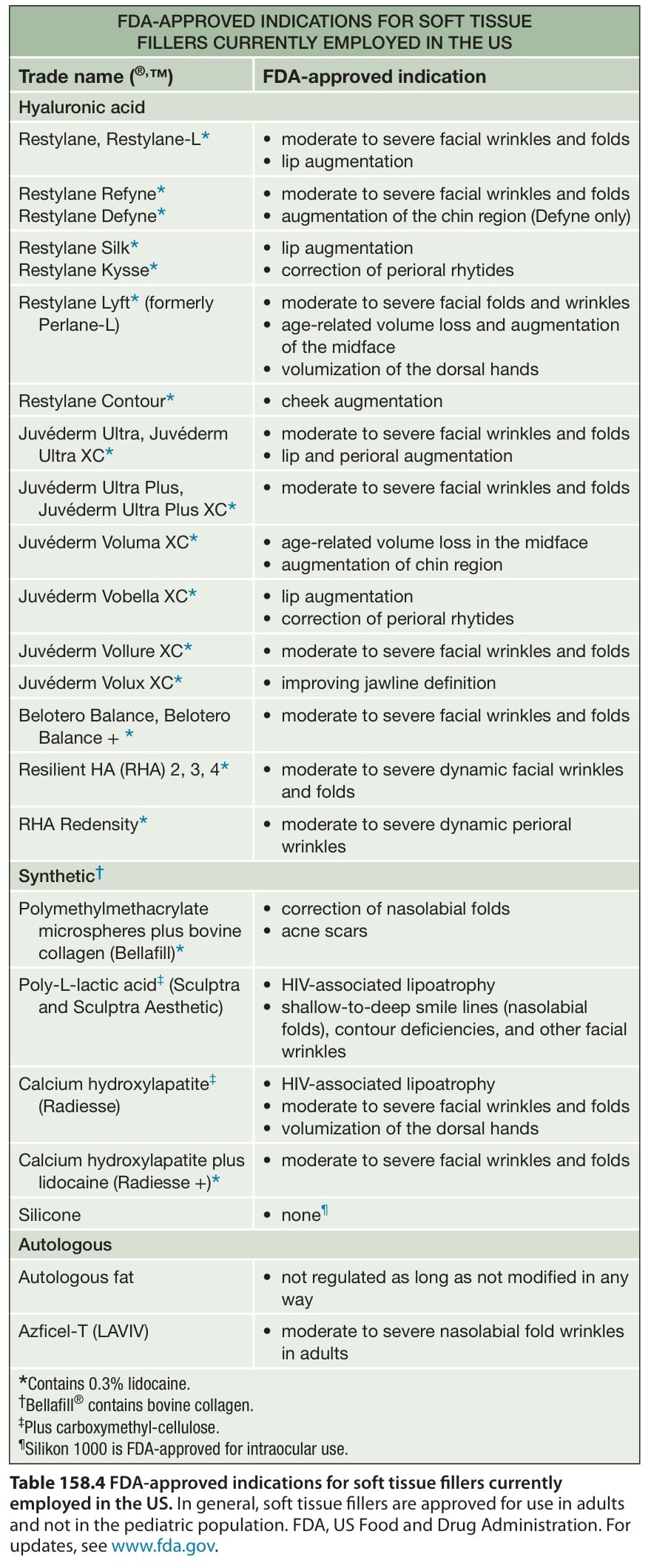
Table 158.4 FDA-approved indications for soft tissue fillers currently employed in the US. In general, soft tissue fillers are approved for use in adults and not in the pediatric population. FDA, US Food and Drug Administration. For updates, see www. fda. gov