PLATELET-RICH PLASMA
Platelet-rich plasma (PRP), an autologous solution with a high concentration of platelets and fibrin in a small volume of plasma, may be used to enhance one’s complexion and less often as an injectable filler. Given the high number of growth factors implicated in extracellular matrix remodeling that it contains, PRP has become an increasingly popular option for rejuvenation. While the quality of published studies has appeared to lag behind quantity, there is a growing number of small RCTs, albeit with different designs, that have reported benefit from intralesional PRP.
One split-face, randomized, rater-blinded study of 20 Asian patients found good to moderate improvement in lower eyelid wrinkles and skin tone after three injection sessions (compared to saline control). One month after a single PRP session, an 89% increase in collagen density was observed histologically compared to baseline and 93% more collagen induction compared to the saline control injections.
A Pre-treatment. B Five years post-treatment.
However, the latter also led to improvement, possibly due to a needling effect. In another study of a single session of PRP versus saline in which photographs were reviewed at six months, masked subjects, but not two expert dermatologists, saw significantly better fine and coarse skin texture. The authors argued that this discrepancy may stem from the failure of imaging to detect nuanced changes and patients’ intimate understanding of their own skin topography. A more recent three-session, saline-controlled trial found statistically significant improvement in wrinkles, texture, and pores using a VISIA® system; the latter may better detect subtle changes in the skin canvas than does global photography. An in vitro arm of this trial demonstrated that PRP mitigated ultraviolet B-induced matrix metalloproteinase-1 and tyrosinase upregulation and induced fibrillin and tropoelastin (precursor to elastin) expression. Perhaps this may explain the effects of PRP on skin photoaging and its enhancement of visible complexion metrics. Histologic improvement of solar elastosis following PRP injections has also been reported.
Taken together, these results support a potential role for PRP in improving skin texture, softening fine lines, and ameliorating degenerative soft tissue changes. While meaningful changes may be seen with a single treatment, more robust aesthetic outcomes seem to come from a series of sessions. However, the studies to date remain small, with a wide variation in protocols and outcome measures, many of which are subjective. There is a need for rigorous, larger scale RCTs to better standardize therapy. Lastly, the combination of PRP plus HA fillers and platelet-rich fibrin matrix (derived from a true clot but often misclassified in the literature) should be investigated for any synergistic biostimulatory activity.
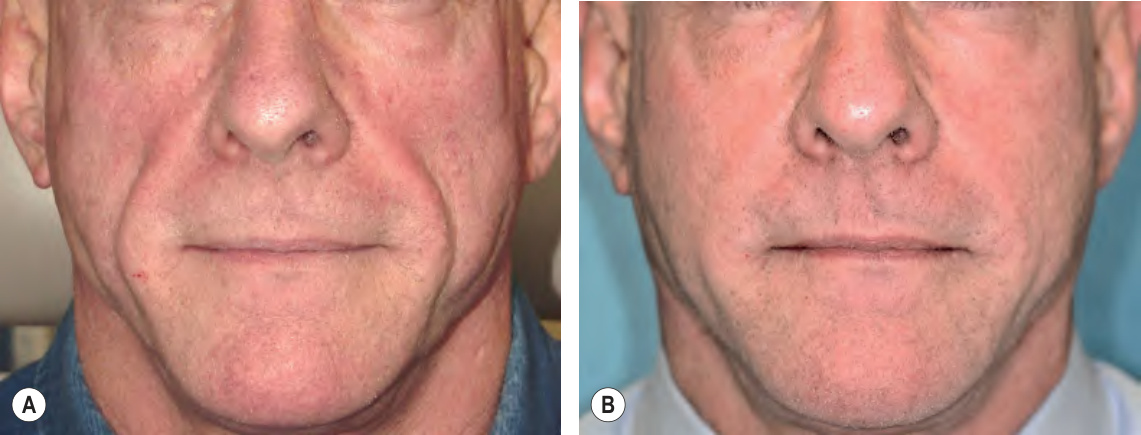
Fig. 158.10 Correction of HIV lipoatrophy with injectable silicone (Silikon® [1000 cs]).