COMPLICATIONS
BoNT-A occasionally affects non-targeted muscles or glandular tissue in the areas surrounding the injection, which can result in effects such as eyelid ptosis (Fig. 159.22), lower eyelid laxity, epiphora (excessive tearing), diplopia, brow ptosis, decreased strength of eye closure, dry eye, mouth incompetence, difficulties in speech, and the inability to whistle. Use of both careful injection technique to target the toxin to the appropriate muscles and concentrated low doses to limit its diffusion to non-targeted muscles or glands are recommended to prevent the occurrence of these adverse effects. In general, a higher concentration allows for more accurate placement, greater duration of effect and fewer side effects, since lower concentrations may encourage the spread of toxin. Of note, there is an area of denervation associated with each point of injection of about 1–1.5 cm (diameter, 2–3 cm) that is due to toxin spread.
A quizzical or “cockeyed” appearance can occur in the brow when the lateral fibers of the frontalis muscle have not been injected adequately and these untreated lateral fibers pull upward on the brow (Fig. 159.23). Brow ptosis may last upwards of 3 months, while upper eyelid ptosis can persist for 2–12 weeks. When upper eyelid ptosis occurs, options include: (1) thrice daily 0.5% apraclonidine eyedrops, an α-adrenergic agonist used for glaucoma, which leads to contraction of the Müller muscle and a 1–2 mm elevation of the upper eyelid; (2) oral pyridostigmine bromide (60 mg 3–4 times daily), an anticholinesterase drug used for myasthenia gravis that inhibits acetylcholine breakdown, whose side effects include hypersalivation, blurred vision, muscle cramps, vomiting, and diarrhea; and (3) precise injections of 0.5–1 U of BoNT-A into the subdermal plane just above the eyelash line at the extreme medial and lateral aspects of the upper eyelid, thereby reducing the strength of the orbicularis oculi muscle and allowing the Müller muscle and the levator muscle to become less opposed.
Bruising, diplopia, ectropion, a drooping lateral lower eyelid, and an asymmetric smile (caused by the spread of toxin to the zygomaticus major) are also reported complications of BoNT-A injections in the periorbital area. Transient local bruising, ptosis, dry eyes, diplopia, and facial droop can occur with injections into the cheek.
Complications of the lower face involve effects on muscle function and facial expression, usually due to use of BoNT-A in large doses. Injections placed too close to the mouth, injection into the mental fold, and interaction with the orbicularis oris muscle can all result in a flaccid cheek, incompetent mouth, or asymmetric smile. Large doses (>100 U) of onaA in the platysma have resulted in reports of dysphagia and weakness of the neck flexors.
Although one of the greatest concerns associated with the use of BoNT-A is the formation of neutralizing antibodies leading to non-response of subsequent injections, the overall risk is actually low (<1%) when BoNT-A is used at recommended doses for cosmetic applications. Of note, the protein content in current lots of BoNT-A is significantly lower than in previous batches and has been shown to be less antigenic than the original product. Although antibody formation has occurred with current lots of BoNT-A, it is usually associated with the use of large doses for therapeutic, rather than cosmetic, purposes. The lack of complexing proteins in incoA reduces the antigenicity but does not appear to eliminate it entirely. Injecting the lowest effective doses, with the longest feasible intervals between injections, minimizes the potential for immunogenicity.
Allergic reactions to BoNT-A are rare but have been described in the literature. Additional reactions include serious or non-serious cutaneous eruptions as well as granulomas. After large doses for therapeutic purposes, anaphylactic reactions and severe respiratory failure have occurred.
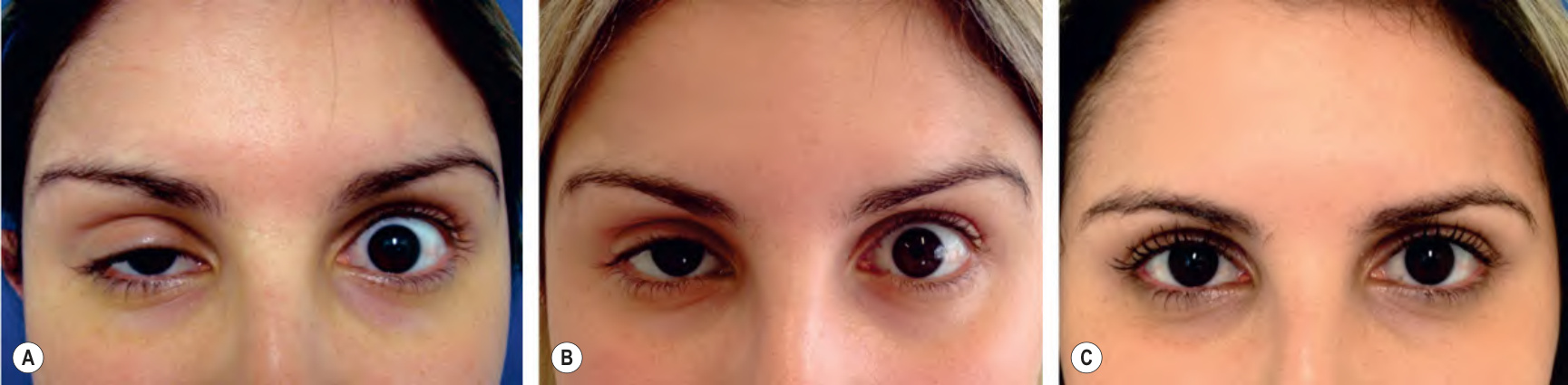
Fig. 159.22 Blepharoptosis. Diffusion of toxin into the levator of the upper eyelid resulted in eyelid ptosis (A) with partial recovery after 3 weeks (B) and complete recovery after 5 weeks (C). See text for therapeutic options.
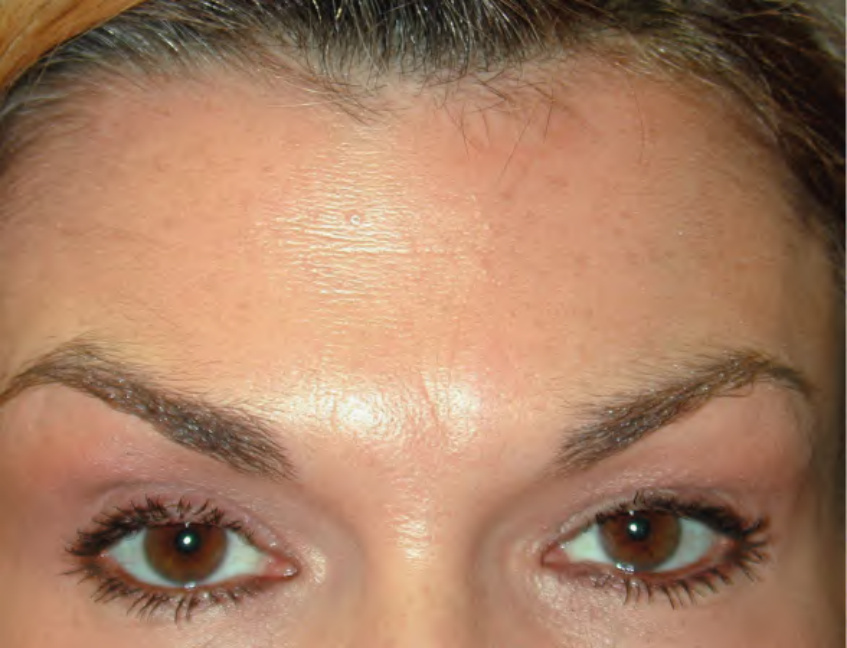
Fig. 159.23 Cockeyed eyebrow. Untreated lateral fibers of the frontalis muscle pull upward on the lateral brow. The result is a quizzical appearance.