PATHOGENESIS
ICD is due to direct contact of a chemical or physical agent with the skin, which triggers activation of the innate immune response without the need for prior sensitization. Although the cellular mechanisms of ICD remain elusive, increasing evidence suggests that activated keratinocytes act as signal transducers in the control of host homeostatic responses to exogenous stimuli and they serve as key immunoregulators. An irritant chemical’s ability to induce cutaneous damage may serve to trigger pattern recognition receptors (PRR), including Toll-like receptors, providing the necessary impetus to activate the innate immune system. While other mediators such as prostaglandins, leukotrienes, and neuropeptides may possibly play a role, cytokines carry the most interest in ICD as they are the central mediators in T-cell recruitment and inflammation.
Several pathomechanisms have been associated with ICD, including denaturation of epidermal keratins, disruption of the permeability barrier (see Ch. 124), damage to cell membranes, and direct cytotoxic effects, with different mechanisms at work with different irritants
(Table 15.2). The mechanisms involved in the acute and chronic phases of ICD are fundamentally different. Acute reactions involve direct cytotoxic damage to keratinocytes, while repeated exposures to solvents and surfactants cause slower damage to cell membranes by removing surface lipids and water-retaining substances.
The pathogenic pathway in the acute phase of ICD, common to many chemically unrelated irritants, begins with penetration of the irritant through the permeability barrier (stratum corneum), mild damage or stress to keratinocytes, and the release of mediators of inflammation with resultant T cell activation. In this manner, once activation is initiated via epidermal cells, continuous T cell activation independent of the exogenous agent may be maintained and barrier dysfunction perpetuated. Tumor necrosis factor (TNF) and interleukin (IL)-1α are the major mediators, and they are capable of inducing production of other cytokines, chemokines, and adhesion molecules, leading to leukocyte recruitment to the site. Specifically, TNF, IL-6, and IL-1β upregulate expression of intercellular adhesion molecule-1 (ICAM-1). This is a predominant feature of ICD. In addition, IL-1 receptor antagonist (IL-1RA) and IL-8 increase substantially after exposure to the common irritant sodium lauryl sulfate.
In the chronic phase of ICD, the stratum corneum barrier is disrupted. Damage to the stratum corneum lipids (which mediate barrier function) is associated with loss of cohesion of corneocytes, desquamation, and an increase in transepidermal water loss (TEWL). TEWL is one of the triggering stimuli that promote lipid synthesis, keratinocyte proliferation, and transient hyperkeratosis during the restoration of the cutaneous barrier. However, damage with a solvent can disrupt this protective mechanism by occlusion and blockage of water evaporation, thus halting lipid synthesis and barrier recovery. After chronic exposure, the result is increased epidermal turnover manifested clinically by the chronic eczematoid irritant reaction.
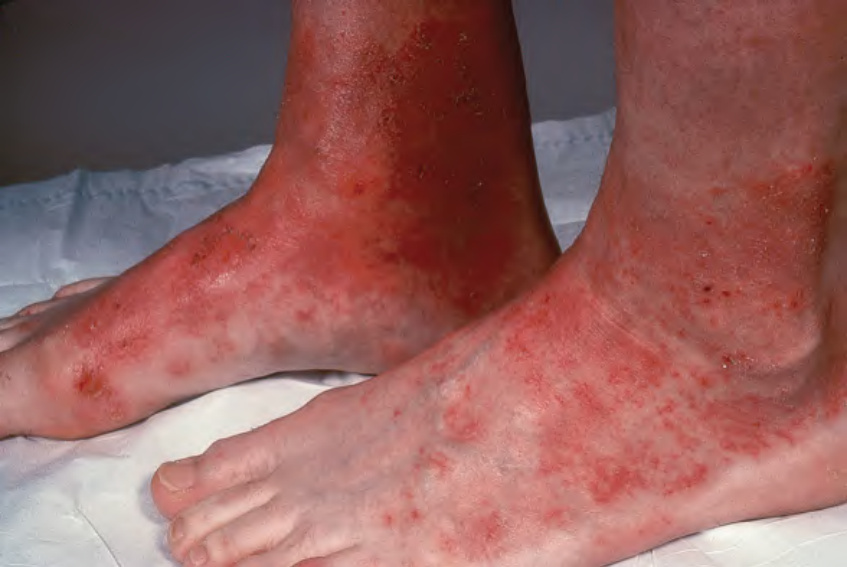
Fig. 15.1 Bilateral irritant contact dermatitis of the feet and ankles due to chronic occlusive footwear.
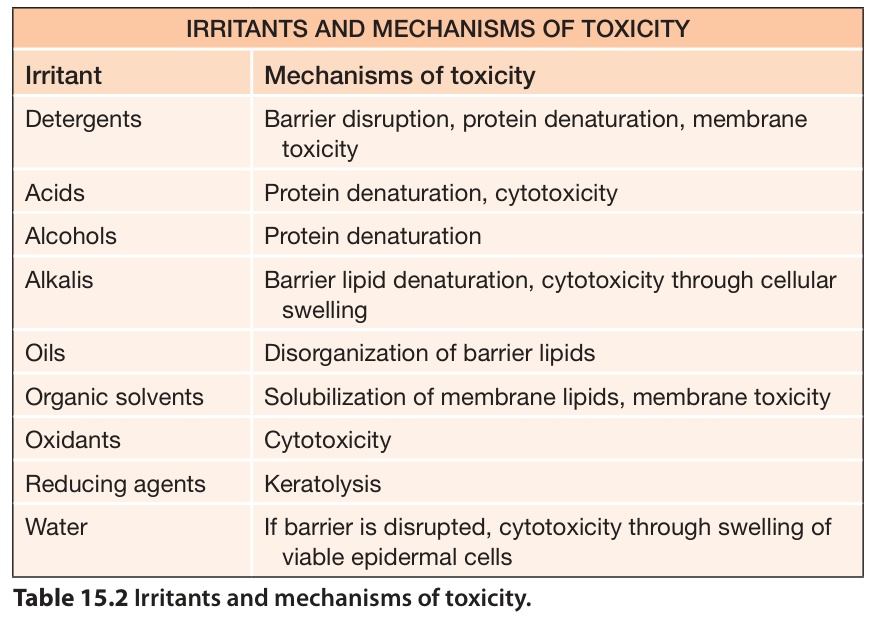
Table 15.2 Irritants and mechanisms of toxicity.