CLINICAL FEATURES
Several different types of ICD have been described (see below). Consequences of the myriad forms of ICD range from postinflammatory pigmentary changes to poorly healing ulcers (Table 15.3).
Acute Irritant Contact Dermatitis
Acute ICD, commonly seen with occupational accidents, develops when the skin is exposed to a potent irritant. The latter is capable of profound reactions on the skin surface: oxidation, reduction, desiccant, vesicant, or ion disruption. The acute reaction reaches its peak quickly, usually within minutes to hours after exposure, and then starts to heal. This is termed the decrescendo phenomenon. Symptoms of acute ICD include burning, stinging, and soreness of the directly affected sites. Physical signs include erythema, edema, bullae, and possibly necrosis. These lesions are restricted to the area where the irritant or toxicant damaged the tissue, with sharply demarcated borders and asymmetry pointing to an exogenous cause. If there is no dermal injury, healing should be complete.
The potent irritants that most frequently lead to ICD are acids and alkalis, resulting in chemical burns.
Acute Delayed Irritant Contact Dermatitis
Acute delayed ICD is a retarded inflammatory response characteristic of certain irritants, such as anthralin (dithranol), benzalkonium chloride (preservative/disinfectant), and ethylene oxide. Adverse reactions to these chemicals are considered idiosyncratic, except when they are applied to previously injured skin, e.g. sites of xerosis or atopic dermatitis. Clinically visible inflammation is not seen until 8 to 24 hours (or more) after exposure, and thus may mimic allergic contact dermatitis; however, the associated symptom is more frequently burning rather than pruritus. Sensitivity to touch and water is elicited. This form of ICD is commonly seen during diagnostic patch testing.
Irritant Reaction Irritant Contact Dermatitis
Irritant reaction ICD is a type of subclinical irritant dermatitis in individuals exposed to wet chemical environments, such as hairdressers, caterers, metal workers, or those with frequent exposures to soap and water. It is characterized by one or more of the following signs: scaling, redness, vesicles, pustules, and erosions, often beginning under occlusive jewelry (e.g. rings) and then spreading onto the fingers and then the hands and the forearms. It may simulate dyshidrotic dermatitis and ultimately result in cumulative ICD if exposure is prolonged; however, ICD tends to resolve if exposure is discontinued.
Cumulative Irritant Contact Dermatitis
Cumulative ICD is a consequence of multiple sub-threshold skin insults, without sufficient time between them for complete restoration of skin barrier function (see Fig. 16.4). It may be due to a variety of stimuli or frequent repetition of one factor, e.g. exposure to water both at the workplace and at home. Clinical symptoms develop only after the cumulative damage exceeds an individually determined manifestation or elicitation threshold, which may decrease with progression of the disease. Weak irritants do not lead to clinical ICD if they are encountered far enough apart to allow for restoration of skin barrier function. However, if the same irritant exposures follow each other closely in time, or when the manifestation threshold is reduced (e.g. in a patient with active atopic dermatitis), cumulative ICD can develop. The properties of the irritating substance, e.g. pH, solubility, detergent action, physical state, are also important. In contrast to acute ICD, the lesions of chronic ICD are less sharply demarcated. Pruritus and pain due to fissures of hyperkeratotic skin are symptoms of chronic ICD. Signs may include xerosis, erythema, and vesicles, but lichenification and hyperkeratosis predominate.
Asteatotic Dermatitis
Asteatotic dermatitis, also referred to as asteatotic eczema, eczema craquelé, or exsiccation eczematid ICD, is a special variant seen primarily during dry winter months. Elderly individuals who frequently bathe without remoisturizing are at particular risk of developing asteatotic dermatitis. Intense pruritus is common, with the skin appearing dry with ichthyosiform scale and characteristic patches of superficially cracked skin (see Ch. 13).
Traumatic Irritant Contact Dermatitis
Traumatic ICD may develop after acute skin trauma, such as from burns, lacerations, or acute ICD. Patients should be asked whether they have cleansed the skin with strong soaps or detergents. It is characterized by eczematous lesions, most commonly on the hands, that last for weeks to months with persistent redness, infiltration, scale, and fissuring in the affected areas.
Pustular and Acneiform Irritant Contact Dermatitis
Pustular and acneiform ICD results from exposure to certain irritants, such as metals, croton oil, mineral oils, tars, greases, cutting and metal working fluids, and naphthalenes (see Table 15.3 and Ch. 16). This syndrome should be considered in conditions in which folliculitis or acneiform lesions develop in settings outside of typical acne, particularly in patients with atopic dermatitis, seborrheic dermatitis, or prior acne vulgaris. The pustules are “sterile” and transient. Miliarial reactions, which may become pustular, can develop in response to occlusive clothing, adhesive tape, or ultraviolet and infrared radiation.
Non-erythematous Irritant Contact Dermatitis
Non-erythematous ICD may be defined as a subclinical form of ICD with early stages of skin irritation seen as changes in the stratum corneum barrier function without a clinical correlate.
Subjective or Sensory Irritant Contact Dermatitis
Subjective or sensory ICD is characterized by reports of a stinging or burning in the absence of visible cutaneous signs of irritation. Irritants capable of eliciting this reaction include propylene glycol, hydroxy acids, ethanol, and topical medications such as lactic acid, azelaic acid, benzoic acid, benzoyl peroxide, mequinol, and tretinoin. Sorbic acid, a preservative in concentrations of up to 0.2% in foods, cosmetics, and drugs, may also produce sensory irritation in predisposed individuals. This reaction to irritants such as lactic or sorbic acid may be reliably reproduced with dose responsiveness in double-blinded exposure tests.
Airborne Irritant Contact Dermatitis
Airborne ICD develops in irritant-exposed sensitive skin of the face and periorbital regions. While this often simulates photoallergic reactions, involvement of the upper eyelids, philtrum, and submental regions in patients with airborne ICD may aid in distinguishing between these two entities. Airborne ICD results from exposure to floating dusts, fibers (particularly fiberglass), fragrances, woods, and volatile solvents and sprays.
Frictional Irritant Contact Dermatitis
Frictional ICD is a distinct ICD subtype resulting from repeated low-grade frictional trauma. It is often acknowledged to also play an adjuvant role in allergic contact dermatitis and ICD. The frictional response includes hyperkeratosis, acanthosis, and lichenification, often progressing to hardening, thickening, and increased toughness. It often involves the fingers of the dominant hand. Frictional ICD has been associated with repetitive handling of paper, carbon, fabric and plastic bags; driving (due to repetitive gripping of the steering wheel and gear stick); and rubbing from clothing or sports equipment, as in golf and fishing.
Contact Urticaria
Contact urticaria is divided into non-immunologic and immunologic subtypes (see Ch. 16), with the former occurring more frequently and in the absence of previous exposure. Irritants that can produce immunologic contact urticaria include parabens (preservatives), henna, ammonium persulfate (oxidizing agent), and latex. Non-immunologic contact urticaria can be caused by a number of exposures, from caterpillars and jellyfish to stinging nettles and foods (see Table 15.3). Risk factors include atopy, hand dermatitis, previous mucosal exposure to latex (e.g. urinary catheterization), and allergies to fruits (e.g. kiwi, avocado; see Table 16.6).
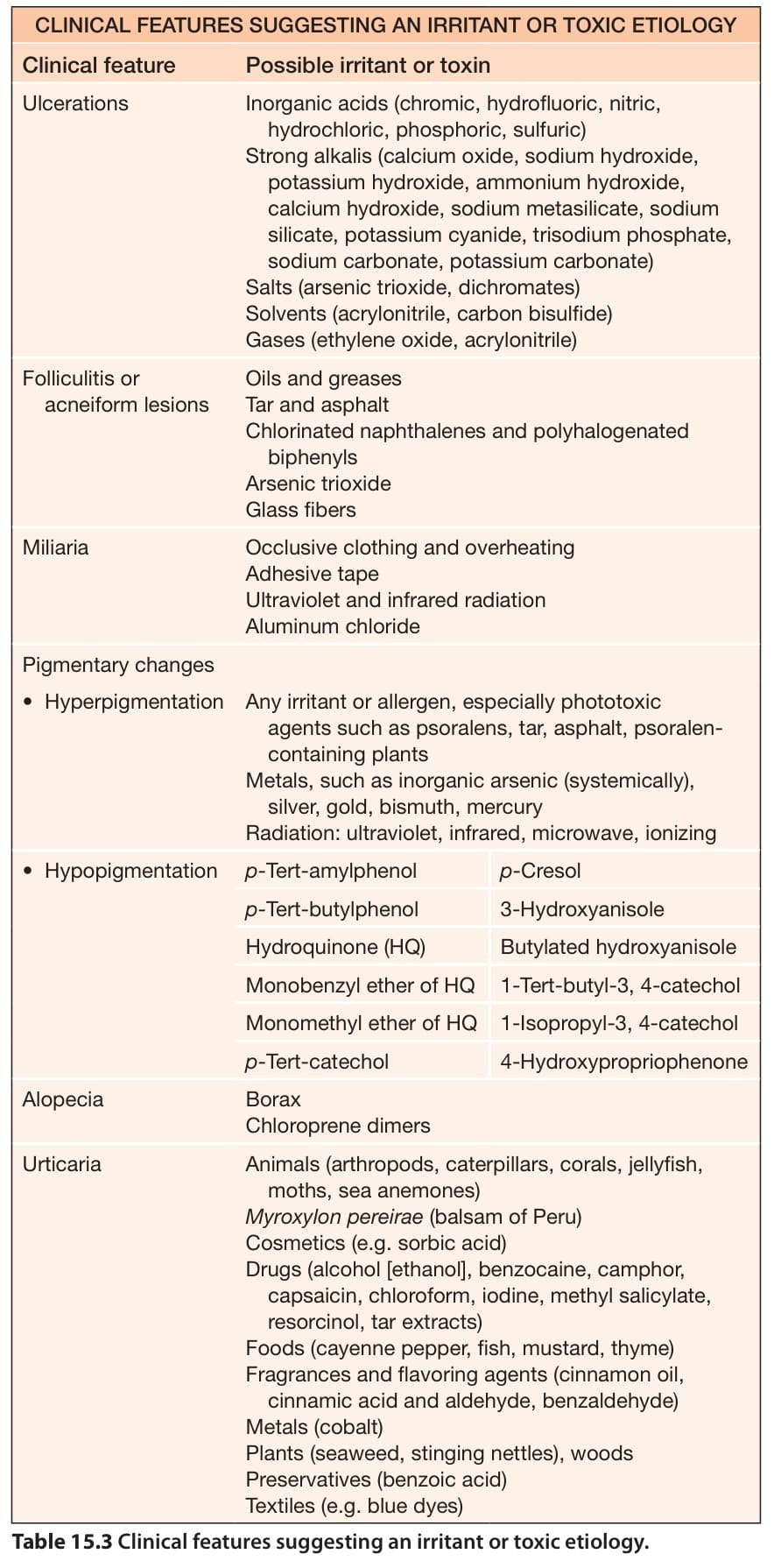
Table 15.3 Clinical features suggesting an irritant or toxic etiology.