PROGNOSIS
In many individuals, ICD resolves spontaneously even with continuous exposure, a process referred to as “accommodation” or “hardening”. The exact mechanisms are still unclear, but the following changes have been observed after repetitive cutaneous exposure to irritants:
●improvement of the physical barrier via formation of a thicker stratum corneum and a thicker stratum granulosum as well as increased production of ceramide 1
●increased skin permeability to irritants plus changes in vascular reactivity that allow faster removal of irritants
●immunologic alterations that favor an anti-inflammatory response to irritants, e.g. increased ratio of IL-1Ra (an anti-inflammatory cytokine) to IL-1α (a proinflammatory cytokine)
●a systemic hyporeactive state following repetitive exposure to low-dose irritants. The time required for “accommodating” to the aggravating stimulus varies among individuals, and for some individuals, ICD can be a chronic and devastating problem. Poor prognosis is related to a previous history of atopy, female sex, and the presence of allergic contact dermatitis (as well as ICD). Factors that can potentially improve prognosis are early diagnosis, treatment, and patient knowledge about the disease.
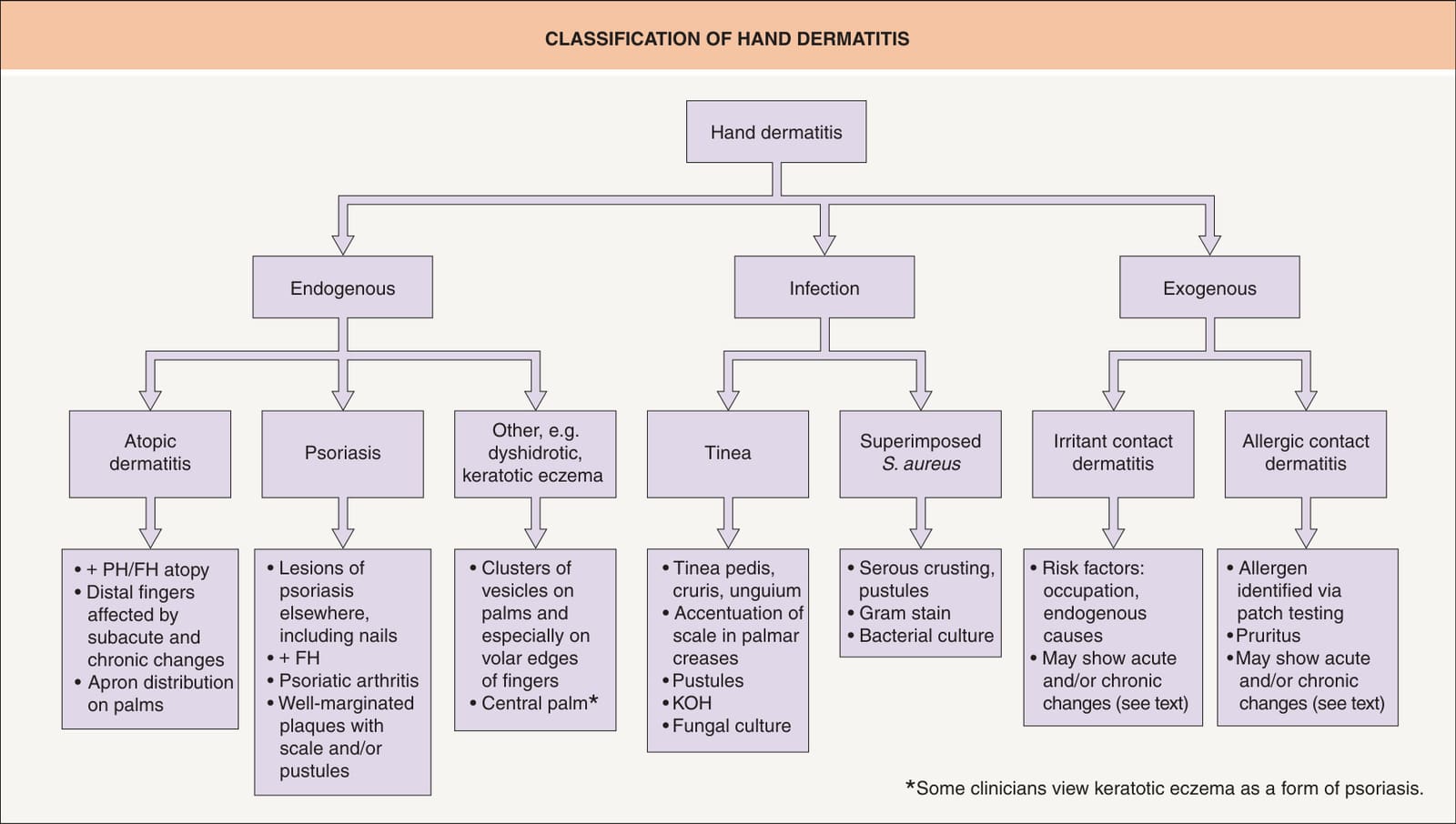
Fig. 15.7 Classification of hand dermatitis. More than one etiology may be present, e.g. atopic dermatitis plus irritant contact dermatitis. Keratolysis exfoliativa is usually not confused with hand dermatitis. Also see Figure 17.1. FH, family history; PH, personal history. (For further details, see Seidenari S, Giusti F, Pepe P, Mantovani L. Contact sensitization in 1094 children undergoing patch testing over a 7-year period. Pediatr Dermatol. 2005;22:1–5.)