INTRODUCTION
Contrary to the belief of patients, just because a product is “natural” and not “artificial”, it doesn’t mean it is safe. When patients discover that a “natural” skin care product is harming them, they are dumbfounded. The light only goes on in their minds when we point out that, “Poison ivy is natural, too.” All the reactions described in this chapter are natural.
Plant reactions can be classified into urticaria (immunologic and toxin-mediated; see Chs. 16 & 18), irritant dermatitis (mechanical and chemical), phototoxic dermatitis (phytophotodermatitis), and allergic contact dermatitis. Table 17.1 lists the most common plant reactions.
Botanical Aspects
Becoming familiar with basic botanical nomenclature used for the over 390 000 plant species will help clinicians to better understand the literature that addresses plant-related dermatoses.
Poison ivy – just as allergenic despite a name change
It is occasionally necessary to change a plant’s name. For example, the genus Rhus was once thought to be a cohesive, widespread genus that included poison ivy (previously known as Rhus radicans or Rhus toxicodendron). Research in the 1950s and 1960s revealed that poison ivy and its immediate relatives represented a distinct developmental lineage that should not be classified as Rhus but as a distinct genus, Toxicodendron, and thus the correct scientific name for common poison ivy is Toxicodendron radicans.
Binomial nomenclature
The nomenclatural scheme of botany and zoology gives every entity two names: a generic name followed by a specific epithet (e.g. Toxicodendron radicans). A reference to the person (authority) who first published the species name is often placed after the binomial name. The full binomial name of common poison ivy reads “Toxicodendron radicans (L.) O. Ktze”. “(L.)” refers to Carl Linnaeus, who first named the plant with the specific epithet radicans. “O. Ktze” refers to Otto Kuntze, who transferred the epithet radicans from the genus Rhus into the genus Toxicodendron.
The genus, species, and any infraspecific epithets are called the “minor categories of nomenclature”, and these names are used when citing a plant’s name (Table 17.2). Genera are grouped into families, and if you know the family to which a plant belongs, you will probably be able to determine what kind of dermatologic manifestations (if any) it can cause.
Plant identification
The following recommendations should be followed to identify an unknown plant that you or your patient thinks is causing an eruption.
●Collect specimens. Herbs (low-growing plants with fleshy stems) should be collected in their entirety with their flowering and/or fruiting materials intact. For shrubs (low-growing plants with woody stems), the end of a branch (up to 60 cm) should be collected, with the leaves attached, as well as any flowering or fruiting materials present. You may press plants before submitting them for identification, or you can put them into a plastic bag with no water added and submit them with data on: (1) where that plant was collected; and (2) its habitat (cultivated in a garden; growing wild along a creek bank, in an open field, in high-elevation woodlands, etc.).
●Involve a plant taxonomist. Every US state and most Canadian provinces have an established mechanism for routine and rapid plant identification, and in most locales the service is free. In suburban and rural areas, the county or regional agricultural extension service or farm advisors are knowledgeable about the procedures for immediate plant identification, and they have access to the regional herbaria. Urban areas have similar services, usually accessed through the urban horticulturist of the state extension service, or through the local garden center or botanical garden. In other countries, look for a nearby herbarium housing a collection of flora of the region. A botanist who works there would likely be willing to help identify an unknown plant.
Patch Testing
Details of patch testing are beyond the scope of this chapter (see Ch. 14). The reader is also referred to the paper by Mitchell. The most common allergenic plants and a proposed botanical screening tray are found in Table 17.3.
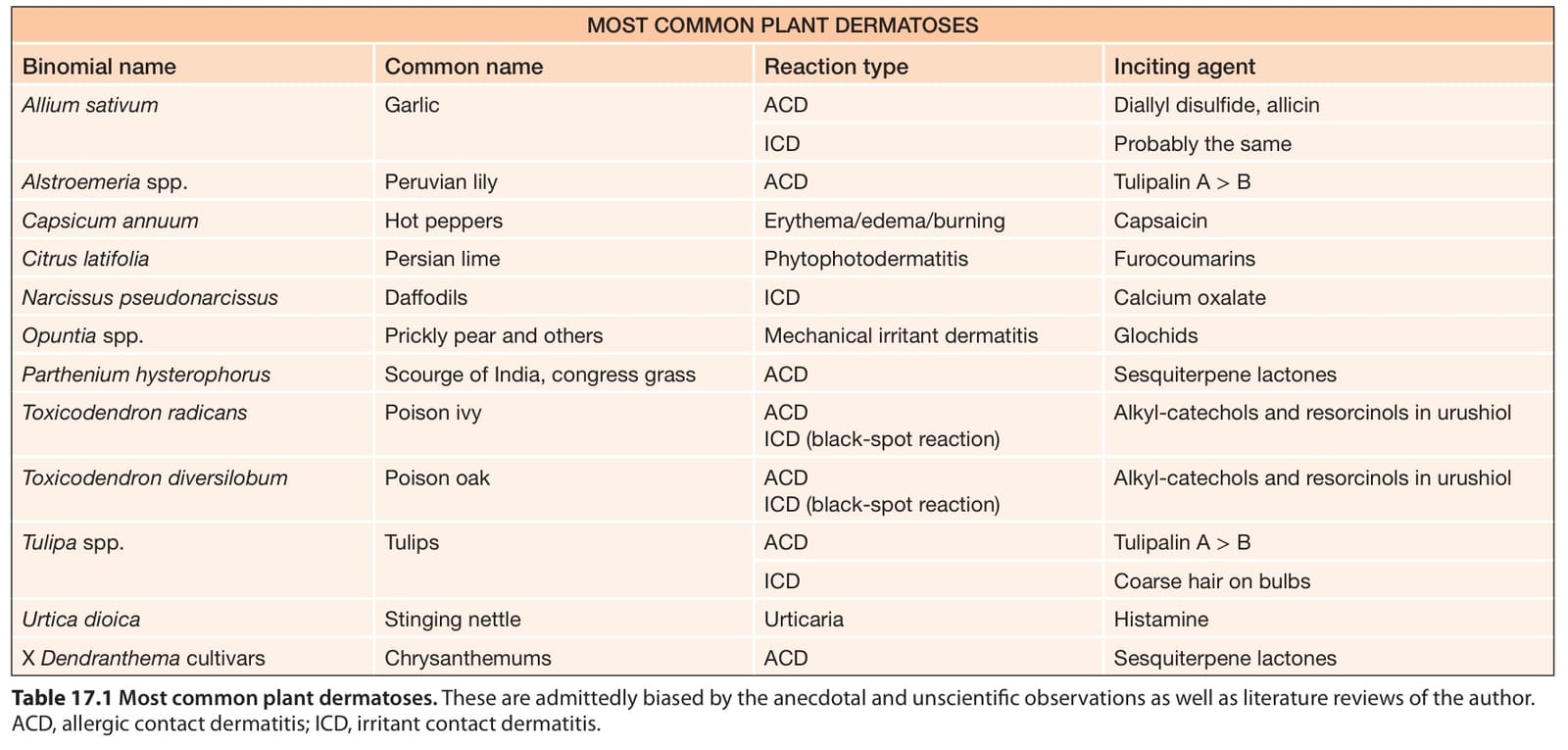
Table 17.1 Most common plant dermatoses. These are admittedly biased by the anecdotal and unscientific observations as well as literature reviews of the author. ACD, allergic contact dermatitis; ICD, irritant contact dermatitis.
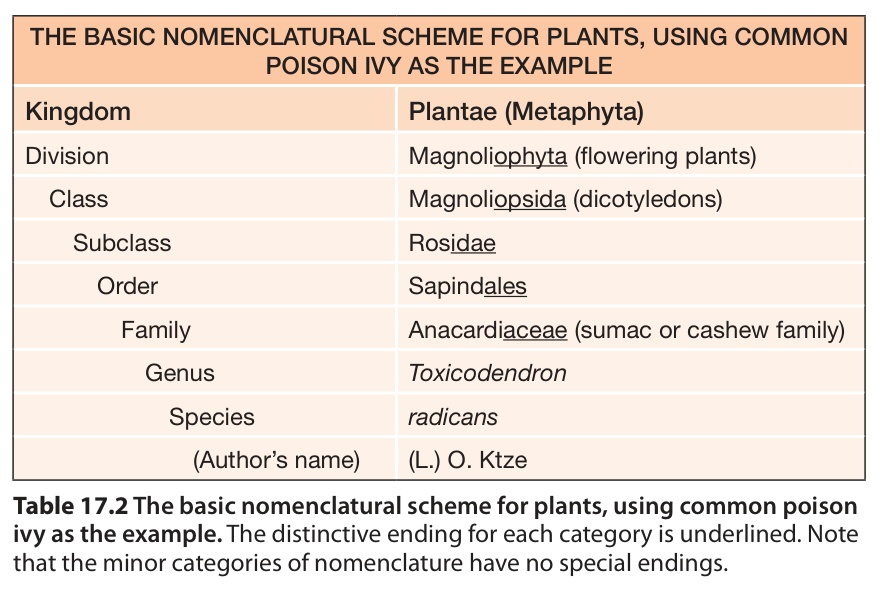
Table 17.2 The basic nomenclatural scheme for plants, using common poison ivy as the example. The distinctive ending for each category is underlined. Note that the minor categories of nomenclature have no special endings.
Table 17.3 Most common relevant botanical allergens and proposed botanical screening tray. This list may help to narrow down a potential botanical allergy in a patient who brings specimens into your office to examine. Note this screening tray does not include urushiol. See Appendix in Chapter 14 for commercial sources of patch tests.