TOXIN-MEDIATED (NON-IMMUNOLOGIC) CONTACT URTICARIA
Key features
Anyone can be affected
Stinging nettles (Urtica spp. ) are most common cause
Reaction can be subjective only
Sharp hairs on the plants can contain histamine, serotonin, and acetylcholine
History
Plants causing toxin-mediated urticaria have been used since antiquity as counterirritants in folk medicine, and Native Americans used
stinging nettles to treat rheumatism, stomach upset, postpartum hemorrhage, paralysis, fevers, colds, and tuberculosis. Stinging nettle is used to produce homemade diuretics, and stem fibers were even used to make cloth until the early twentieth century.
Epidemiology
Urticaceae family members cause the majority of plant-induced contact urticaria. Because everyone exposed to the toxins develops urticaria, toxin-mediated urticaria is far more common than immunologic urticaria. Since few affected people seek medical attention, the true incidence of toxin-mediated urticaria is unknown. The most common culprit in the US is the stinging nettle (Urtica dioica; Fig. 17.2A), which is widely scattered throughout the northern hemisphere (except in lowland tropical areas), especially in moist woods, roadsides, and on wasteland. Other common urticating plants are listed in Table 17.4.
Pathogenesis (see Ch. 18)
Inciting plants possess sharp hairs (trichomes) on leaves and stems (Fig. 17.2B,C). The proximal silicaceous hair is attached to a distal calcified portion that possesses a terminal bulb. When rubbed against, the bulb dislodges to reveal a beveled, hypodermic needle-like, hollow hair (Fig. 17.2D). The latter releases an irritant chemical cocktail (histamine, acetylcholine, serotonin) that supposedly serves as a defense mechanism against herbivores.
Clinical Features
Wheals achieve maximal size 3 to 5 minutes after contact, and erythema, burning, and pruritus last 1–2 hours. Paresthesias may last 12 hours or more. Although histamine, acetylcholine, and serotonin explain the early cutaneous reaction, they do not account for the persistent paresthesias.
Reactions to stinging nettle pale in comparison to those elicited by members of the Dendrocnide genus of the Urticaceae family. These trees grow up to 40 meters tall in eastern Australian rainforests. Young
shoots are covered with stiff stinging hairs. Severe urticaria from these may last for weeks, and contact with water or cold objects reactivates the urticaria. Severe, intermittent, stabbing pains may follow the course of lymphatics. Human and animal deaths due to Dendrocnide contact have been documented.
Pathology (see Ch. 18)
Five minutes after contact with Urtica dioica, dermal edema and telangiectasias with or without mild spongiosis are seen. At 12 hours, the edema resolves but vasodilation persists. Some patients develop spongiosis in conjunction with a neutrophilic and/or lymphocytic infiltrate. Mast cells are observed within the papillary dermis at 12 hours, but not at 5 minutes.
Differential Diagnosis (see Ch. 18)
Although the evaluation of such patients is difficult, office testing of suspected allergens or toxin-containing plants may involve one of several methods. The most sensitive tests for immunologic contact urticaria are the prick and scratch-chamber tests. For the scratch-chamber test, a 5-mm scratch is made on the back or forearm. Test material is applied and occluded with a Finn chamber for 15 minutes. The site is examined following Finn chamber removal and every 15 minutes for an hour. After reading, the chamber can be replaced for 48 hours to test for delayed hypersensitivity.
The open application test provides the most reliable way to test for toxin-mediated urticaria. Samples (0.1 ml) from a series of dilutions are each spread onto discrete 3 × 3 cm areas of skin. Sites are observed every 10–15 minutes for an hour. Maximal erythema and edema typically occur 30–40 minutes after application.
Treatment
Most stings are benign, self-limited, and require no treatment. Trichomes may be removed with glue and gauze as described in the next section. Topical pramoxine or oral analgesics may provide some symptomatic relief.
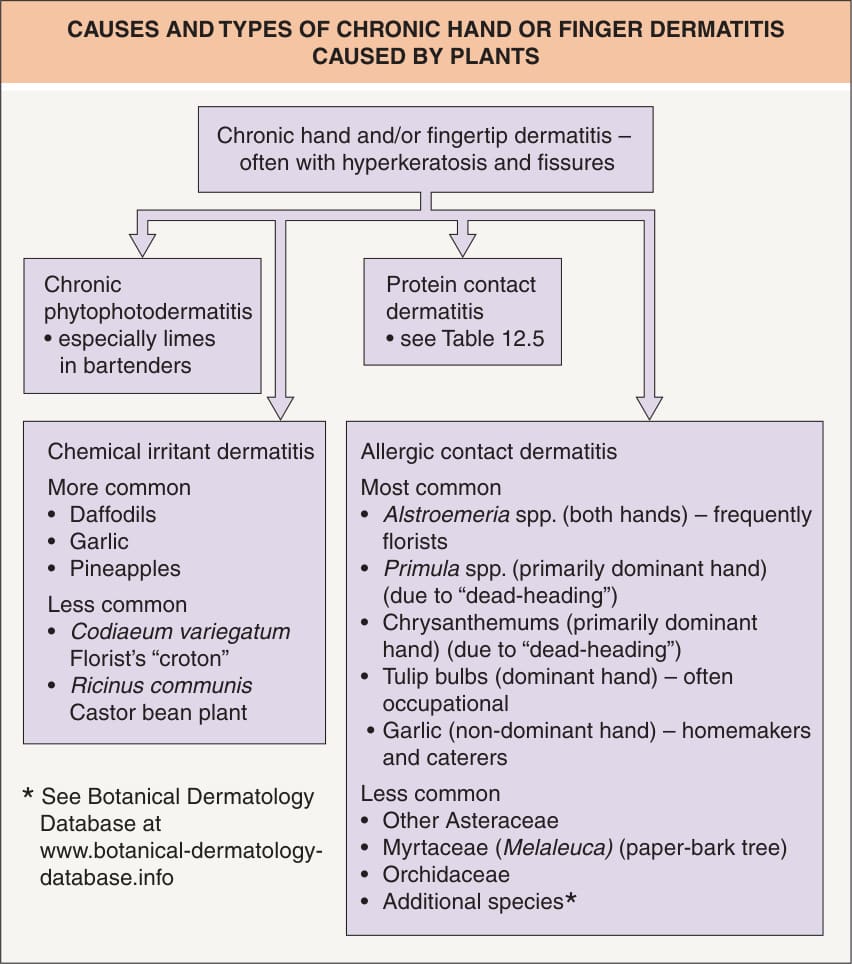
Fig. 17.1 Causes and types of chronic hand or finger dermatitis caused by plants.
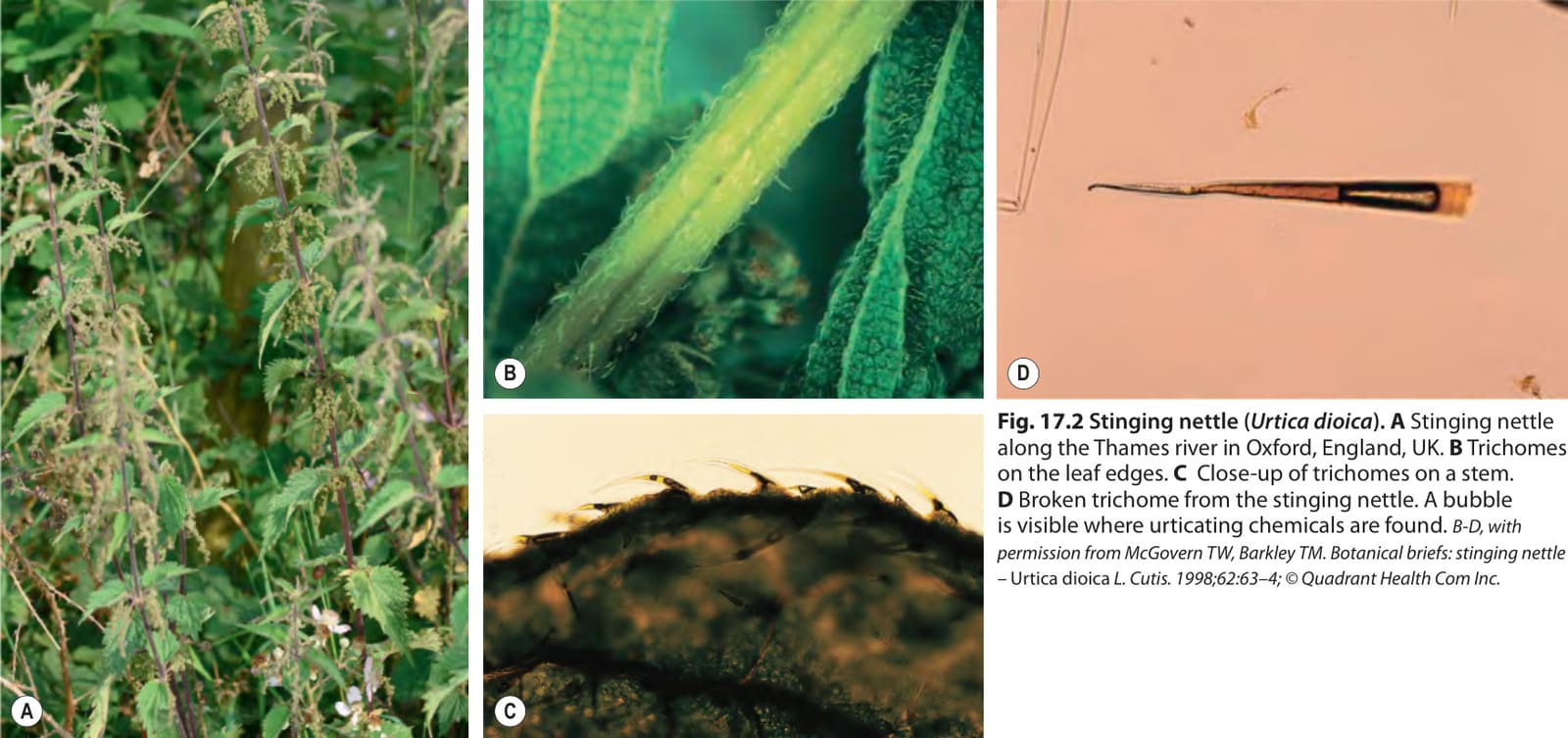
Fig. 17.2 Stinging nettle (Urtica dioica).A Stinging nettle along the Thames river in Oxford, England, UK. B Trichomes on the leaf edges. C Close-up of trichomes on a stem. D Broken trichome from the stinging nettle. A bubble is visible where urticating chemicals are found. B-D, with permission from McGovern TW, Barkley TM. Botanical briefs: stinging nettle – Urtica dioica L. Cutis. 1998;62:63–4; © Quadrant Health Com Inc.
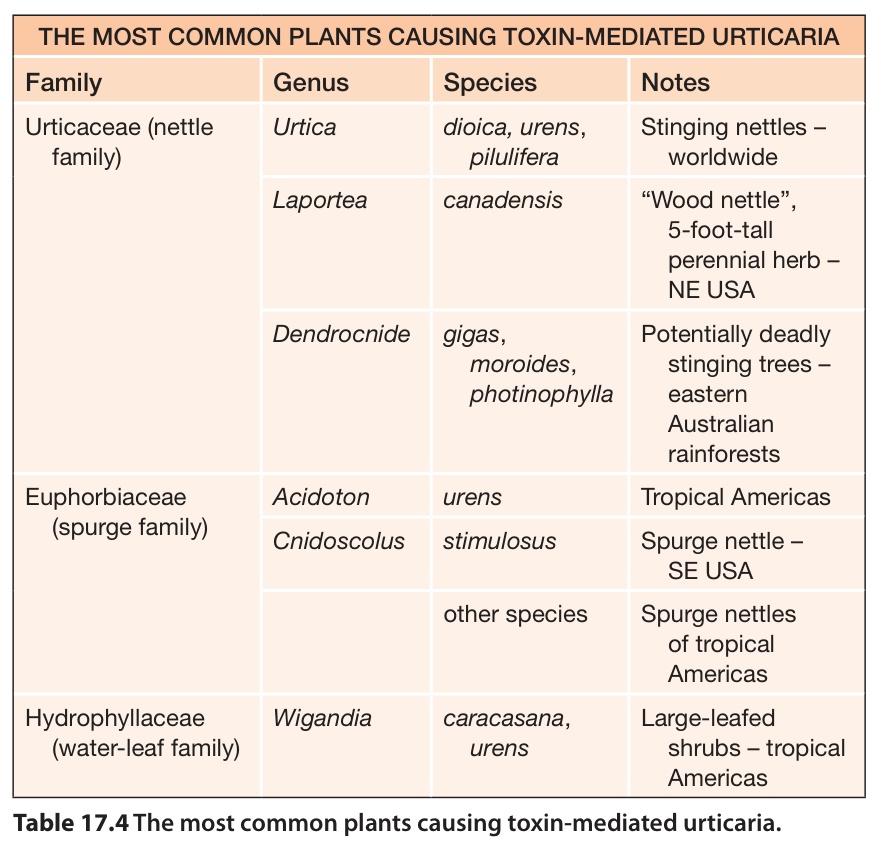
Table 17.4 The most common plants causing toxin-mediated urticaria.