MECHANICAL IRRITANT DERMATITIS
Key features
Large spines (modified leaves) and thorns (modified branches)
cause penetrating injuries and secondary infection
Small fishhook-shaped spines (glochids) can embed in the skin
Prickly pears are a cause of glochid dermatitis
Epidemiology
Mechanical irritant dermatitis can affect anyone. Many plants, including most cacti, can inflict mechanical injury via small or large emergences. Generally, the amount of damage to the skin is inversely proportional to the size of the emergence. Many of the plant families that can cause mechanical irritant dermatitis are listed in Table 17.5.
Although numerous plants possess irritant appendages, some of the well-known ones are listed here.
Pathogenesis
Whereas cacti possess large spines, their smaller glochids cause more notorious dermatologic problems. The glochids – tufts of hundreds of short, barbed or hooked hairs – arise from pincushion-like structures called “areoles”, from which larger spines may also arise. The minute, barbed glochids (Fig. 17.3A) often point outward and backward like a fishhook and produce considerable irritation and pruritus after penetrating the skin. For example, Opuntia microdasys (“polka dot cactus”, “bunny ears cactus”), a house and garden favorite, bears disarming-appearing “fluffy” clusters of 100–200 glochids on its pads (see Fig. 17.12).
Clinical Features
Prickly pear glochids from Opuntia spp. cause “Sabra dermatitis”, a pruritic, papular eruption occurring among prickly-pear pickers and those who unwarily stumble into burglar-proof hedges of this native Mexican plant (Fig. 17.3B). The fruit contains the highest concentration of glochids (Fig. 17.3C), and the ensuing eruption can resemble fiberglass dermatitis or scabies. Prickly pears should be picked only when wetted, and harvesting should cease when it is windy, since the glochids can become airborne.
All 200 or so species of Opuntia are native to the New World, ranging from New England and British Columbia southward to the Straits of Magellan. Numerous species have become established in the Mediterranean basin, South Africa, South Asia, and Australia.
Spine and thorn injuries can be complicated by cutaneous inoculation of microorganisms such as Clostridium tetani and Staphylococcus aureus. Grasses, sphagnum moss, and rose thorns can transmit Sporothrix schenckii. Atypical mycobacteria such as Mycobacterium kansasii (blackberries), M. marinum (cactus spines), and M. ulcerans (spiky tropical vegetation) have also added infectious insult to mechanical injury.
Treatment
In a controlled study in rabbits, Opuntia glochids were most effectively removed by first detaching the larger clumps with tweezers and then applying glue and gauze to the affected area. After the glue dried, the gauze was grasped and peeled off, resulting in the removal of 95% of implanted glochids.
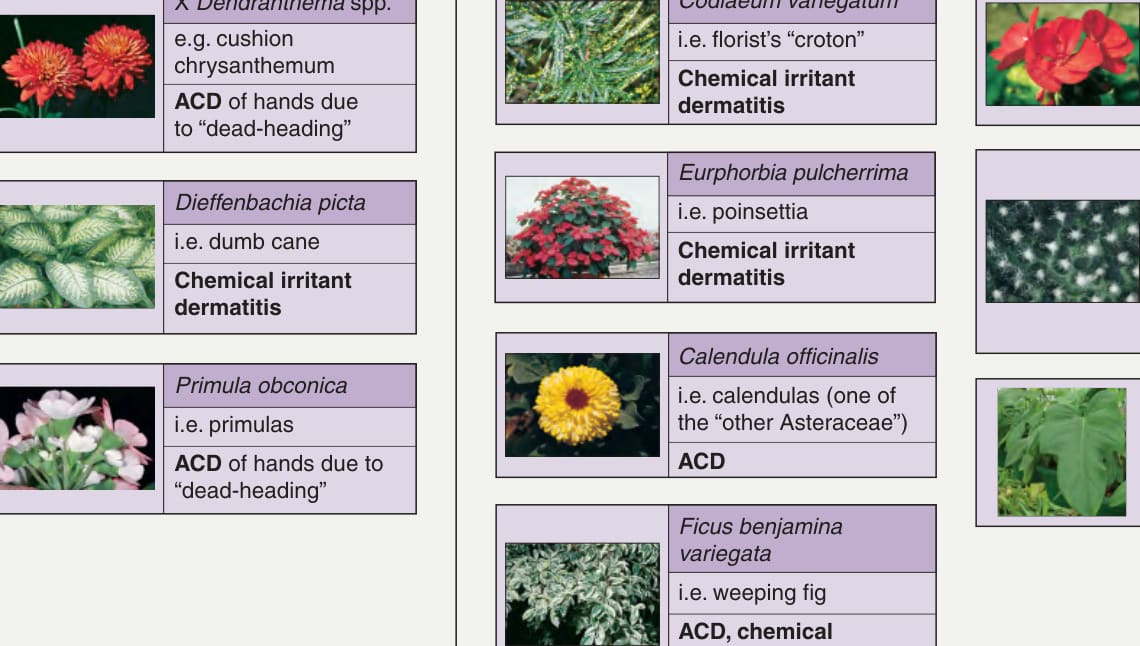
Fig. 17.12 House and garden plants that commonly cause dermatoses. ACD, allergic contact dermatitis. Photograph of poinsettia courtesy Denver Botanical Gardens.
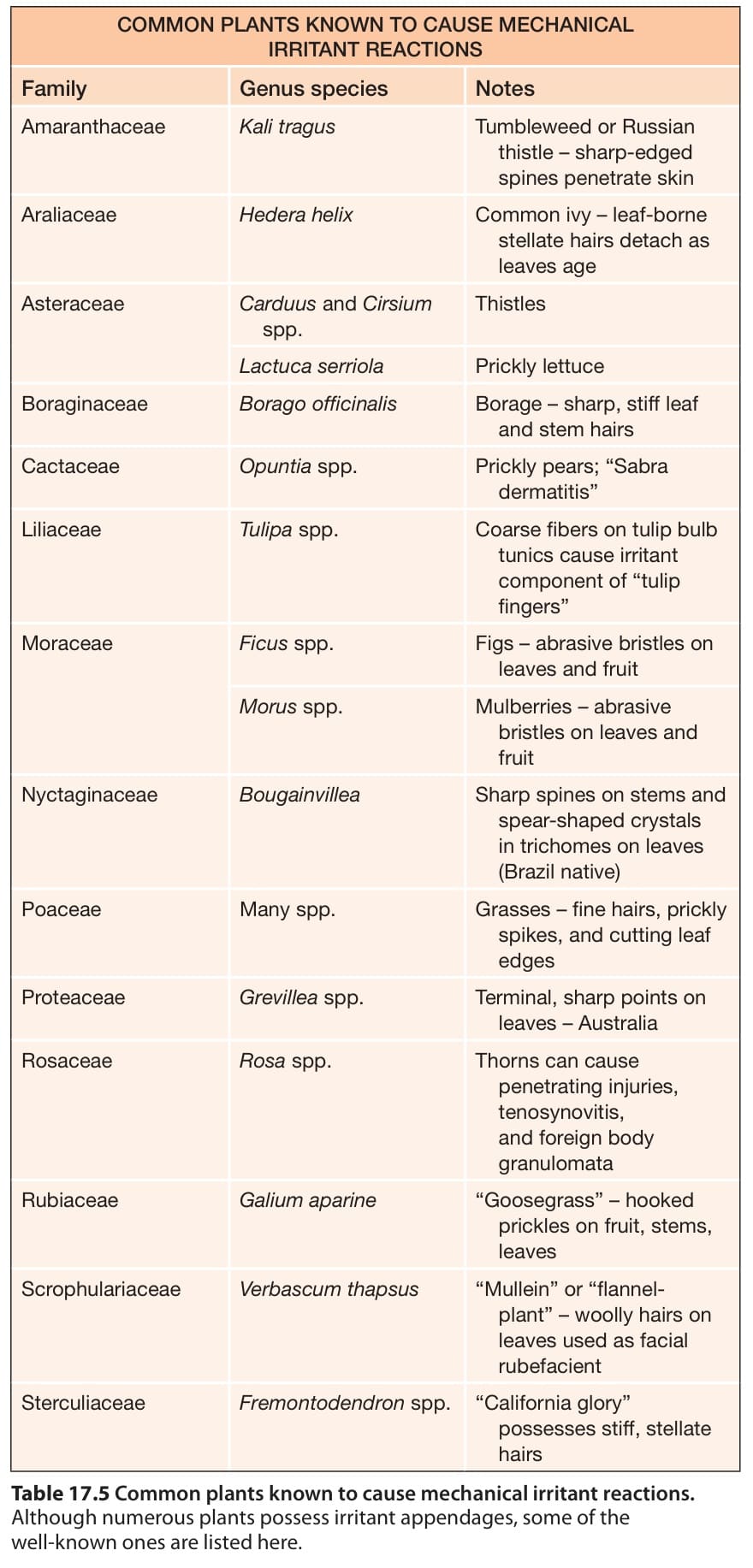
Table 17.5 Common plants known to cause mechanical irritant reactions.