CHEMICAL IRRITANT DERMATITIS
Key features
Calcium oxalate in daffodils is a major cause of plant-related irritant dermatitis in florists and horticulturalists
Spurges (including poinsettias) contain irritant phorbol esters in latex
Capsaicin in hot peppers affects cutaneous nerves, but not the skin
History
Plant-derived irritant chemicals have been recognized for centuries. Native Mexican Indians once used smoke from burning peppers (Capsicum [Solanaceae]) as a weapon against enemies, and latex from the manchineel tree (Hippomane mancinella [Euphorbiaceae]) was used by Caribbean people as poison for arrow tips.
Epidemiology
Several major plant families found throughout the world contain chemical irritants (Table 17.6).
Pathogenesis, Clinical Features, and Treatment (see Ch. 15)
Calcium oxalate, one of the most common chemical irritants, is found in Dieffenbachia picta (Araceae), a plant that decorates millions of homes and public places. Upon contact with a moist surface, the leaves release water-insoluble calcium oxalate. When leaves are chewed, salivation, burning, mucosal edema, and blistering follow. This causes hoarseness or aphonia, hence the common name “dumb cane”. Treatment includes parenteral corticosteroids, antacid mouthwashes, and analgesics; antihistamines are of no benefit. The pain and edema wane over 4–12 days.
Calcium oxalate enhances the irritancy of other chemicals, including the proteolytic enzyme bromelain (bromelin) found in pineapples. Pineapple workers often develop cracks, fissures, fingerprint loss, and microhemorrhages on their hands. Calcium oxalate-induced microabrasions allow bromelain to exert its proteolytic effect on dermal blood vessels. Nitrile gloves can be worn for protection.
Bulb dermatitis, though less dramatic, is more common. Daffodil sap, found not only in bulbs but also in stems and leaves, contains calcium oxalate and causes “daffodil itch”, probably the most common dermatitis in florists. Dryness, scaling, fissures, and erythema develop on the fingertips, hands, and forearms. Bulbs of several other plants (e.g. tulips, hyacinths) also commonly cause dermatitis. Allergens found in garlic bulbs act as irritants at high concentrations leading to second- and third-degree burns as well as subungual hyperkeratosis and hemorrhage that can mimic nail psoriasis.
While spurges (Euphorbiaceae) are notorious for their irritant latex, they derive their common name from the purgative properties of their seeds. The milky latex contains irritant phorbol esters, diterpenes, and daphnane esters that may cause a painful, blistering dermatitis and even temporary blindness if the latex contacts the eye. Sitting under a manchineel tree in the Caribbean during a rainstorm will lead to intense cutaneous burning, erythema, and bullae, often accompanied by periocular swelling through transfer of the latex by rain. Manchineel fruit is known locally as the “apple of death”. The latex of the best-known family member, the poinsettia (Euphorbia pulcherrima), is only mildly irritating.
Buttercups (Ranunculaceae) contain the glycoside ranunculin that is converted to protoanemonin after plant injury. Protoanemonin causes severe, linear vesiculation that may resemble early phytophotodermatitis, but no hyperpigmentation ensues. Because protoanemonin rapidly polymerizes to the non-irritant anemonin, only freshly damaged plants cause reactions.
“Chili burns” commonly occur among those who remove skins from large batches of roasted chili peppers (Capsicum annuum). When applied to skin, the active principle, capsaicin, depolarizes nerves causing vasodilation, smooth muscle stimulation, glandular secretion, and sensory nerve activation. Because only nerves are affected, there is erythema but no vesicles or bullae. Symptoms may be delayed and last hours to days. The best home remedy for chili burns is handwashing with soap and water followed immediately by 1 hour of immersion in vegetable oil to remove the fat-soluble capsaicin.
The “century plant” (Agave americana) grows in temperate, subtropical, and tropical climates and forms rosettes of tough, swordshaped leaves with spiny margins. The marked pruritus and stinging that follows within five minutes of contact with the agave leaf is thought to be caused by latex-derived calcium oxalate crystals and saponins. Purpura may appear subsequently. Soldiers have been known to try to “earn” sick leave by rubbing broken leaves on their skin to induce a severe vesiculopustular irritant dermatitis, often accompanied by systemic symptoms.
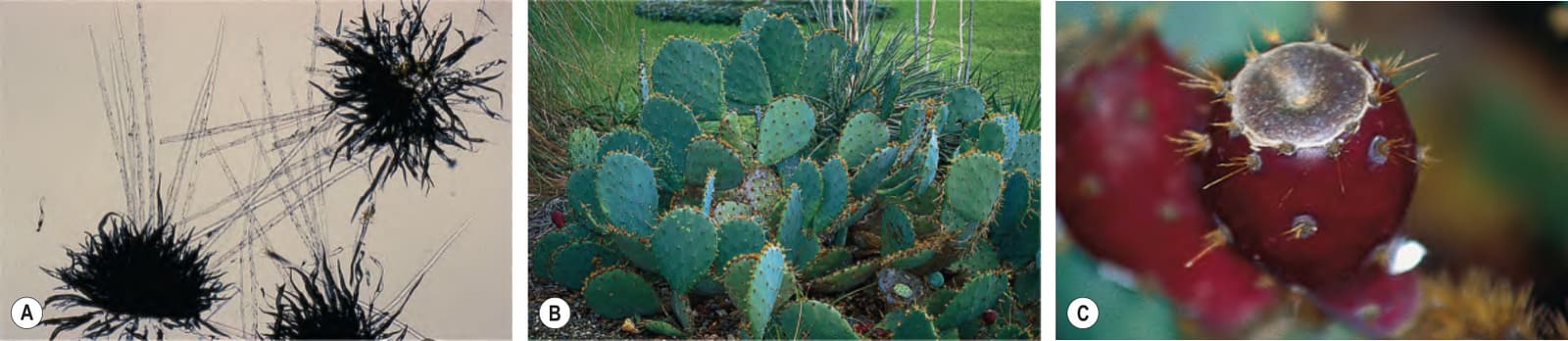
Fig. 17.3 Prickly pears (Opuntia spp.) and their glochids.A Microscopic appearance of glochids from Opuntia microdasys. B Prickly pear (Opuntia ficus-indica) habit. C Prickly pear (Opuntia ficus-indica) fruit. Fine spines and glochids are visible. Courtesy Dirk Elston, MD.
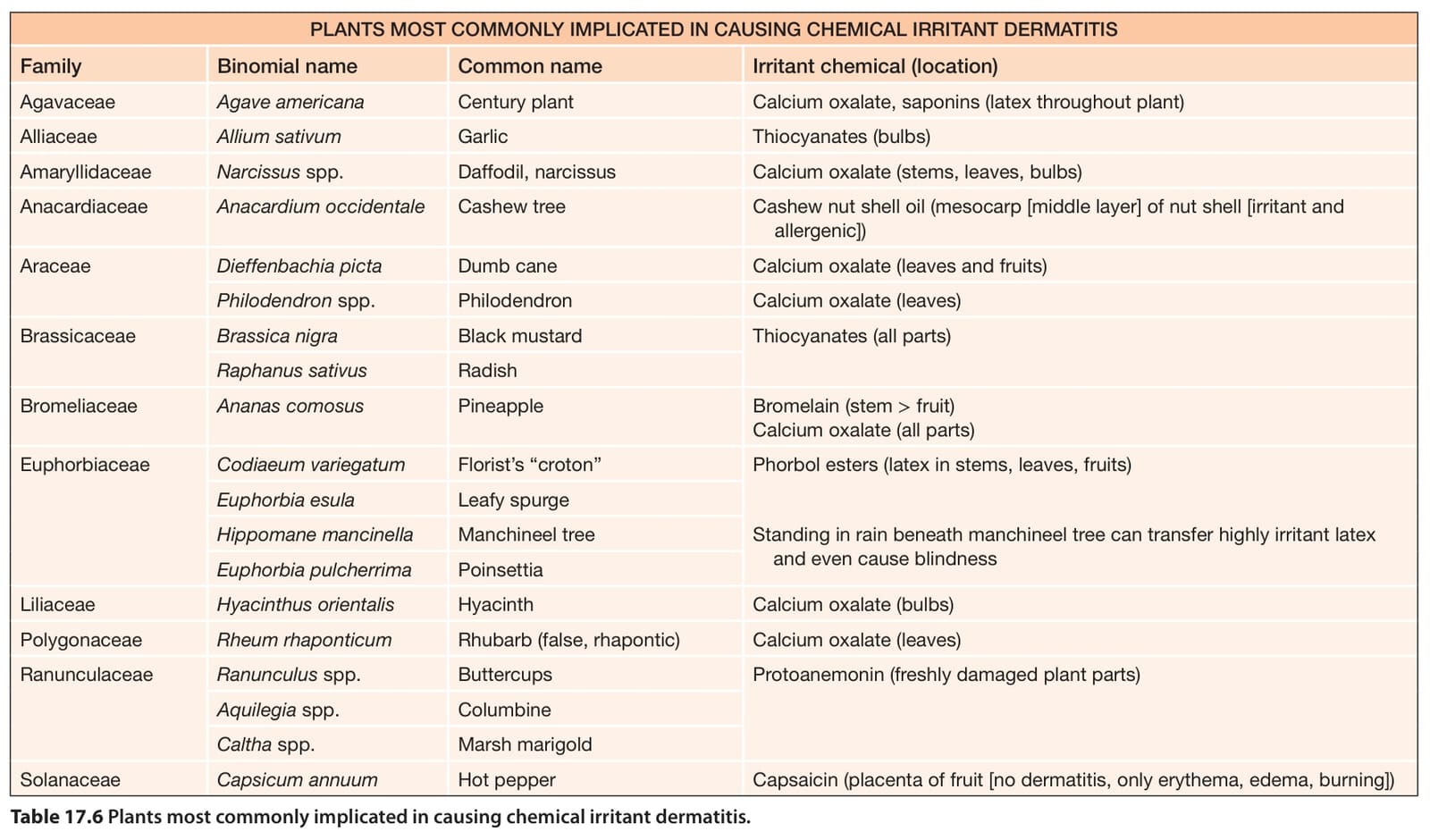
Table 17.6 Plants most commonly implicated in causing chemical irritant dermatitis.