PHYTOPHOTODERMATITIS
Key features
Non-immunologic – it can happen to anyone
Need UVA light plus topical or oral contact with photosensitizer
Furocoumarins (psoralens and angelicins) are the most common photosensitizers
Limes, celery, and rue (herb-of-grace) are the most common causes
Potential photosensitizing plants of the family Apiaceae can be identified by umbel flower structure
Phytophotodermatitis connotes phototoxic reactions consisting of erythema (with or without blistering) and delayed hyperpigmentation following exposure to plants. Phototoxicity implies an inflammatory reaction caused by the combination of a topical or oral photosensitizing agent followed by exposure to the appropriate wavelength of UV radiation. Because this is not an immunologic reaction, no prior sensitization is necessary and anybody can be affected.
History
As early as 2000 BCE, vitiligo patients were encouraged to lie in the sun after picking Ammi majus from the Nile River valley and rubbing the juice on their skin. By 1400 BCE, Indian doctors were using boiled extracts of Psoralea corylifolia (scurf-pea, babchi), from which we derive the term “psoralen”. Even nowadays in India, its seeds remain a source of psoralens for the treatment of vitiligo.
In 1897, Apiaceae-induced dermatitis was first reported, but the need for concomitant UV radiation went unnoticed. It would be another 40 years before Klaber introduced the term “phytophotodermatitis” to emphasize that a combination of plants (“phyto-”) plus light (“photo-”) is required for the reaction.
Epidemiology
Apiaceae (formerly Umbelliferae) and Rutaceae (citrus family) plants are the most common causes of phytophotodermatitis (Table 17.7 & 17.8). Members of the mulberry (Moraceae) and pea (Fabaceae) families also contain furocoumarins.
Apiaceae
A distinctive floral umbel makes family members easy to recognize: numerous small flowers form a simple umbel (a cluster of flowers on stalks of roughly equal length arising from a single point). Many small umbels can form “compound umbels” (Fig. 17.4A). Compound umbels may be umbrella-shaped or ball-shaped. The flower heads are sheathed at the base by one or more leaf-like bracts.
Common hogweed, also referred to as cow parsnip, is known by three species names: Heracleum lanatum, H. maximum, or H. spondylium. In North America, it naturally grows over 2 meters tall (Fig. 17.4B,C), with leaves up to 1 meter long. The larger giant hogweed (H. mantegazzianum) is a European native that has now invaded parts of North America. Both cause phytophotodermatitis. Fruits contain the highest concentrations of psoralens followed by leaves and stems. The greatest threat from hogweed occurs in the autumn, when the weather favors the development of many seeds. One severe case of occupational contact with giant hogweed during mid-summer roadside lawn mowing led to marked phytophotodermatitis-induced soft tissue necrosis of the leg and eventual below-the-knee amputation.
Rutaceae
The Rutaceae family includes tropical (Citrus spp.), subtropical, and temperate (Ruta spp.) plants and is the second most common plant family (after Apiaceae) that causes phytophotodermatitis (see Table 17.8). Many Rutaceae grow as shrubs or small trees and produce fleshy fruit. The rind of the Persian lime (Citrus latifolia), which contains ten times more 5-methoxypsoralen (5-MOP) than the pulp, is a major cause of phototoxic reactions in the US, especially in Florida and the desert Southwest. Outdoor bartenders commonly develop vesicles on
their index and middle fingers from squeezing limes to make cocktails. Even the sweet orange (Citrus sinensis) can cause a phototoxic cheilitis after contact with the rind.
Garden rue (Ruta graveolens) is a bitter tasting and smelling sub-shrub native to the Mediterranean basin with a long history as a folk medicine
A Compound umbels can be umbrella-shaped or ball-shaped. B Cow parsnip (common hogweed; Heracleum maximum) habit, Mackinac Island, MI, USA. C Compound umbel of cow parsnip (common hogweed)
remedy and insect repellant. It contains 5-MOP, 8-MOP, and angelicins and is probably the most common cause of phototoxicity acquired in English gardens.
Dictamnus albus, the gas plant or burning bush, exudes an aromatic oil that can be ignited briefly without harming the plant. It has become a common yard plant in the US and Canada, and it grows wild in central and southern Europe, eastern Siberia and northern China. The seed pods have high concentrations of both 5-MOP and 8-MOP.
Moraceae
The mulberry family includes the fig tree (Ficus carica), a Middle Eastern native that has been widely cultivated throughout warm, temperate regions of the world. Psoralens are found chiefly in the sap of leaves and shoots but not in the fruit.
Other families
Eleven of 23 HIV-infected patients receiving systemic hypericin (from St John’s wort, Hypericum perforatum [Hypericaceae]) as a potential antiretroviral agent developed severe cutaneous phototoxicity.
Pathogenesis
Furocoumarins possess linear (psoralens) or angular (angelicins) tricyclic structures (see Fig. 134.9). Bergapten (5-MOP), originally isolated from the southern European bergamot orange (Citrus bergamia), and 8-MOP (xanthotoxin), first isolated from the Nigerian prickly ash (Fagara zanthoxyloides), cause the most severe reactions.
In the presence of UVA (peak effectiveness at 320–340 nm), psoralens within the skin can interact with molecular oxygen and form reactive oxygen species that induce cytoplasmic vacuolization and membrane rupture of keratinocytes. Within 2 hours of UVA exposure, desmosomal plaques detach and degenerate leading to blister formation without the need for DNA damage.
UVA also excites intercalated psoralens to form covalent interstrand DNA cross-links by binding to pyrimidines (see Fig. 134.10). This leads to further keratinocyte cell death (apoptosis, “sunburn cells”) and stimulates hyperpigmentation via increased melanocyte mitosis and dendricity, melanocyte hypertrophy, increased tyrosinase activity, larger melanosomal size, and enhanced distribution of melanosomes throughout the epidermis.
Furocoumarins appear necessary to defend plants from fungal attack. Healthy celery plants (Apium graveolens) contain 10–100 mcg/g wet weight of psoralens, but they may produce 320 mcg/g when infected with pink-rot fungus (Sclerotinia sclerotiorum). Disease-resistant celery unfortunately possesses high levels of furocoumarins concentrated in the leaf and stem sap.
Clinical Features
Cutaneous sensitivity to UVA light peaks 30–120 minutes after contact with furocoumarins. Bizarre configurations of erythema, edema, and bullae appear after 24 hours and peak at 72 hours (Fig. 17.5). These painful, non-pruritic reactions are more often seen in mid to late summer, when psoralen concentrations are highest in the offending plants and more skin is exposed to direct sunlight. To avoid misdiagnosis as poison ivy dermatitis, physicians must note that the initial erythematous and bullous reaction only occurs in sun-exposed areas. Hyperpigmentation appears 1–2 weeks later and lasts months to years (Fig. 17.6). Occasionally, low-dose UVA and/or psoralens cause hyperpigmentation without a preceding vesicular or erythematous eruption (see Ch. 67). Involved areas may remain hypersensitive to UV radiation for years. Wet skin, sweating, and heat enhance the phototoxic response.
Furocoumarin exposure occurs in many settings (Table 17.9). Modern power tools such as weed-whackers and strimmers (string trimmers) deliver a buckshot spray of weeds that may include phototoxic plants. “Strimmer dermatitis” appears 12–24 hours later as red, irregular macules and papules, not bizarre linear and angular streaks, on the chest, arms, and legs if wearing shorts. Implicated species, especially in Europe, include common hogweed (cow parsnip; Heracleum sphondylium), giant hogweed (Heracleum mantegazzianum), and cow parsley
(Anthriscus sylvestris). Berlock (or berloque, meaning trinket or charm) dermatitis is characterized by pendant-like streaks of pigmentation on the neck, face, arms, or trunk after the application of colognes containing 5-MOP.
Phytophotodermatitis has also been mistaken for child abuse (see Ch. 90). Parents who touch plants or fruit containing furocoumarins can transfer these chemicals to their children. A week or more later, the children may develop digitate hyperpigmentation in sun-exposed sites of parental hand contact. Multiple hues are not seen in the skin lesions, as in healing bruises. In addition, lime-induced phytophotodermatitis can be misdiagnosed as allergic contact dermatitis, impetigo, cellulitis, and infectious lymphangitis.
Celery harvesters and canners are at high risk for developing phytophotodermatitis. Only 1 mcg of 8-MOP/cm of skin is necessary to produce blisters after 2.4 J/cm (less than 10 minutes) of summer sunlight in Colorado. In one study of 320 randomly selected Michigan celery workers, 163 (51%) displayed various stages of vesicular and bullous dermatitis on the fingers, hands, and forearms. In this study, the authors could not induce phytophotodermatitis except by using celery infected with pink-rot fungus. However, phototoxicity following the ingestion of naturally occurring psoralens is uncommon.
Phytophotoallergic Contact Dermatitis
Photoallergy due to plants is rare. A 20-year review of photopatch testing results from a tertiary medical center found reactions in eight of 69 patients, with reactions in only four patients thought to be clinically relevant.
Treatment
Prevention is the best treatment for phytophotodermatitis. Known furocoumarin-containing plants should not be planted near play areas. When using weed-whackers or strimmers, operators must cover their chest and extremities. If one has been in contact with a suspected phototoxic plant, prompt washing with soap and water may prevent a reaction.
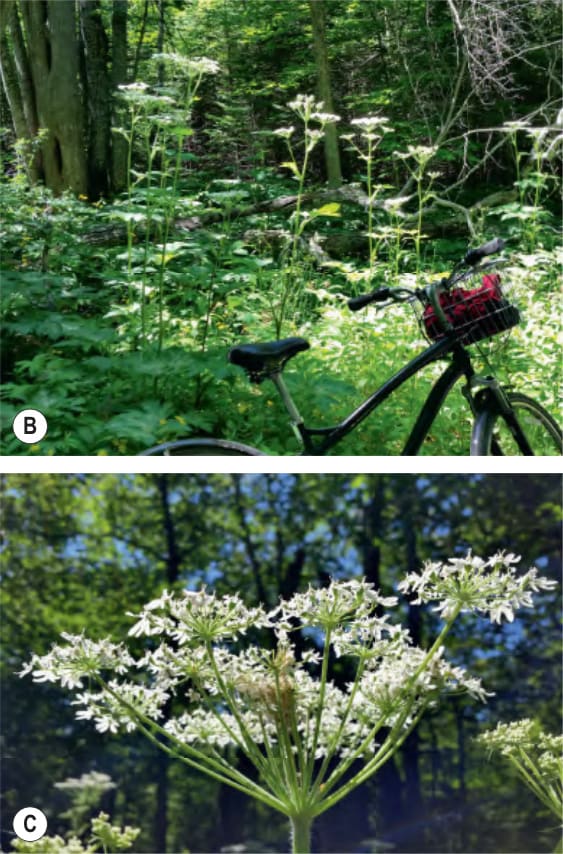
Fig. 17.4 Apiaceae.
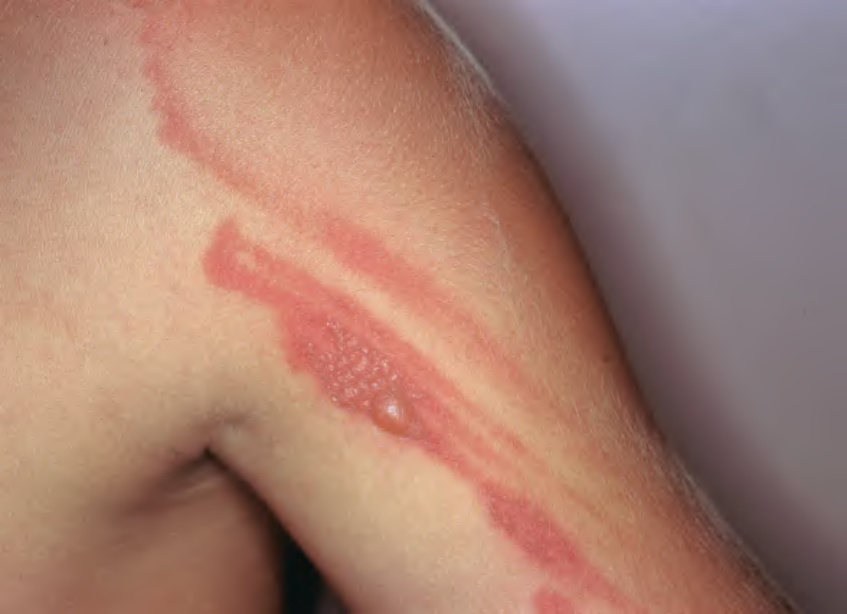
Fig. 17.5 Bullous phase of phytophotodermatitis. There was associated burning but no pruritus, and the linear bullae were replaced by hyperpigmentation. Courtesy Jean L. Bolognia, MD.
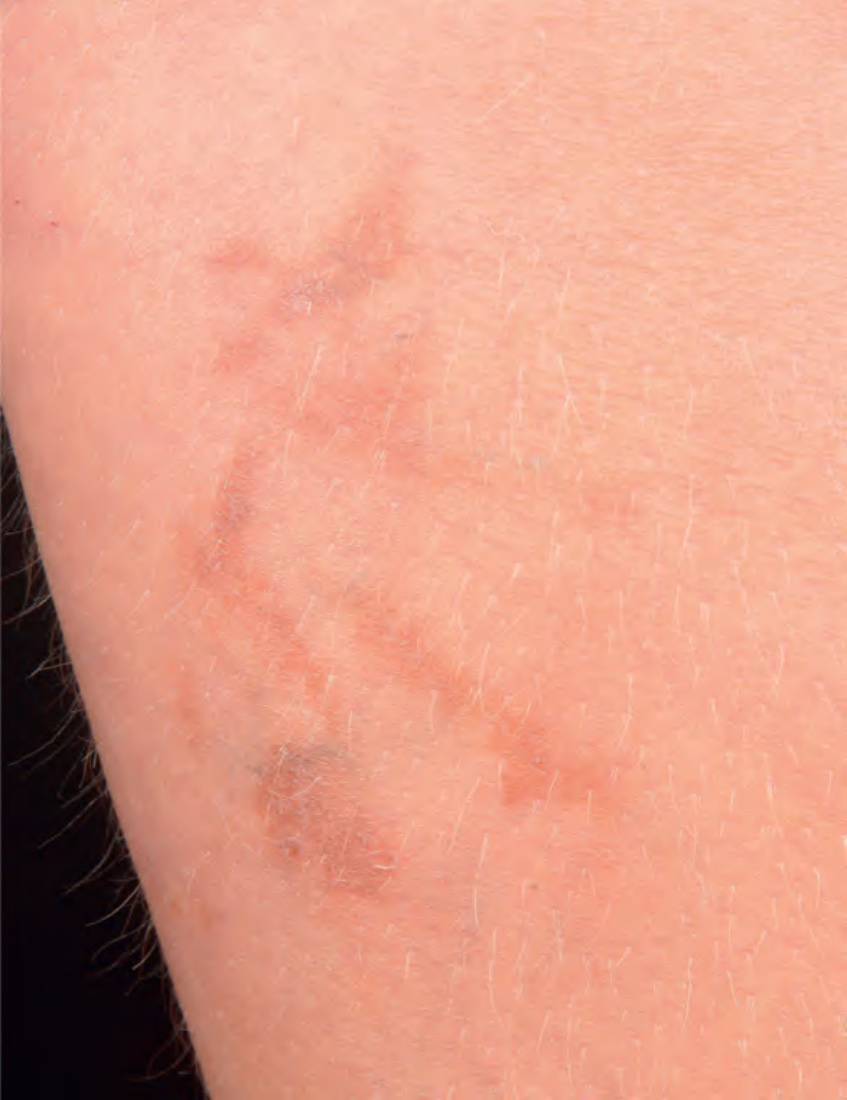
Fig. 17.6 Phytophotodermatitis. Streaky hyperpigmentation due to contact with a psoralen-containing plant followed by exposure to sunlight. Courtesy Lorenzo Cerroni, MD.
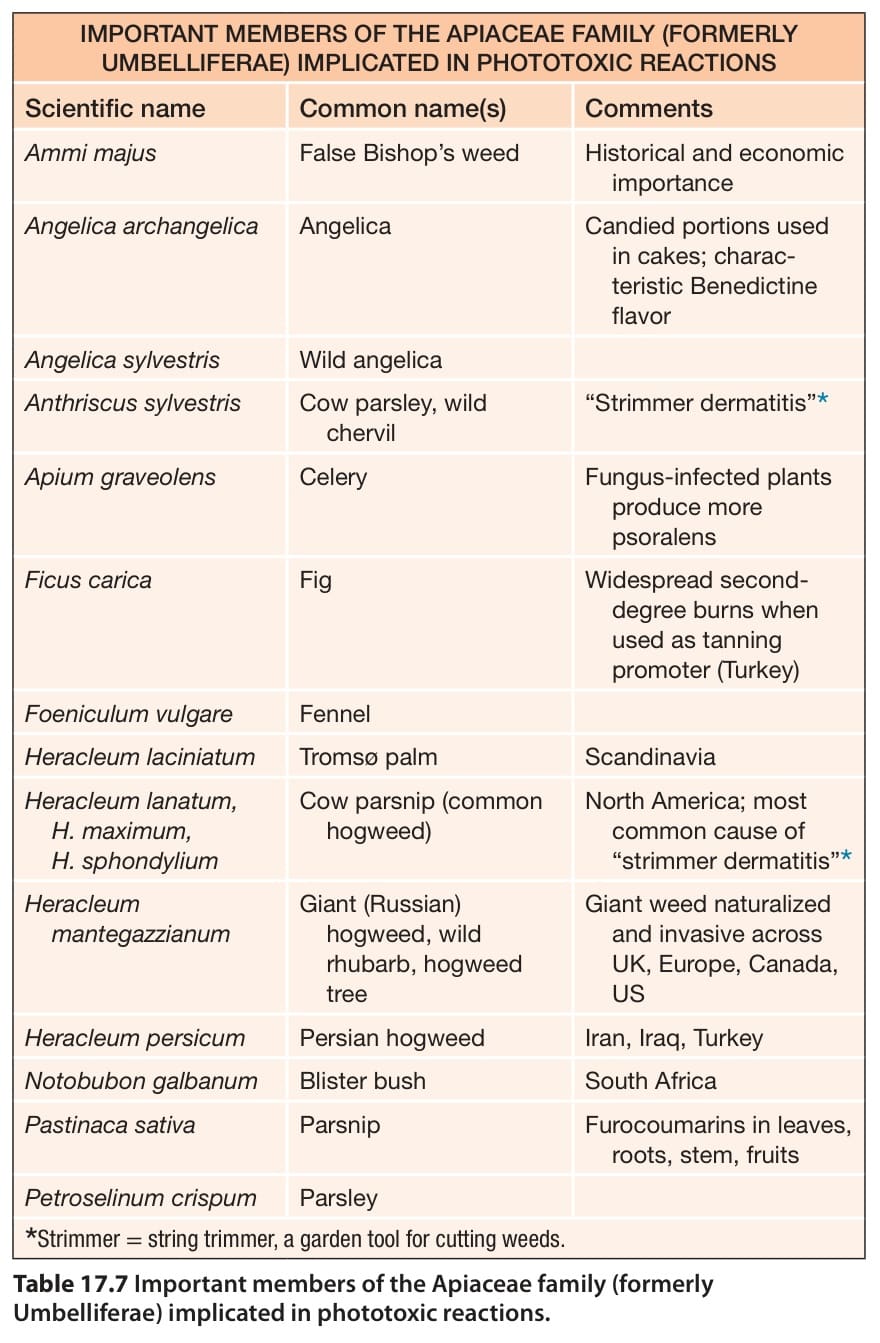
Table 17.7 Important members of the Apiaceae family (formerly Umbelliferae) implicated in phototoxic reactions.
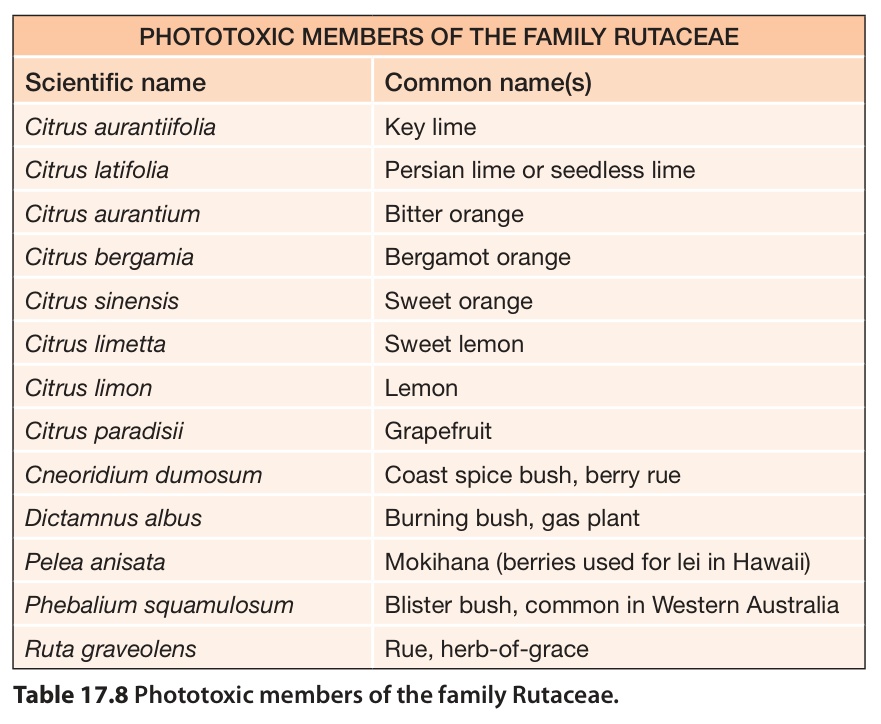
Table 17.8 Phototoxic members of the family Rutaceae.
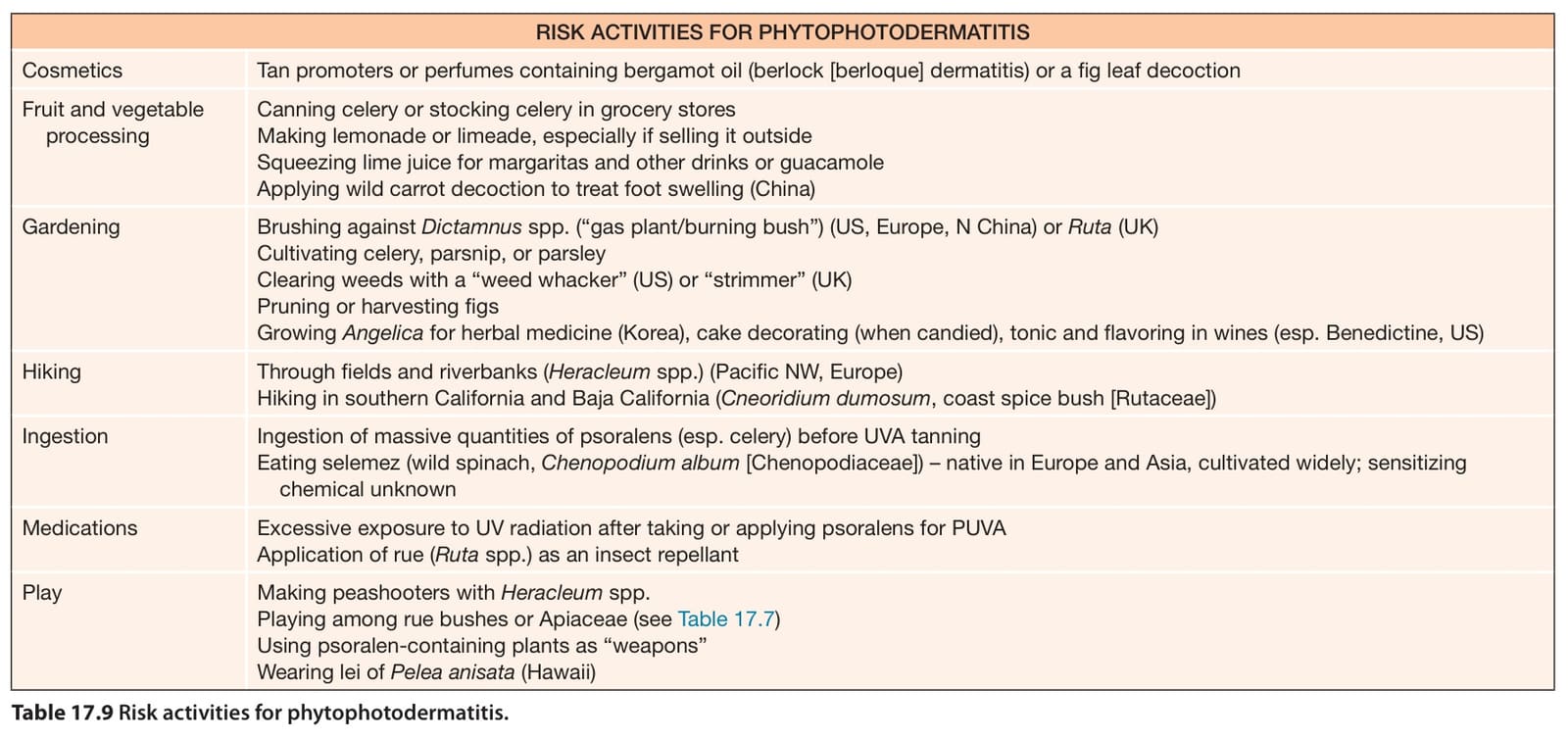
Table 17.9 Risk activities for phytophotodermatitis.