OCCUPATIONAL PLANT DERMATOSES
Bakers
Bakers and food processors have high rates of immunologic contact urticaria. Flours, grains, and feeds ranked third behind cow dander and latex as the causes of such urticaria. Omalizumab has allowed at least one baker to maintain his job when protein contact dermatitis to wheat threatened his livelihood.
Florists and Horticulturalists43–45
Irritant dermatitis outweighs allergic contact dermatitis in frequency and importance. Estimates of hand dermatitis in florists range from an 8% point prevalence to a 25%–30% annual incidence to a nearly 50% lifetime incidence, especially amongst floral designers. Although most cases of hand dermatitis are mild, periodic, and self-limited, because florists’ hands are often wet, primary irritant reactions may lead to sensitization over long periods of time.
For florists, the most common sensitizers are sesquiterpene lactones, tulipalin A, and primin (Primula obconica). Daffodil itch (caused by calcium oxalate), from handling stems and bulbs, is probably the most common cause of irritant contact dermatitis in florists. In one series,
A Florist with fingertip Alstroemeria allergic contact dermatitis showing how he holds a Peruvian lily while cutting off the leaves. B Index finger of the same florist, showing the chronic, lichenified, hyperkeratotic dermatitis caused by allergy to Peruvian lily and tulipalin A. Photos with permission from the American Journal of Contact Dermatitis 1999;10:172–6.10% of 250 horticultural workers were allergic to Asteraceae and one-third developed urticaria. An atopic family history increased one’s likelihood of developing urticaria.
Food Handlers
Food handlers are at increased risk for immunologic contact urticaria and protein contact dermatitis (see above). Of those who develop protein contact dermatitis, over 60% need to change jobs. Among grocery store workers, contact with fresh celery combined with indoor tanning increases the prevalence ratio for phytophotodermatitis to >40 as compared to those with neither risk factor.
Outdoor Workers
Among outdoor workers, poison ivy and poison oak (Toxicodendron spp.) are the main causes of occupational contact dermatitis. Toxicodendron contact accounts for 10% of all lost-time injuries for the US Department of Agriculture Forest Service. Foresters, especially when fighting forest fires, have virtually no control over avoiding these plants. Up to 25% of firefighters need to leave the fire line because of severe Toxicodendron dermatitis.
Forestry workers in the American and Canadian Pacific Northwest may develop “woodcutter’s eczema”, an allergic contact dermatitis caused by airborne or rainwater-dispersed SQLs from liverworts (Frullania spp.) growing on trees and rocks. The dermatitis is worse in wet winter months and presents in a pseudo-photodistribution, involving the upper eyelids while sparing the submental area.
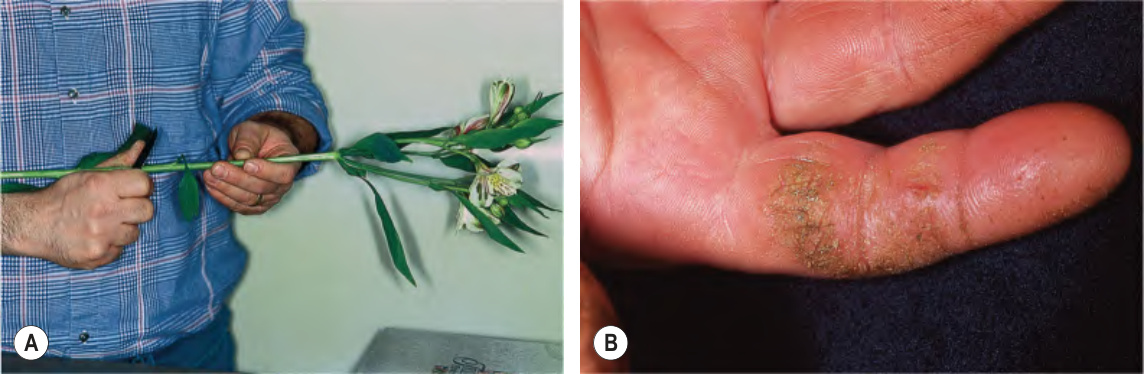
Fig. 17.14 Allergic contact dermatitis in a florist.