INTRODUCTION
The skin is one of the most common sites for adverse drug reactions. Although eruptions are usually observed in 0.1% to 1% of patients enrolled in pre-marketing trials of most systemic drugs, up to 5% of patients treated with antibiotics or aromatic anticonvulsants may develop a cutaneous eruption. Even higher incidences have been reported with newer targeted therapies and immune checkpoint inhibitors (ICIs) to treat cancer. In the mid 1990s, it was estimated that 1 of every 1000 hospitalized patients had a serious cutaneous drug reaction. Introduction of the term SCARs (severe cutaneous adverse reactions [to drugs]) reinforced the need for prompt identification followed by discontinuation of the most likely culprit drug(s) thereby decreasing both morbidity and mortality (Table 21.1).
It may be tempting to consider most eruptive cutaneous drug reac tions, especially the severe ones, as various presentations of a “hypersensitivity state”. However, it is more precise to examine the specificity of the clinical, pathologic, and biologic patterns, thus allowing linkage of each type of adverse cutaneous reaction with a well-defined mechanism.
This chapter focuses on adverse cutaneous reactions due to systemically administered drugs. In addition, several specific types of cutaneous adverse reactions (CARs) are discussed in other chapters (Table 21.2).
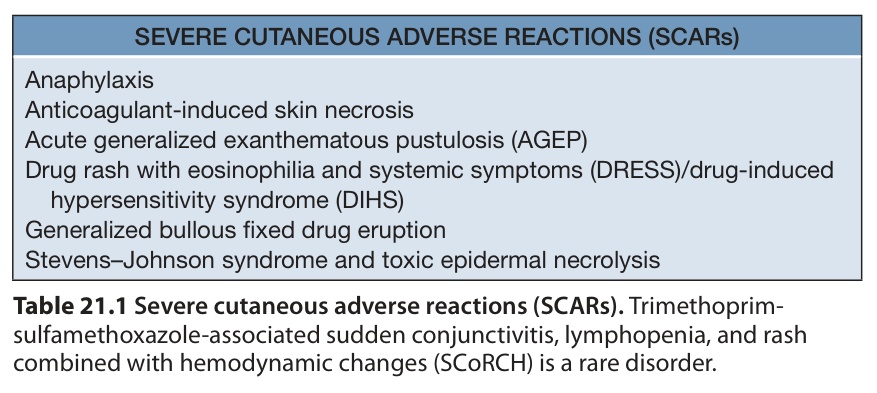
Table 21.1 Severe cutaneous adverse reactions (SCARs). Trimethoprim-sulfamethoxazole-associated sudden conjunctivitis, lymphopenia, and rash combined with hemodynamic changes (SCoRCH) is a rare disorder.
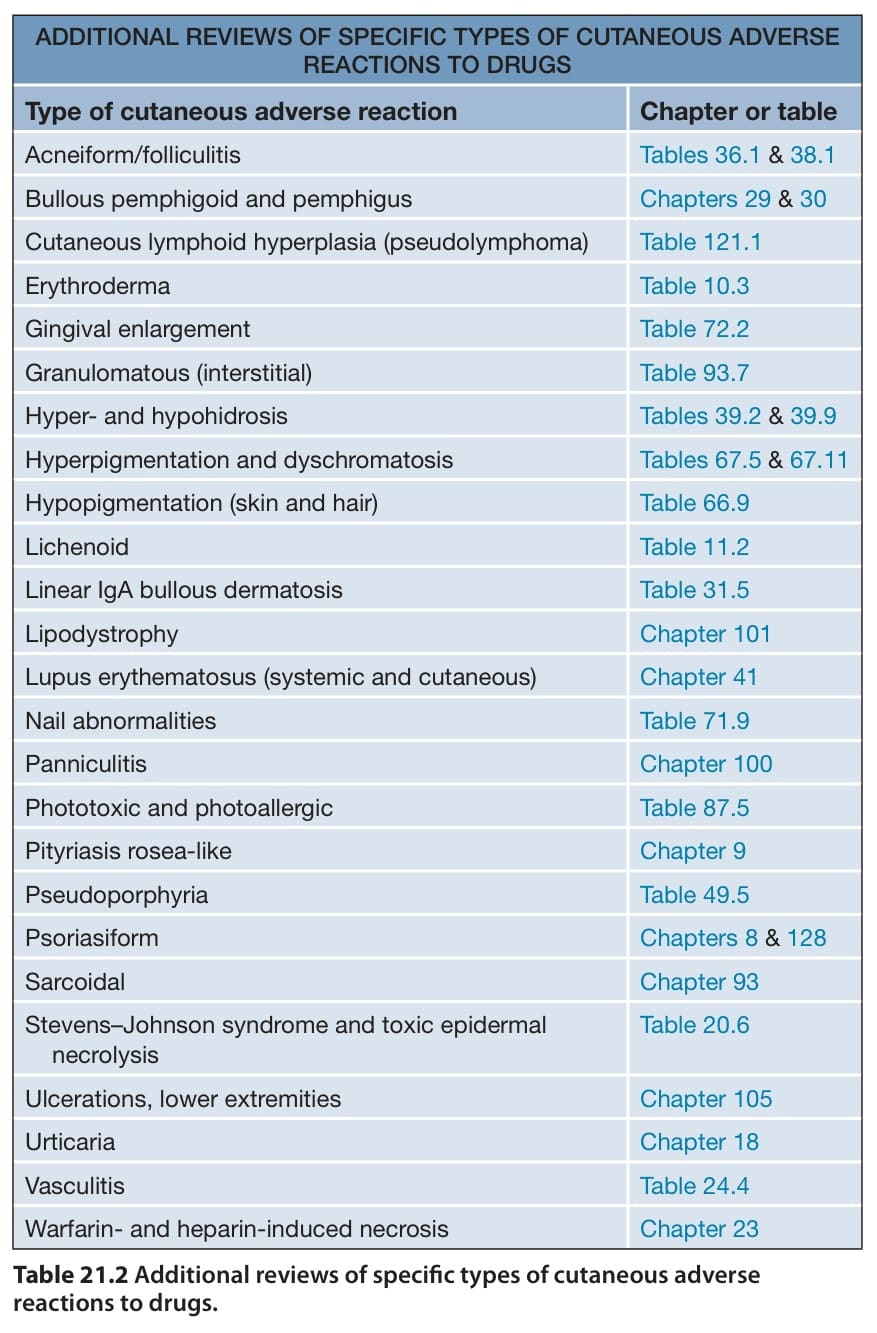
Table 21.2 Additional reviews of specific types of cutaneous adverse reactions to drugs.