EPIDEMIOLOGY
CARs to drugs occur in up to 8% of hospitalized patients. In departments of dermatology, they represent 2% of consultations and ~5% of the admissions to an inpatient dermatology service. The incidence of fatalities due to drug reactions (systemic and cutaneous) among inpatients is between 0.1% and 0.3%. There are multiple risk factors for developing an adverse drug reaction, including immunosuppression (e.g. HIV-infected individuals have a 10- to 50-fold greater risk of developing an exanthematous eruption to sulfamethoxazole) and specific HLA alleles (Table 21.3).
Epidemiology of common CARs is still evolving. As a result, the incidence of drug reactions is difficult to establish precisely. Generally speaking, pre-marketing clinical trials, conducted before a new drug is licensed, include a limited number of patients, thus preventing a clear estimate of the true incidence. It is usually after several months or years of greater utilization that a more precise profile of the side effects of a newly released drug is established. Moreover, available information should be interpreted with caution, depending upon the method of data collection.
Reaction rates to commonly administered drugs have been confirmed by several prospective studies; however, the latter have been limited to inpatients. In one series, adverse skin reactions occurred in 2.7% of 48 000 patients hospitalized over a 20-year period on a general internal medicine service; maculopapular exanthems (91.2%), urticaria (5.9%), and vasculitis (1.4%) were the reactions most commonly observed. The primary responsible drugs were penicillins, sulfonamides, and nonsteroidal anti-inflammatory drugs (NSAIDs).
Except for studies in hospitalized populations and those focusing on the most severe reactions, data regarding the incidence of cutaneous drug reactions in the general population are minimal, in part due to the absence of comprehensive post-marketing surveillance programs. In a retrospective cohort study from the Netherlands of 13 679 patients from general practices, the most frequently reported skin reactions to antimicrobials were due to trimethoprim–sulfamethoxazole (2.1% of users), fluoroquinolones (1.6%), and penicillins (1.1%).
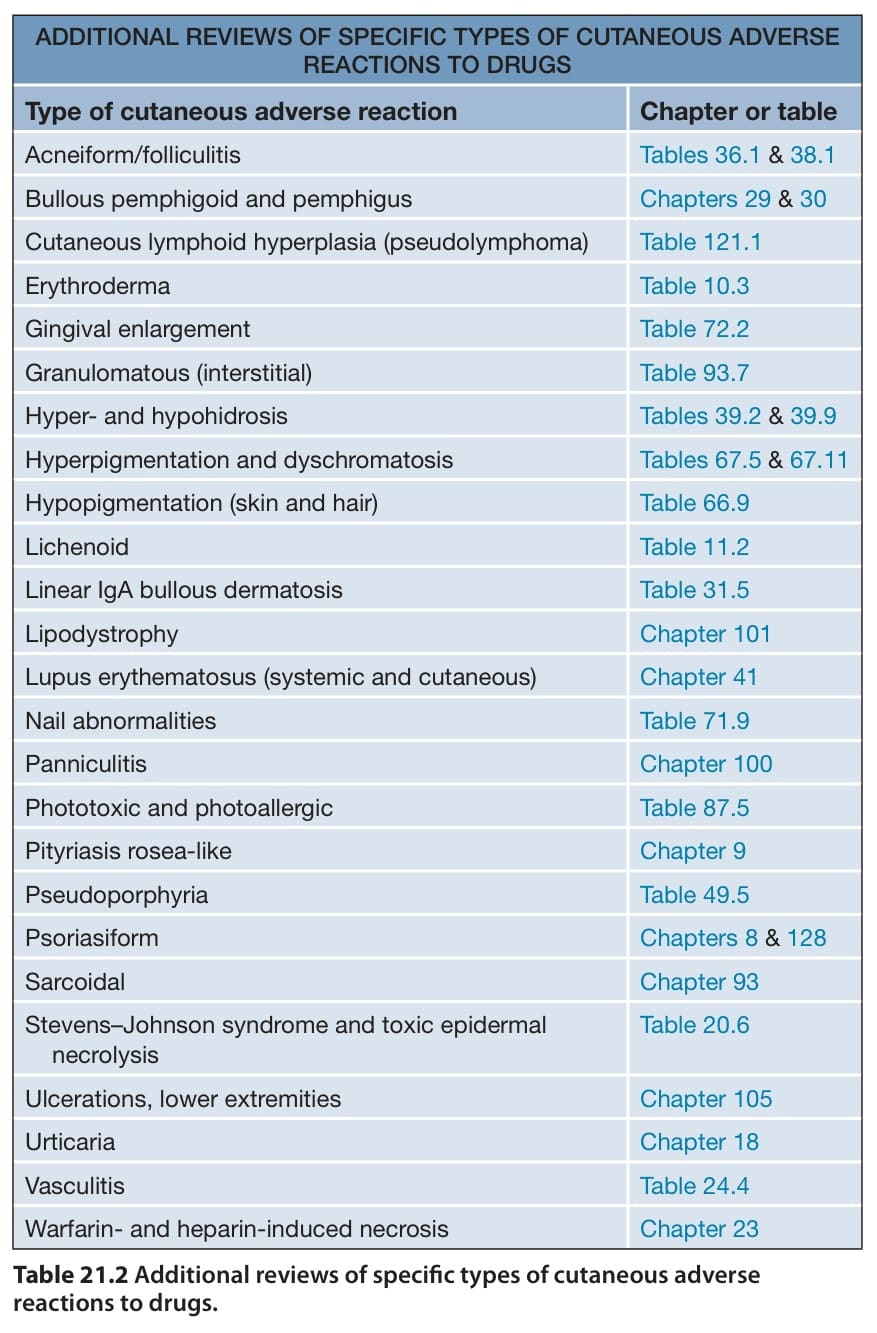
Table 21.2 Additional reviews of specific types of cutaneous adverse reactions to drugs.
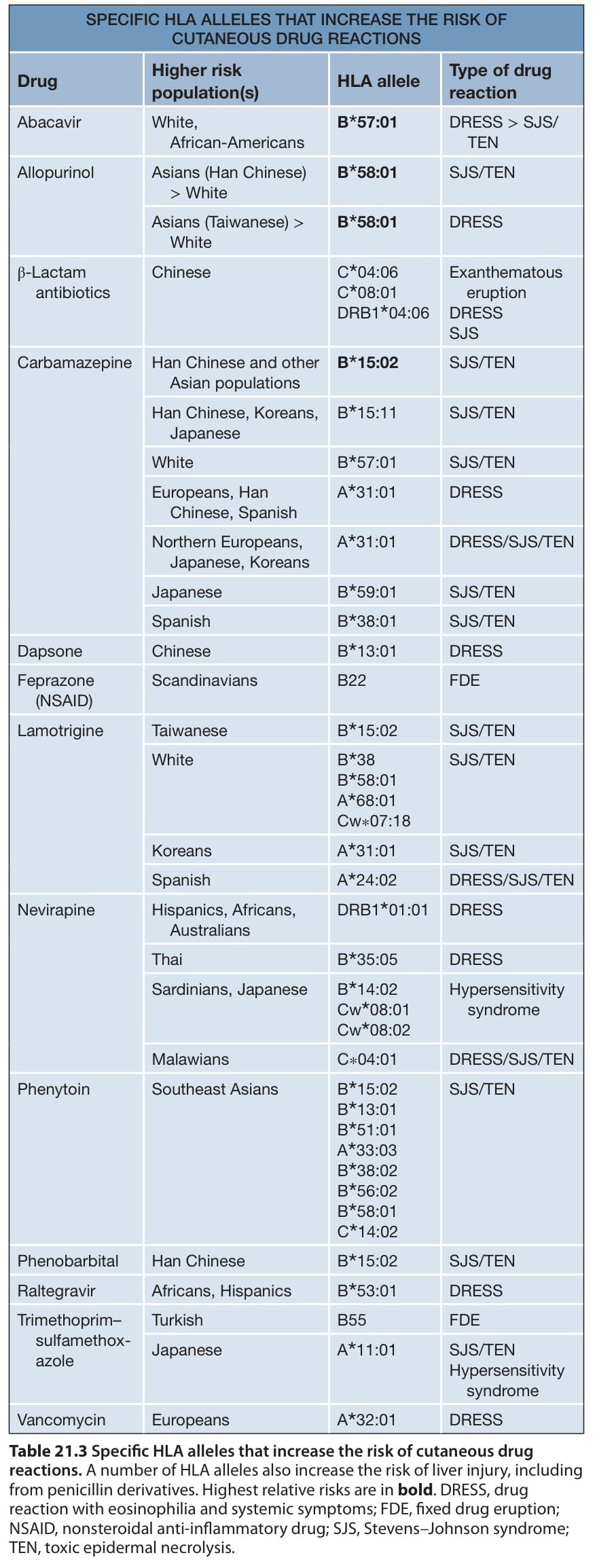
Table 21.3 Specific HLA alleles that increase the risk of cutaneous drug reactions. A number of HLA alleles also increase the risk of liver injury, including from penicillin derivatives. Highest relative risks are in bold. DRESS, drug reaction with eosinophilia and systemic symptoms; FDE, fixed drug eruption; NSAID, nonsteroidal anti-inflammatory drug; SJS, Stevens–Johnson syndrome; TEN, toxic epidermal necrolysis.