CLASSIFICATION
The 2012 revised International Chapel Hill Consensus Conference Nomenclature, which is based upon expert consensus, provides standardized terminology and disease definitions for the various types of vasculitis. A 2018 dermatologic addendum to the Chapel Hill Nomenclature further classifies cutaneous vasculitides. In addition, the Diagnostic and Classification Criteria in Vasculitis Study (DCVAS), a large, multinational observational study that utilized patient data, aims to develop and validate evidence-based diagnostic and classification criteria for use in practice and clinical trials. These data are the basis of revised ACR-EULAR classification criteria for large vessel vasculitis and ANCA-associated vasculitis.
Because a system based upon the predominant size of the involved blood vessels is conceptually useful and helps to predict the clinical presentation and corresponding histopathologic findings, this type of classification scheme will be employed in this chapter (see Table 24.1). Additional features that aid in classifying cutaneous vasculitis are systemic manifestations, direct immunofluorescence studies, and the presence or absence of pertinent laboratory findings, e.g. anti-neutrophil cytoplasmic antibodies (ANCAs) (see Fig. 24.16). Despite descriptions of distinct vasculitic syndromes, unique diagnostic criteria are often lacking and clinicopathologic correlation is always required.
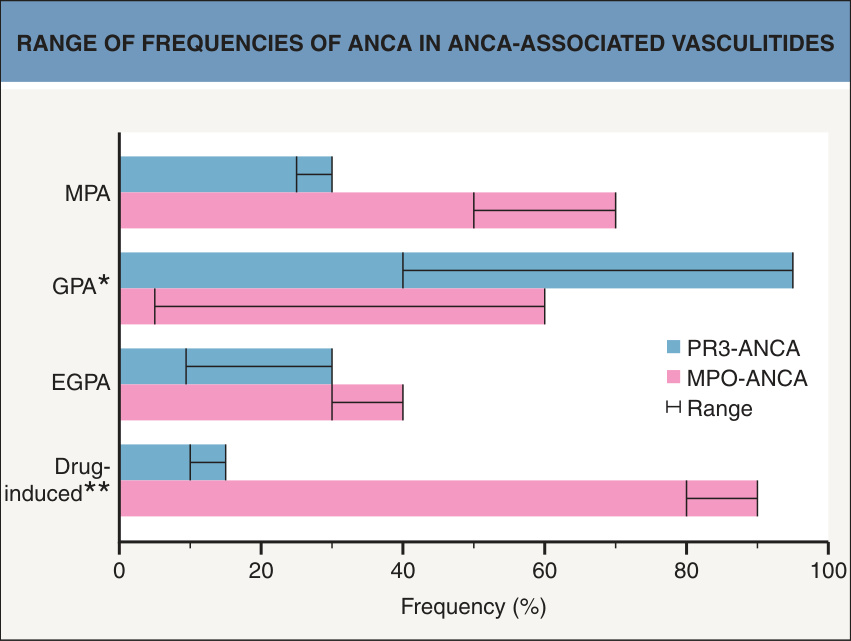
Fig. 24.16 Range of frequencies of ANCA in ANCA-associated vasculitides.
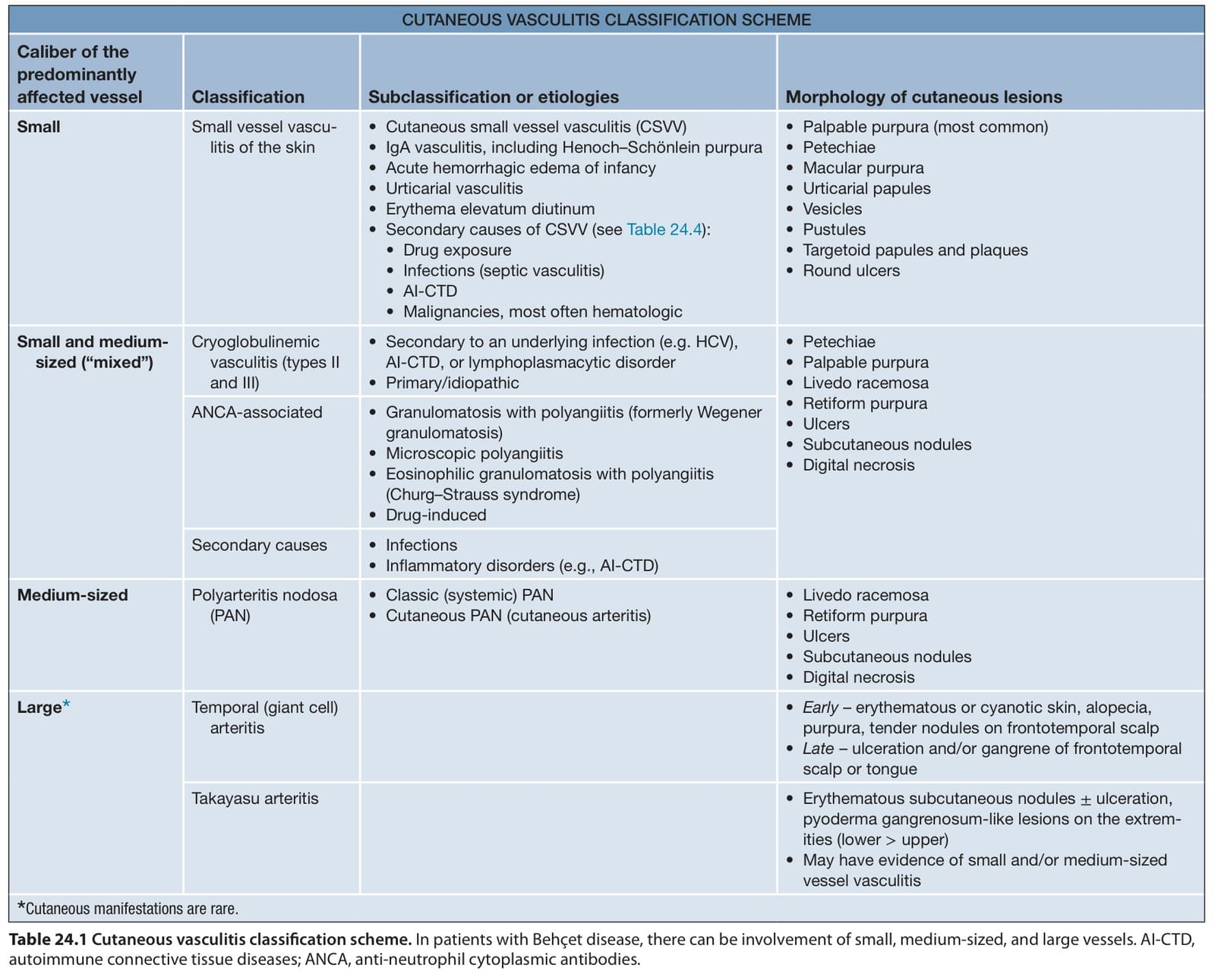
Table 24.1 Cutaneous vasculitis classification scheme. In patients with Behçet disease, there can be involvement of small, medium-sized, and large vessels. AI-CTD, autoimmune connective tissue diseases; ANCA, anti-neutrophil cytoplasmic antibodies.