INTRODUCTION
The neutrophilic dermatoses constitute a heterogeneous but linked spectrum of diseases, with significant overlapping histopathologic findings and similar pathogenic mechanisms and therapeutic approaches. They are often associated with underlying systemic diseases. Histologically, these disorders are characterized by perivascular and diffuse dermal or subcutaneous neutrophilic infiltrates without identifiable infectious agents (Fig. 25.1). The cutaneous manifestations vary, from urticarial plaques and vesiculopustules to nodules and ulcers. It is noteworthy that there may be several different types of clinical lesions in the same patient, simultaneously or sequentially. Cutaneous lesions may be localized or widespread, and in some patients, sterile neutrophilic infiltrates may occur in other organs including the lungs, eyes, joints, bones, heart, and kidneys. Peripheral neutrophilia may be present. Distinct entities have been defined by the nature of their clinical and histopathologic presentations as well as their associated diseases.
Patients with autoinflammatory disorders may develop neutrophilic dermatoses, from sterile pustules in DIRA (deficiency of IL-1 receptor antagonist) to pyoderma gangrenosum in PAPA (pyogenic [sterile] arthritis, pyoderma gangrenosum, and acne) and PASH (pyoderma gangrenosum, acne, and suppurative hidradenitis) syndromes (see Tables 45.6 and 45.7). There is also overlap between neutrophilic dermatoses and neutrophilic urticaria (see Table 45.6).
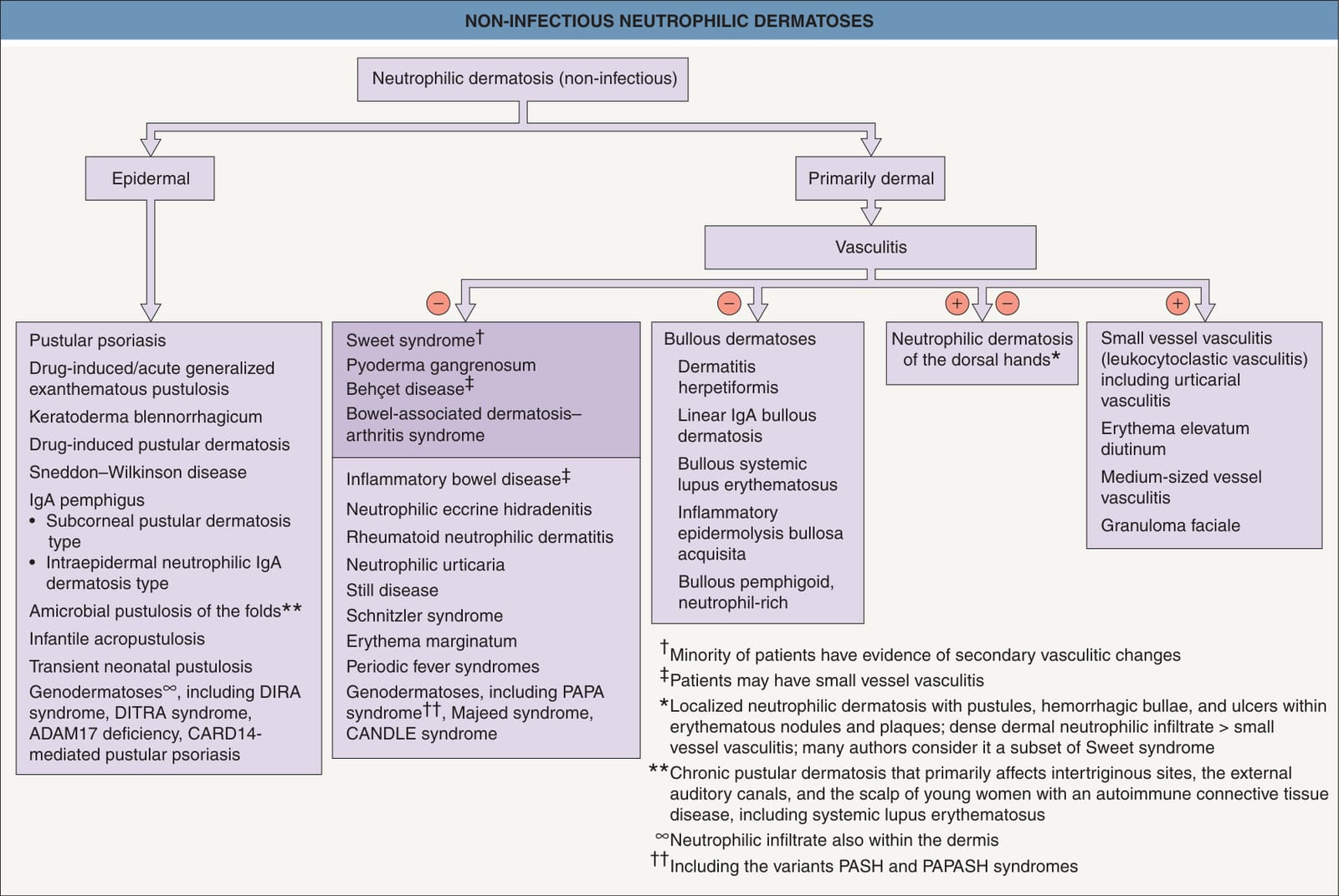
Fig. 25.1 Non-infectious neutrophilic dermatoses. Entities in the darker box are discussed in this chapter. CANDLE, chronic atypical neutrophilic dermatosis with lipodystrophy and elevated temperature; DIRA, deficiency of the interleukin-1 receptor antagonist; DITRA, deficiency of the interleukin-36 receptor antagonist; PAPA, pyogenic arthritis, pyoderma gangrenosum, and acne; PAPASH, pyogenic arthritis, pyoderma gangrenosum, acne, and suppurative hidradenitis; PASH, pyoderma gangrenosum, acne, and suppurative hidradenitis.