前言(Introduction)
嗜中性球皮膚病(neutrophilic dermatoses)構成一組異質性但彼此相連的疾病譜,具有顯著重疊的組織病理學表現,以及相似的致病機轉與治療策略。它們常合併有潛在的全身性疾病。在組織學上,這些疾病的特徵為血管周圍及瀰漫性的真皮或皮下嗜中性球浸潤,且找不到可辨識的感染性病原(圖 25-1)。皮膚表現變化多端,從蕁麻疹樣斑塊、水疱膿疱,到結節與潰瘍皆有。值得注意的是,同一位病人可能同時或先後出現數種不同型態的臨床病灶。皮膚病灶可以是局限性或廣泛性的;在某些病人身上,無菌性的嗜中性球浸潤也可能發生在其他器官,包括肺臟、眼睛、關節、骨骼、心臟與腎臟。周邊血液可能出現嗜中性球增多(peripheral neutrophilia)。各個獨立的疾病實體是依其臨床與組織病理表現的性質,以及其相關疾病來定義的。
自體發炎性疾病(autoinflammatory disorders)的病人可能發展出嗜中性球皮膚病,從 DIRA(deficiency of IL-1 receptor antagonist,IL-1 受體拮抗劑缺乏症)的無菌性膿疱,到 PAPA(pyogenic [sterile] arthritis, pyoderma gangrenosum, and acne,化膿性[無菌性]關節炎、壞疽性膿皮症與痤瘡)與 PASH(pyoderma gangrenosum, acne, and suppurative hidradenitis,壞疽性膿皮症、痤瘡與化膿性汗腺炎)症候群的壞疽性膿皮症(pyoderma gangrenosum)皆屬之(見表 45.6 與 45.7)。嗜中性球皮膚病與嗜中性球性蕁麻疹(neutrophilic urticaria)之間也存在重疊(見表 45.6)。
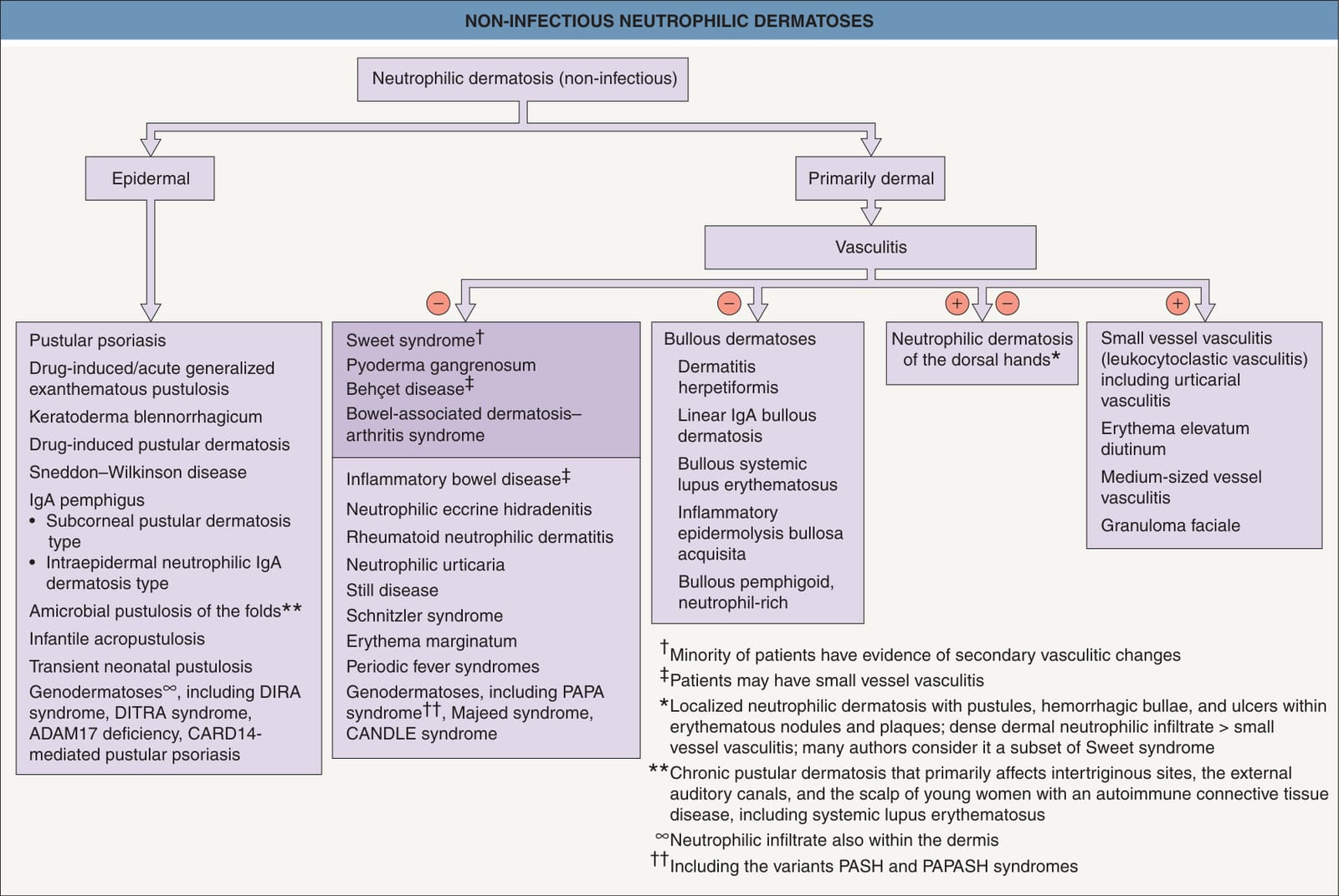
圖 25-1:非感染性嗜中性球皮膚病。位於深色方框內的疾病實體為本章討論之範圍。CANDLE,慢性非典型嗜中性球皮膚病合併脂肪失養與體溫升高(chronic atypical neutrophilic dermatosis with lipodystrophy and elevated temperature);DIRA,interleukin-1 受體拮抗劑缺乏症(deficiency of the interleukin-1 receptor antagonist);DITRA,interleukin-36 受體拮抗劑缺乏症(deficiency of the interleukin-36 receptor antagonist);PAPA,化膿性關節炎、壞疽性膿皮症與痤瘡(pyogenic arthritis, pyoderma gangrenosum, and acne);PAPASH,化膿性關節炎、壞疽性膿皮症、痤瘡與化膿性汗腺炎(pyogenic arthritis, pyoderma gangrenosum, acne, and suppurative hidradenitis);PASH,壞疽性膿皮症、痤瘡與化膿性汗腺炎(pyoderma gangrenosum, acne, and suppurative hidradenitis)。