BOWEL-ASSOCIATED DERMATOSIS–ARTHRITIS SYNDROME
Synonyms: Bowel bypass syndrome Bowel bypass syndrome without bowel bypass Intestinal bypass arthritis–dermatitis syndrome
Key features
Constitutional signs and symptoms are serum sickness-like Cutaneous lesions include erythematous and purpuric papules and vesiculopustules as well as nodular panniculitis Associated polyarthritis and tenosynovitis Histopathology includes dermal perivascular nodular neutrophilic infiltrates and edema as well as a lobular neutrophilic or septal panniculitis
Introduction
Bowel-associated dermatosis–arthritis syndrome (BADAS) is characterized by diarrhea with resultant malabsorption, arthritis, and skin lesions. It is seen in patients who have undergone intestinal bypass surgery, have blind loops of bowel following surgery, had biliopancreatic diversion, or have gastrointestinal disorders (Table 25.16).
History
During the 1960s and 1970s, morbid obesity began to be treated surgically by jejunoileal bypass surgery and 20% of these patients developed a syndrome initially referred to as bowel bypass syndrome. In the 1980s, a similar syndrome was described in patients with inflammatory bowel disease or with blind loops of bowel after intestinal surgery.
Pathogenesis
In bowel-associated dermatosis–arthritis syndrome, there is usually bacterial overgrowth in a blind loop of bowel. It is postulated that resultant immune complexes containing bacterial antigens are then deposited within the skin and synovium. The pathogenic role of bacteria in this syndrome is supported by the disappearance of the disease with antibiotic therapy or surgery.
Clinical Features
Bowel-associated dermatosis–arthritis syndrome is characterized clinically by constitutional flu-like symptoms, skin lesions, and a variety of systemic complications (see below). It can occur from 1 to 6 years after the responsible bowel surgery. Constitutional symptoms, which are usually present and may precede the cutaneous eruption, are similar to those of serum sickness, e.g. fever, chills, malaise, arthralgias and myalgias.
The characteristic skin lesions are erythematous macules which progress to papules and purpuric vesiculopustules within 48 hours and last for 2–4 weeks; they may recur at 4- to 6-week intervals. The lesions may be few or many (Fig. 25.17), and they favor the proximal extremities and trunk.
Recurrent, tender, erythematous subcutaneous nodules are also seen in these patients and may be associated with fever. They are due to either a nodular, non-suppurative, lobular neutrophilic panniculitis (involving both the trunk and extremities and healing with depressed scars) or erythema nodosum (generally involving only the lower extremities), two entities which differ clinically and histologically. Among the more common non-cutaneous findings are tenosynovitis and non-destructive polyarthritis. Associated systemic complications include electrolyte imbalance from persistent diarrhea, hepatic dysfunction and failure, renal calculi composed of calcium oxalate, gallstones, zinc deficiency, vitamin A deficiency, beriberi, hyperuricemia, and emotional disturbances.
Pathology
The characteristic lesions exhibit a perivascular, nodular neutrophilic infiltrate with nuclear dust and papillary and reticular dermal edema. The infiltrate may be admixed with lymphocytes and histiocytes and may extend into the mid dermis and panniculus. A similar neutrophilic vascular pattern is seen in lesions of Sweet syndrome, Behçet disease, and the early phase of PG.
Differential Diagnosis
The papular eruption must be differentiated from that seen in urticarial vasculitis and erythema multiforme, whereas the pustular vasculitic lesions must be distinguished from other causes of small vessel vasculitis, disseminated gonococcemia (septic vasculitis), systemic candidiasis, subacute bacterial endocarditis, and Behçet disease. Pustular lesions may be misdiagnosed as folliculitis or arthropod bites (e.g. fire ants).
Treatment
Surgically, either revision of the bowel bypass or surgical resection of the blind loop of bowel is curative. Medically, systemic prednisone can produce significant symptomatic improvement of the cutaneous and rheumatologic manifestations, but it is not curative. It is inadvisable to administer systemic corticosteroids as a long-term therapy. Antibiotics that have proven to be beneficial are listed in Table 25.17.
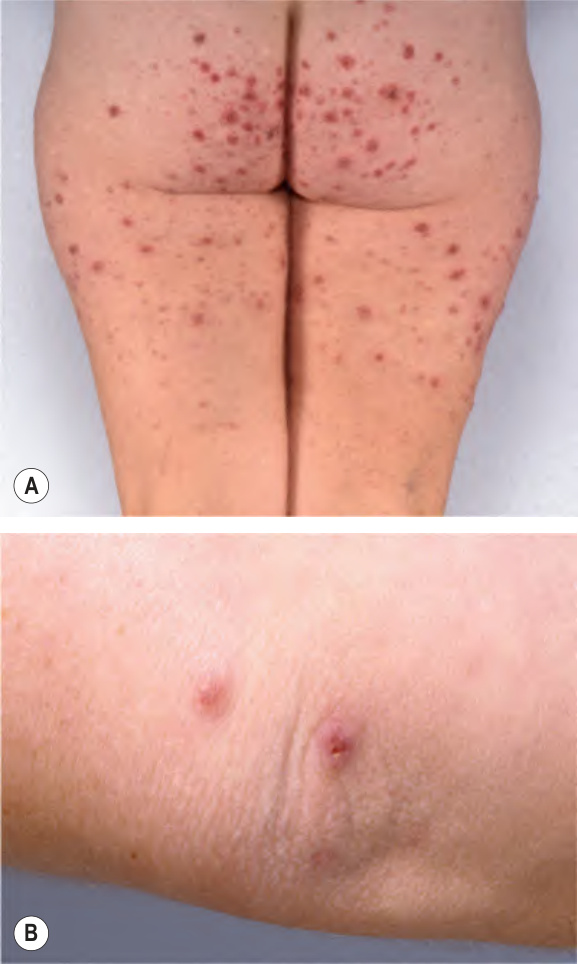
Fig. 25.17 Bowel-associated dermatosis–arthritis syndrome.A, B Papules and papulopustules can be erythematous or violaceous and purpuric. The number of lesions varies from a few to many.
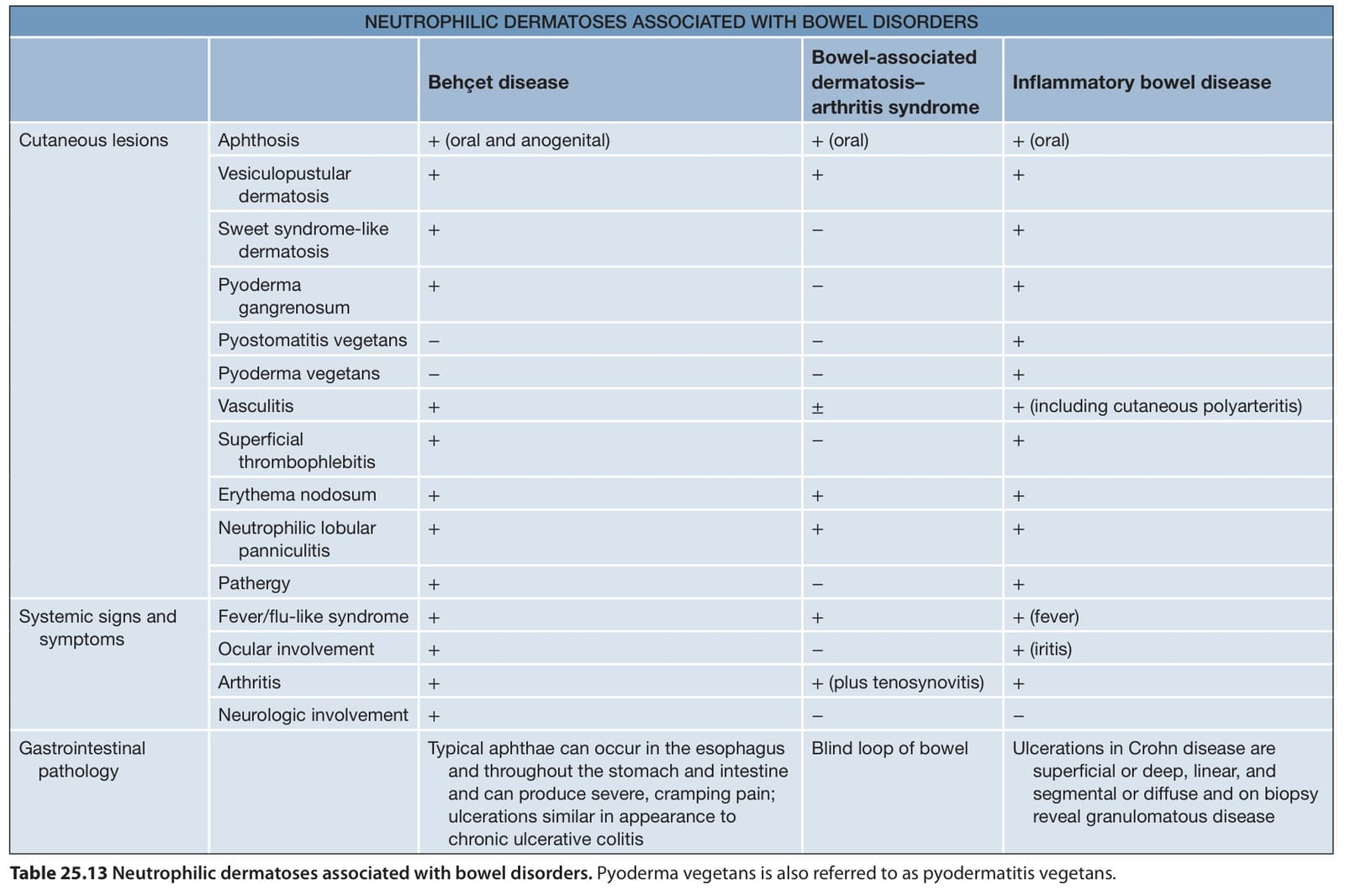
Table 25.13 Neutrophilic dermatoses associated with bowel disorders. Pyoderma vegetans is also referred to as pyodermatitis vegetans.
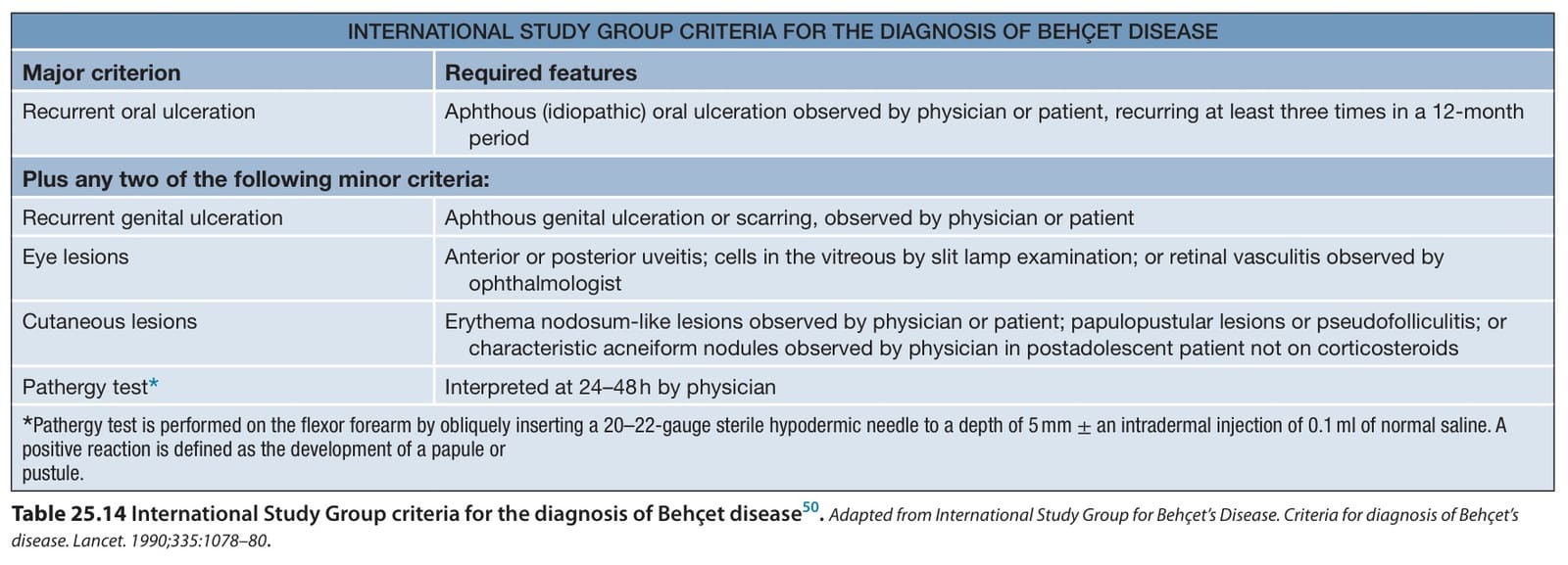
Table 25.14 International Study Group criteria for the diagnosis of Behçet disease. Adapted from International Study Group for Behçet’s Disease. Criteria for diagnosis of Behçet’s disease. Lancet. 1990;335:1078–80
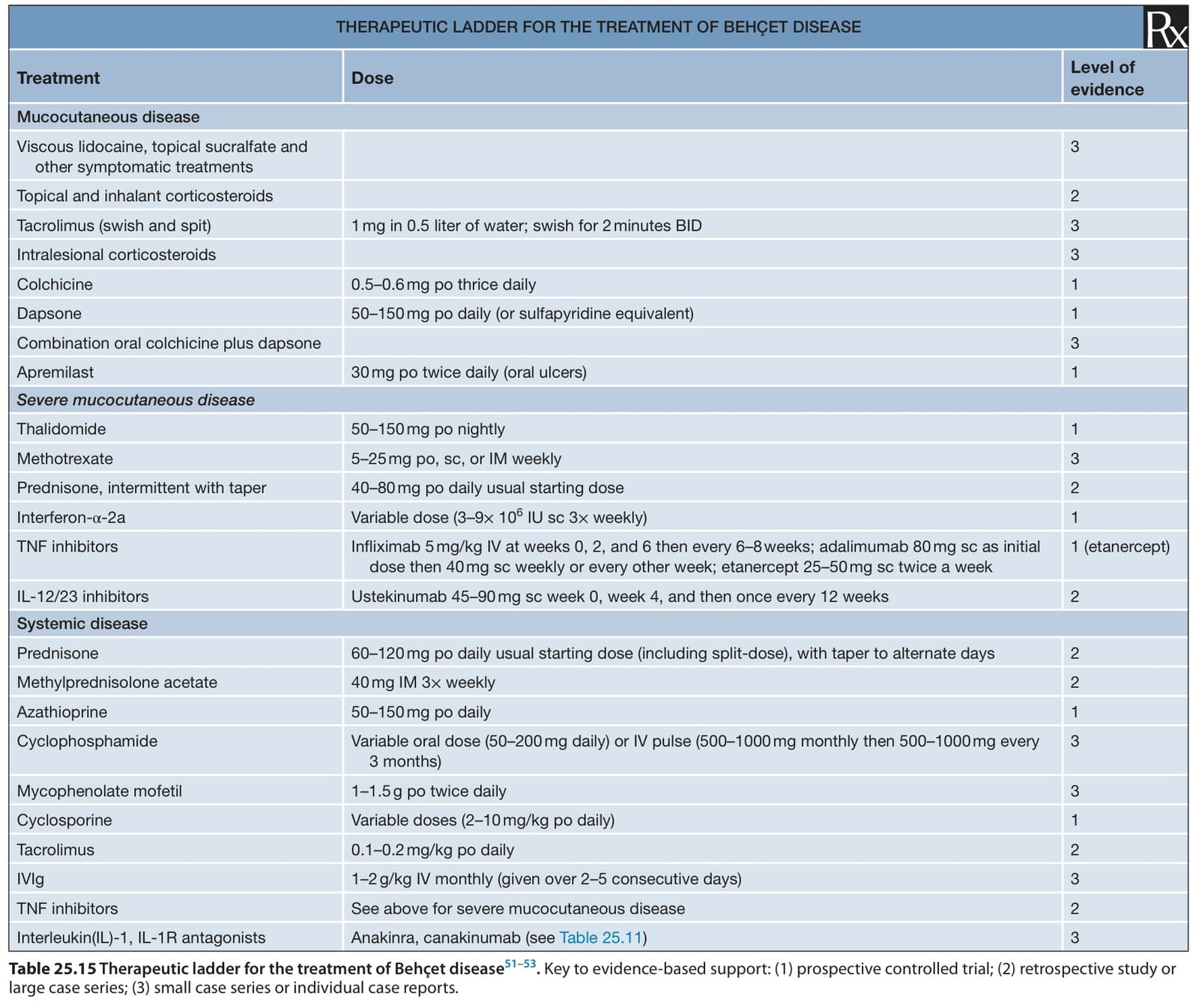
Table 25.15 Therapeutic ladder for the treatment of Behçet disease. Key to evidence-based support: (1) prospective controlled trial; (2) retrospective study or large case series; (3) small case series or individual case reports.
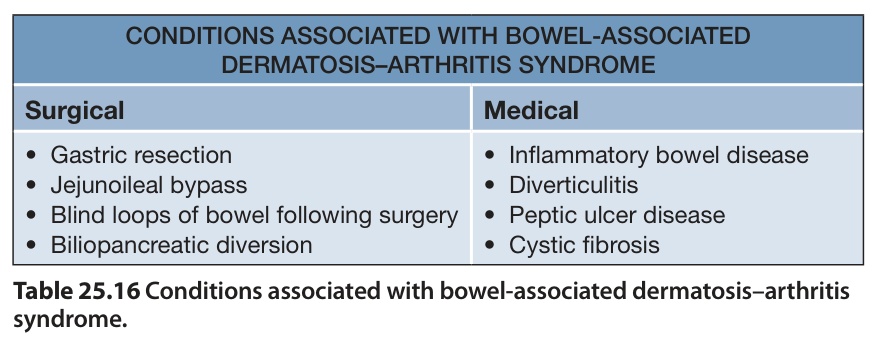
Table 25.16 Conditions associated with bowel-associated dermatosis–arthritis syndrome.
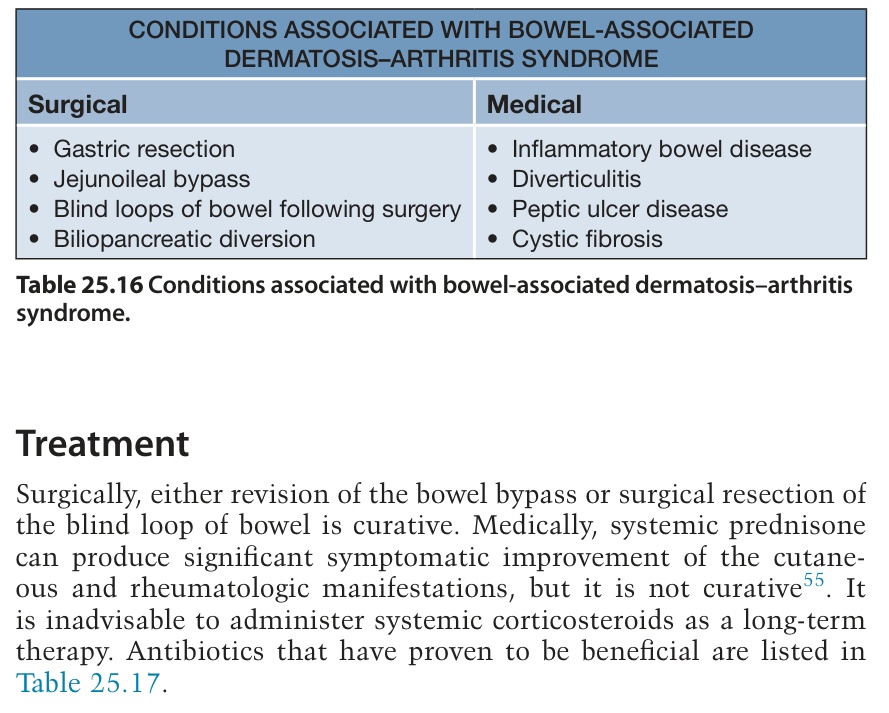
Table 25.17 Therapeutic approaches for bowel-associated dermatosis– arthritis syndrome.