INTRODUCTION
Inherited epidermolysis bullosa (EB), the prototypic mechanobullous disease, is characterized by the development of blisters following seemingly minor or insignificant trauma or traction to the skin. The most recent classification includes four major forms of classic EB – EB simplex, junctional EB, dystrophic EB, and Kindler EB – and at least 30 distinctive clinical phenotypes (Table 32.1). Inherited EB can result from mutations within the genes that encode at least 16 structural proteins: keratins 5 and 14; the subunits of laminin 332 (formerly laminin 5); types VII and XVII collagens; plectin; αβ integrin; α integrin subunit; bullous pemphigoid antigen 1; kindlin-1; exophilin 5; kelch-like protein 24; and CD151 (tetraspanin 24). The current EB classification also delineates other disorders associated with skin fragility in which blistering is a relatively minor feature, with at least 23 additional genes implicated in their pathogenesis. These entities include several disorders that were previously classified as suprabasal forms of EB simplex, such as acral peeling skin syndrome (transglutaminase-5; see Table 57.8), skin fragility–ectodermal dysplasia syndrome (plakophilin-1), and acantholytic erosive disorder (desmoplakin or plakoglobin).
Although most forms of EB are rare, research into their underlying pathophysiologic bases has led to major advances in our understanding of the cell and molecular biology of keratins, other keratinocyteassociated structural proteins, collagens, and the cutaneous extracellular matrix (ECM). Study of EB has also helped to elucidate mechanisms of epithelial cell adhesion, migration, and differentiation and to highlight the role of the epidermal basement membrane in health and disease. The creation of in vitro and animal models of EB has facilitated the development of novel translational therapeutic approaches for the treatment of EB patients.
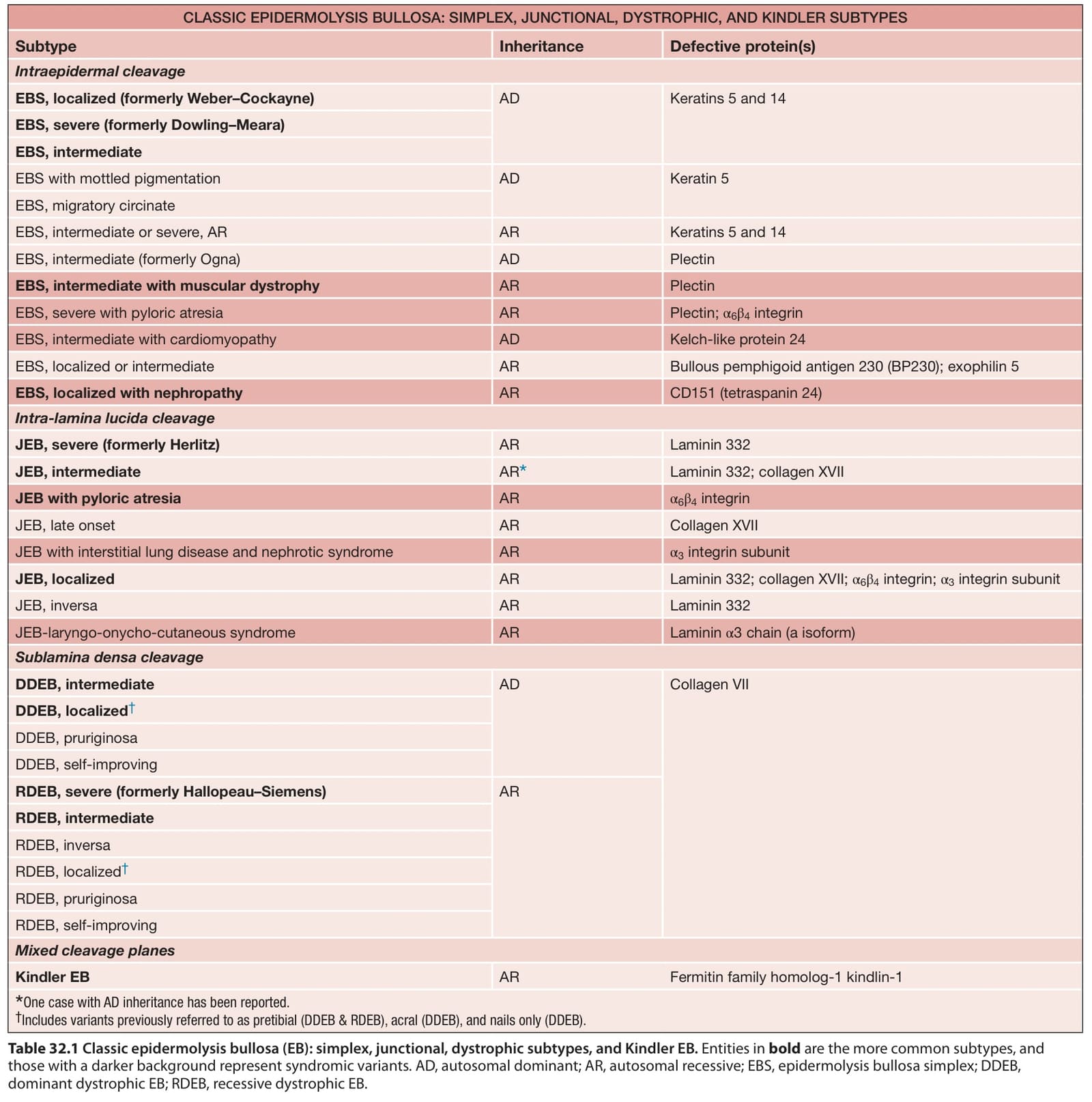
Table 32.1 Classic epidermolysis bullosa (EB): simplex, junctional, dystrophic subtypes, and Kindler EB. Entities in bold are the more common subtypes, and those with a darker background represent syndromic variants. AD, autosomal dominant; AR, autosomal recessive; EBS, epidermolysis bullosa simplex; DDEB, dominant dystrophic EB; RDEB, recessive dystrophic EB.