TREATMENT
General skin care recommendations for all rosacea patients are outlined in Table 37.5 and they represent an important component of the overall therapeutic regimen. Currently available treatment options for the various subtypes of rosacea are listed in Table 37.6. Grading the predominant features of rosacea into mild, moderate, and severe (grades 1–3) assists in guiding initial therapeutic interventions and in monitoring the clinical response (see Table 37.2). At the initial consultation, the patient should be made aware of the chronic relapsing nature of rosacea and the need for maintenance therapy even when in remission.
Transient and Persistent Erythema and Telangiectasia
A skin care regimen aimed at reducing skin sensitivity and improving epidermal barrier function is particularly important in these patients (see Table 37.5). In addition, strict photoprotection is advised, as UV exposure may potentiate dermal matrix and vascular damage. Topical application of vasoconstrictive adrenergic agonists, such as brimonidine (selective α) or oxymetazoline (selective α1A and partial α), may help to diminish persistent erythema. Patients should be instructed on the proper application of these agents and informed of side effects including rebound erythema, a burning sensation, and irritant contact dermatitis.
Topical antibiotics such as metronidazole may reduce erythema in a select group of patients, but they can cause irritation (see Table 37.6).
Use of nonselective β-blockers (e.g. propranolol, carvedilol) to treat rosacea-associated flushing can be beneficial in selected individuals. Laser therapy (e.g. pulsed dye, potassium titanyl phosphate) and intense pulsed light can be used to ameliorate telangiectasias and improve erythema (see Ch. 137).
Papules and Pustules
In general, patients with inflammatory papules and pustules are treated with topical and/or systemic antibiotics (see Table 37.6). Although many of the antibiotics used to treat these lesions are the same as those used for acne vulgaris, the treatment course for rosacea is usually shorter (4–8 weeks as opposed to 3–4 months) and subantimicrobial doses may be effective. Sometimes successful treatment of the papulopustules may unmask background telangiectasias which then need to be addressed. Following successful clearance of inflammatory lesions, maintenance therapy (usually topical) should be instituted to avoid a likely relapse. Many patients with moderate and severe (grades 2 and 3) disease require repeated courses of systemic antibiotic therapy, but subsequent courses can often be shorter in duration, i.e. 3 to 4 weeks.
Topical ivermectin, which has both anti-inflammatory and antiparasitic properties, has become an important first-line therapy, as are
topical metronidazole and azelaic acid. Other topical agents include sodium sulfacetamide +/− sulfur, minocycline, clindamycin, benzoyl peroxide, retinoids, and permethrin. Low-dose isotretinoin and photodynamic therapy are treatment options in patients whose lesions prove resistant to first-line therapies.
Other Forms of Rosacea
Rhinophyma is the type of phymatous rosacea most amenable to treatment (see Table 37.6). Mild disease may be responsive to low-dose isotretinoin, although conclusive evidence of efficacy is lacking. More
severe (grades 2 and 3) disease responds best to physical modalities such as CO laser therapy, electrosurgery, or surgical excision (see Fig. 140.7). Longitudinal evaluation of patients treated with CO laser therapy suggests that improvement persists long-term. Other sites of phymatous rosacea are very rare and there are no established therapeutic interventions.
Ocular rosacea is a common entity that is frequently underdiagnosed. Patients with mild ocular rosacea (grade 1 disease) often respond to washing of the eyelid margins with gauze soaked with dilute, tear-free baby shampoo. This is combined with an oily tear replacement. Burning or stinging with crusting of the eyelid margins or the formation of a chalazion or hordeolum are manifestations of moderate (grade 2) disease and treatment consists of topical and/or systemic antibiotics (see Table 37.6). Pain, photophobia, and visual disturbances are features of severe (grade 3) disease. Such symptoms require prompt referral to an ophthalmologist.
Granulomatous rosacea is difficult to treat, and no consensus exists regarding first-line therapies. Anecdotally, options include dapsone, minocycline, isotretinoin, hydroxychloroquine, and the 1450-nm diode laser. Anecdotally, apremilast has been reported to improve LMDF.
While some authors consider rosacea fulminans (pyoderma faciale; Fig. 37.12) and rosacea conglobata to be within the rosacea spectrum, others view them as variants of acne vulgaris. Nonetheless, systemic corticosteroids are required to control the aggressive inflammation observed in both disorders, followed by the use of oral isotretinoin. Scarring can be a sequela despite these interventions.
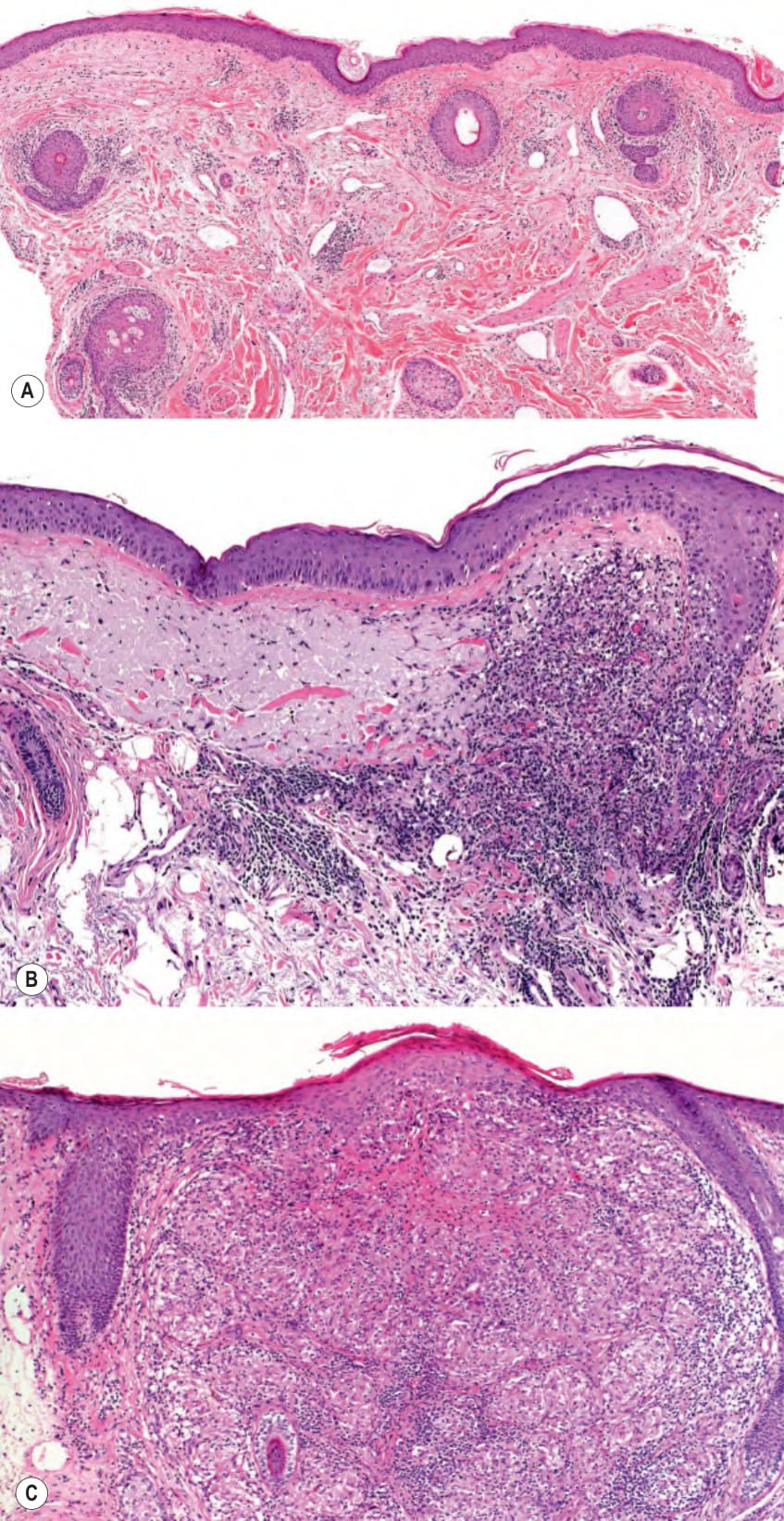
Fig. 37.11 Rosacea – range of histopathologic features.AErythema and telangiectasia subtype with multiple dilated blood vessels as well as minimal perifollicular and perivascular lymphocytic infiltrates. BPapules and pustules subtype with a dense dermal infiltrate of lymphocytes, predominantly surrounding an involved hair follicle. There is also marked solar elastosis. CGranulomatous variant of rosacea with a nodular granulomatous infiltrate composed of histiocytes, histiocytic giant cells, and admixed lymphocytes filling the upper interfollicular dermis. Courtesy Lorenzo Cerroni, MD.
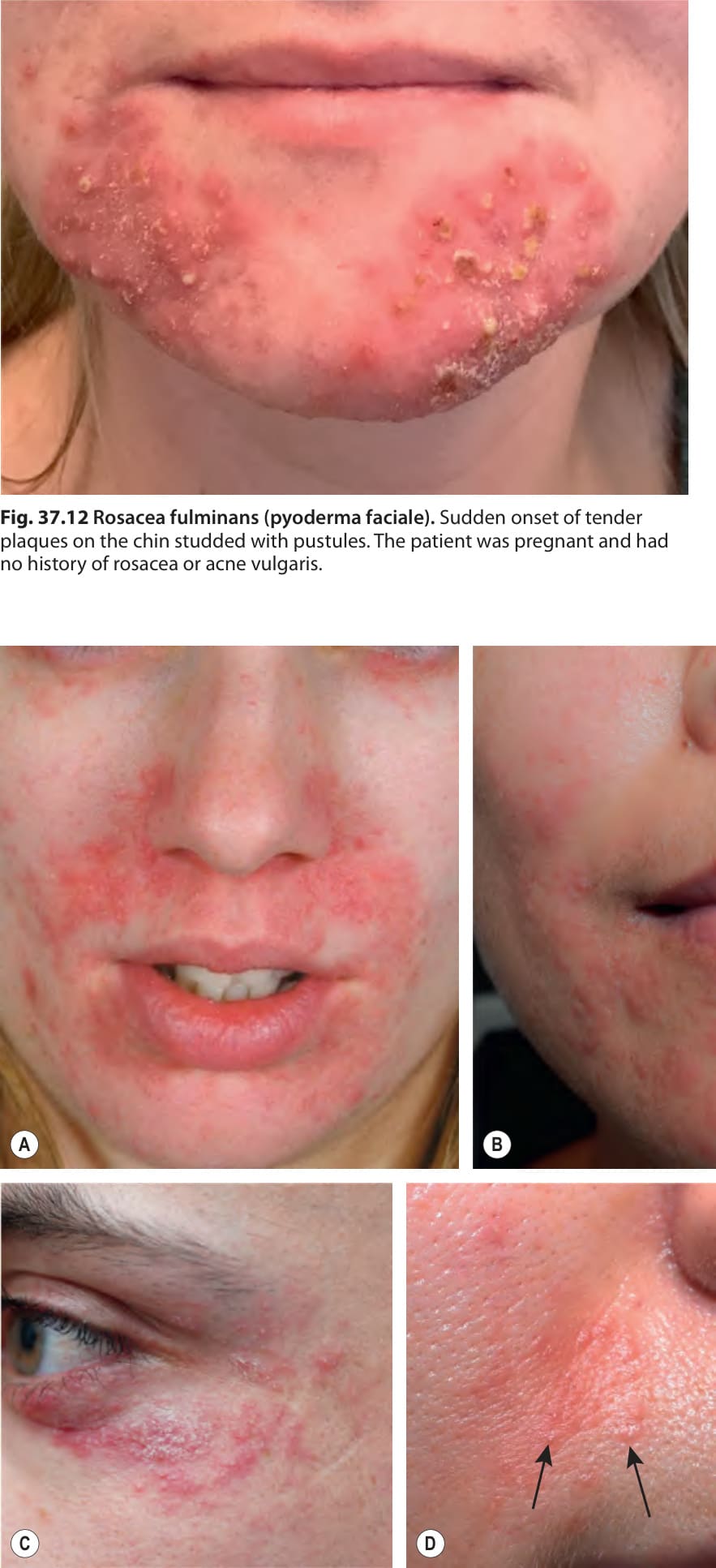
Fig. 37.12 Rosacea fulminans (pyoderma faciale). Sudden onset of tender plaques on the chin studded with pustules. The patient was pregnant and had no history of rosacea or acne vulgaris.
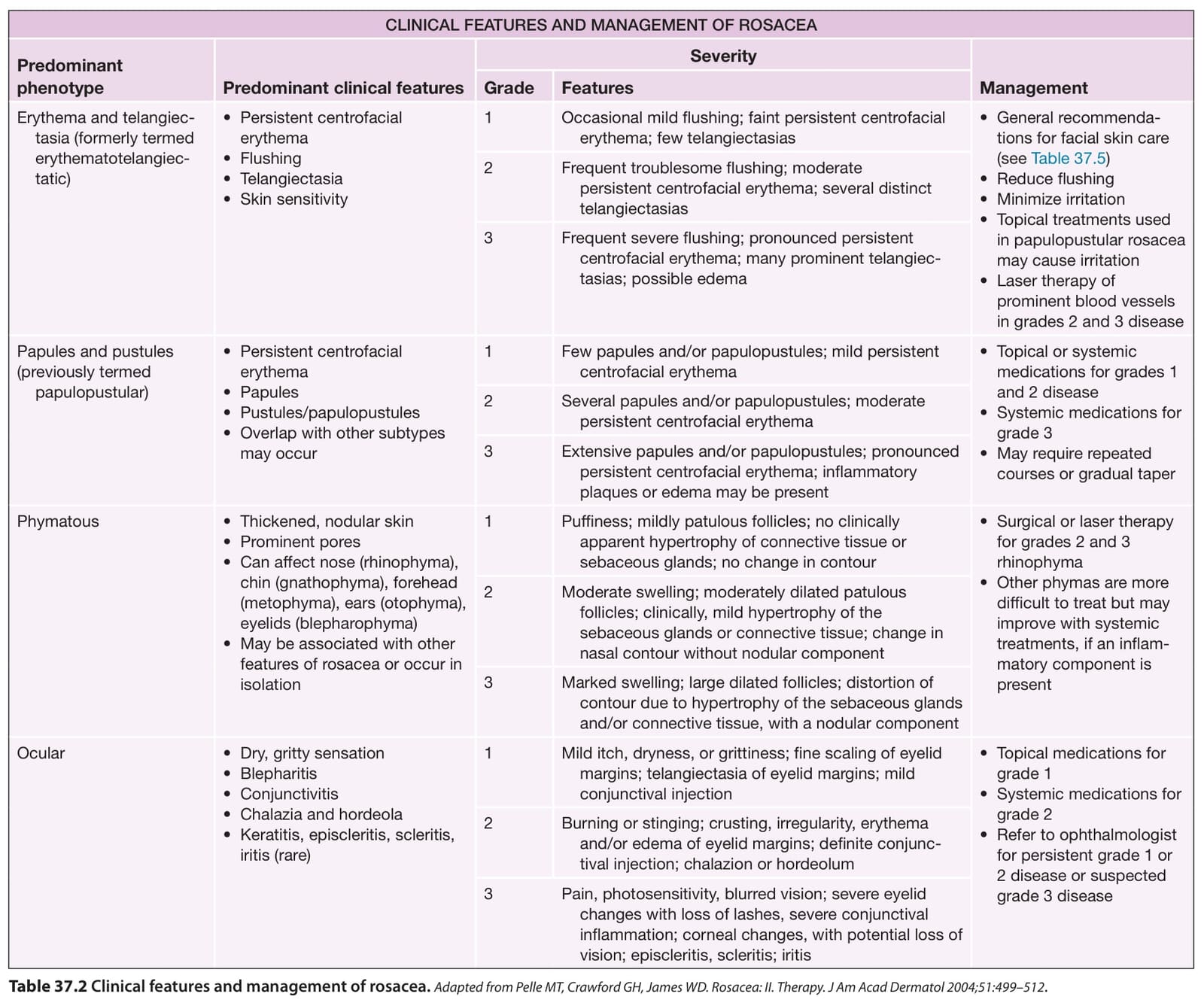
Table 37.2 Clinical features and management of rosacea.Adapted from Pelle MT, Crawford GH, James WD. Rosacea: II. Therapy. J Am Acad Dermatol 2004;51:499–512.
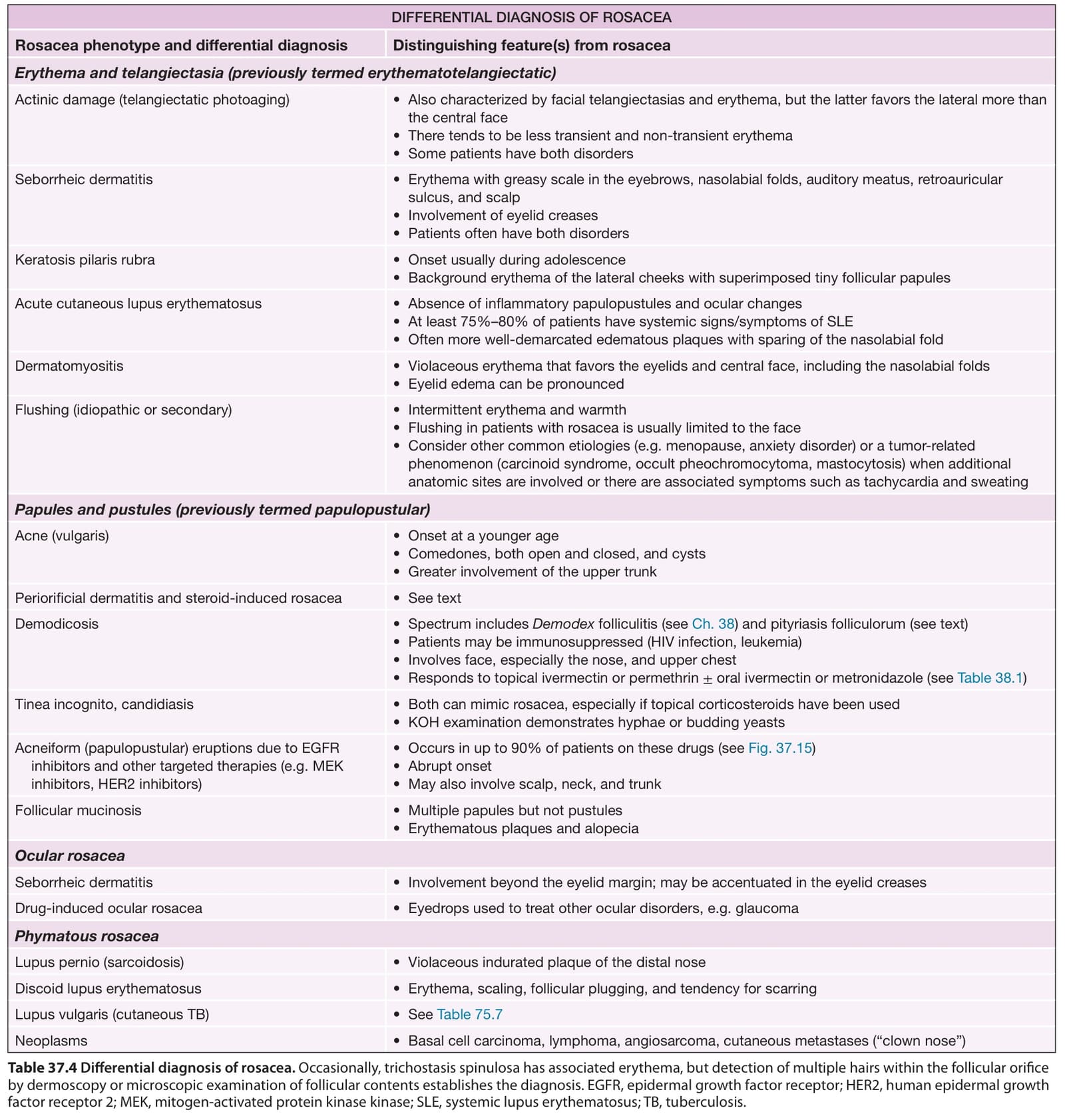
Table 37.4 Differential diagnosis of rosacea. Occasionally, trichostasis spinulosa has associated erythema, but detection of multiple hairs within the follicular orifice by dermoscopy or microscopic examination of follicular contents establishes the diagnosis. EGFR, epidermal growth factor receptor; HER2, human epidermal growth factor receptor 2; MEK, mitogen-activated protein kinase kinase; SLE, systemic lupus erythematosus; TB, tuberculosis.
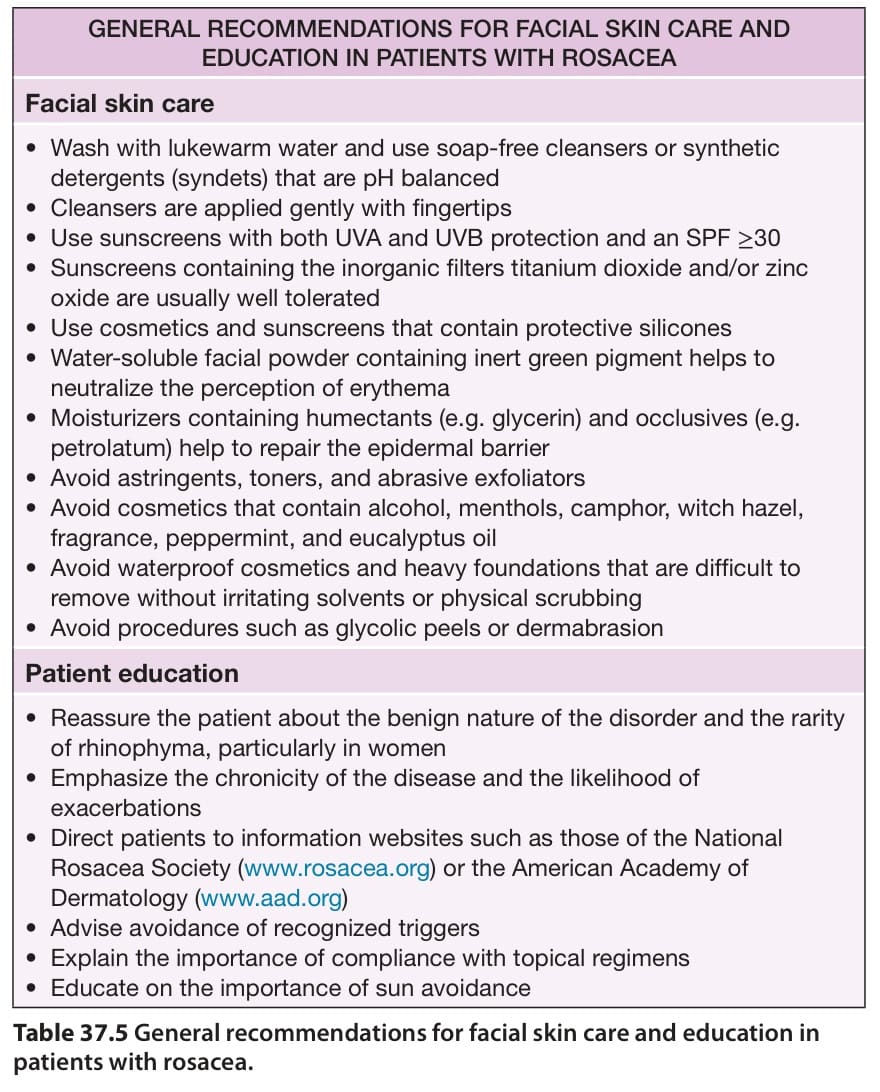
Table 37.5 General recommendations for facial skin care and education in patients with rosacea.
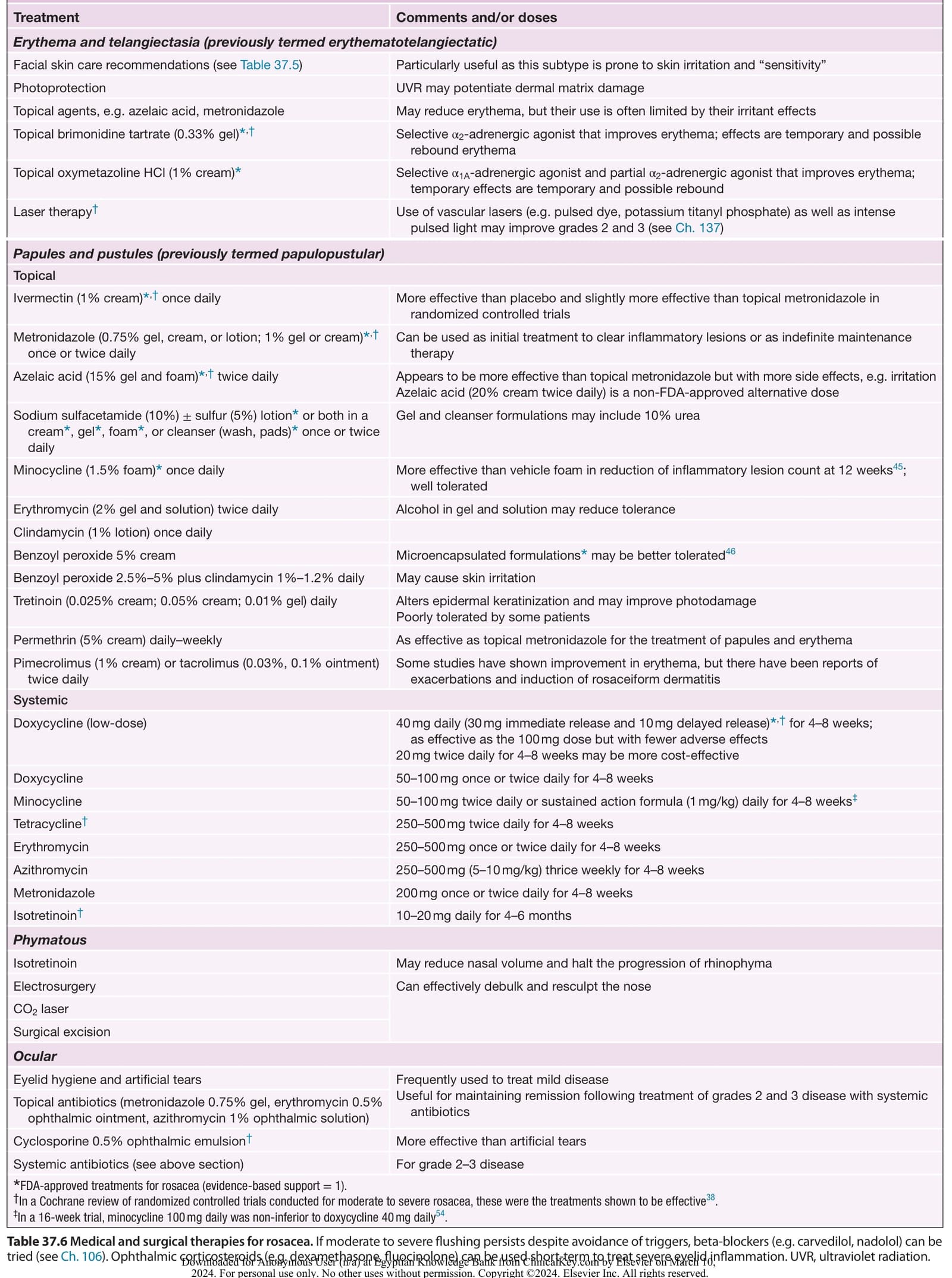
Table 37.6 Medical and surgical therapies for rosacea. If moderate to severe flushing persists despite avoidance of triggers, beta-blockers (e.g. carvedilol, nadolol) can be tried (see Ch. 106). Ophthalmic corticosteroids (e.g. dexamethasone, fluocinolone) can be used short-term to treat severe eyelid inflammation. UVR, ultraviolet radiation.