DIFFERENTIAL DIAGNOSIS AND EVALUATION
The differential diagnosis varies considerably with the subtype of cutaneous LE under consideration. Some of the major entities in each of the differential diagnoses are outlined in Table 41.8.
In evaluating a patient with cutaneous lesions, lesional biopsy for H&E is, in general, the most valuable diagnostic test. An approach to the diagnosis of cutaneous LE is shown in Fig. 41.19. In an occasional situation, such as that of a patient with known SLE who has transient facial lesions that appear to be ACLE, the clinician may forego a biopsy because of the high likelihood of obtaining nonspecific findings and the cosmetic sequela of a scar on the face. Thus, the diagnostic tree presented is not intended to be followed strictly for each situation, but
rather is meant as a general overview that is to be individualized for each patient.
In evaluating a patient with cutaneous lesions for the presence of systemic disease, the dermatologist can take a directed history, perform a cutaneous examination looking for signs of possible systemic disease (such as vasculitic lesions), and perform blood and urine testing for evidence of hematologic or renal disease, ANA, and SLE-specific autoantibodies (Table 41.9; see Fig. 40.5). Many clinicians also obtain an ESR and complement levels. Autoantibodies to dsDNA and Sm are relatively specific for SLE, and are, therefore, helpful indicators of a high likelihood of systemic disease (see Ch. 40). Autoantibodies to SSA/Ro, SSB/La, U1RNP, histones, and ssDNA are common in patients
with SLE, but they are not disease-specific. An ANA test is helpful if negative, as it is quite unusual for patients with SLE to have a negative ANA test, particularly if the assay employed is the indirect immuno fluorescent test. It is common for the ANA test to be positive in patients with cutaneous lesions, but a positive ANA is neither an indicator of systemic disease nor of LE. ANAs may be found in patients with many other diseases (see Ch. 40) and even in apparently normal individuals. Approximately a third of apparently normal individuals have a positive ANA at a dilution of 1 : 40, 13% at a dilution of 1 : 80, and 5% at a dilution of 1 : 160.
Clinical evaluation should also include consideration of drug-induced systemic or cutaneous lupus (Table 41.10). Drug-induced SLE typically presents as a systemic illness with arthralgias, myalgias, pleuritis, and fever, but lacking nephritis and CNS disease. SCLE is the most common form of drug-induced cutaneous LE and is clinically and serologically indistinguishable from the classic form; however, patients tend to be older.
In many cases, the decision to make a diagnosis of SLE is done on the basis of whether or not the patient’s findings fulfill classification criteria (see Tables 41.4 & 41.5). However, there are limitations to making a diagnosis on the basis of criteria, which were developed primarily to improve reproducibility of research studies and clinical trials. Meeting criteria does not necessarily imply the presence or development of major organ involvement, nor does lack of meeting criteria ensure that an individual patient does not have SLE.
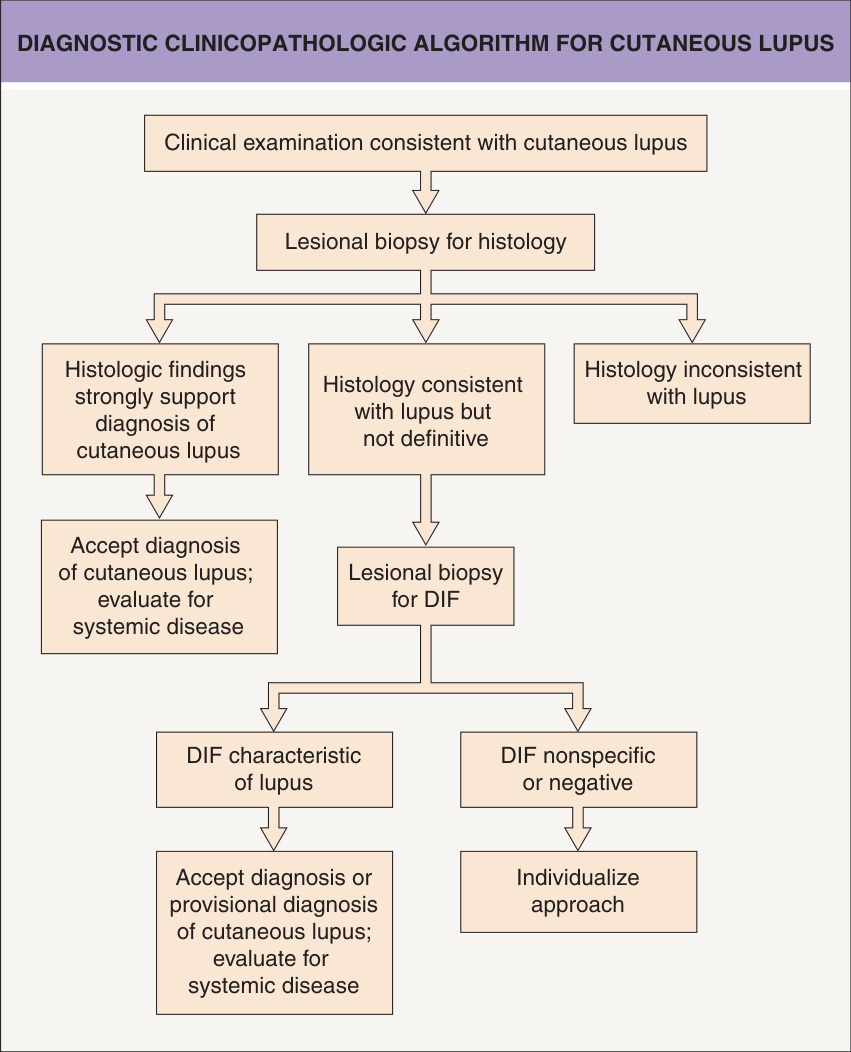
Fig. 41.19 Diagnostic clinicopathologic algorithm for cutaneous lupus. This algorithm is intended as a guide to diagnosis and should be individualized for each situation. For example, lesional biopsy for direct immunofluorescence (DIF) may be performed at the same time as a lesional biopsy for routine histology. Less definitive histologic findings might sometimes be acceptable if the patient is already known to have SLE. Whether a diagnosis is clear-cut or provisional may be, on occasion, a subjective determination.
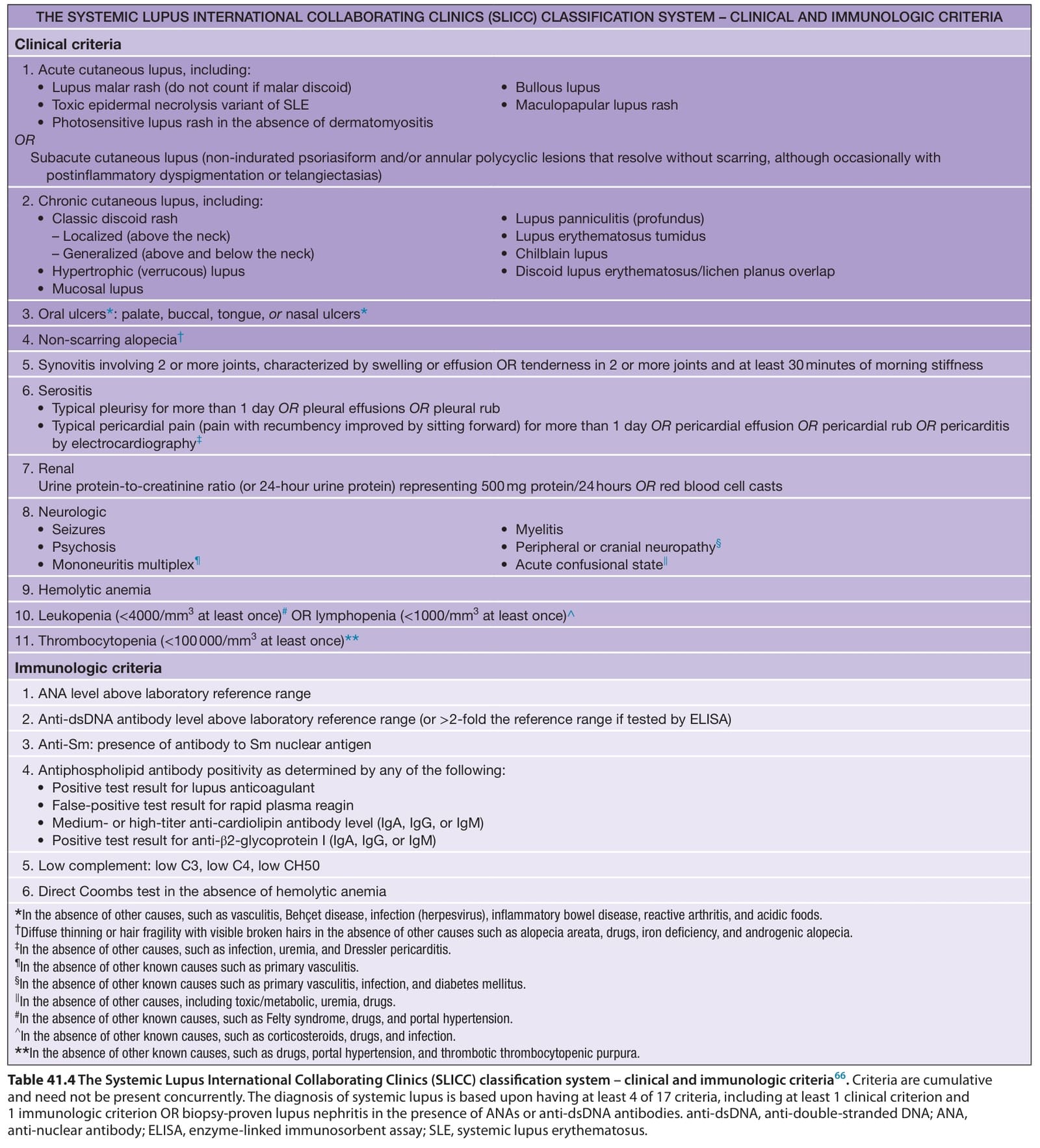
Table 41.4 The Systemic Lupus International Collaborating Clinics (SLICC) classification system – clinical and immunologic criteria. Criteria are cumulative and need not be present concurrently. The diagnosis of systemic lupus is based upon having at least 4 of 17 criteria, including at least 1 clinical criterion and 1 immunologic criterion OR biopsy-proven lupus nephritis in the presence of ANAs or anti-dsDNA antibodies. anti-dsDNA, anti-double-stranded DNA; ANA, anti-nuclear antibody; ELISA, enzyme-linked immunosorbent assay; SLE, systemic lupus erythematosus.
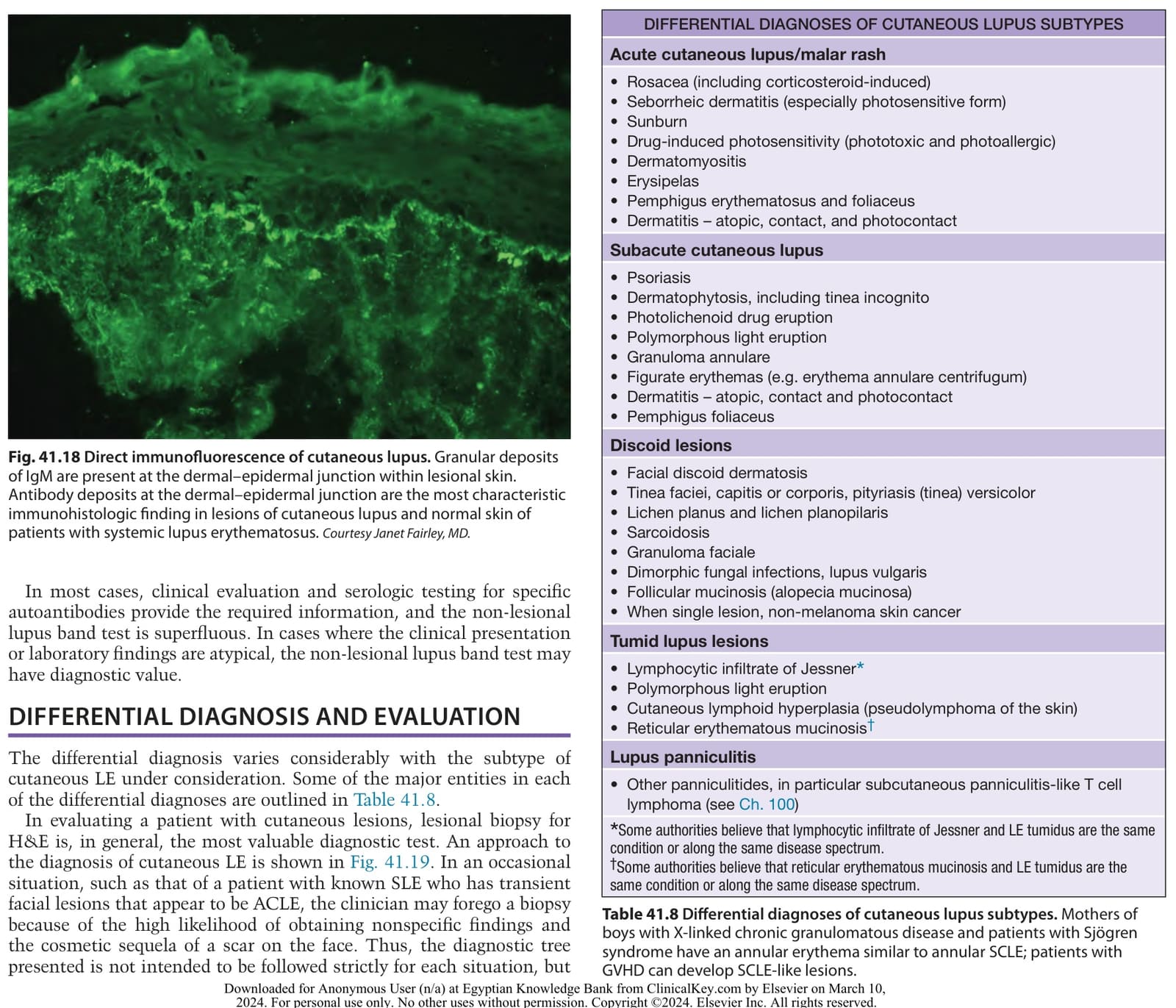
Table 41.8 Differential diagnoses of cutaneous lupus subtypes. Mothers of boys with X-linked chronic granulomatous disease and patients with Sjögren syndrome have an annular erythema similar to annular SCLE; patients with GVHD can develop SCLE-like lesions.
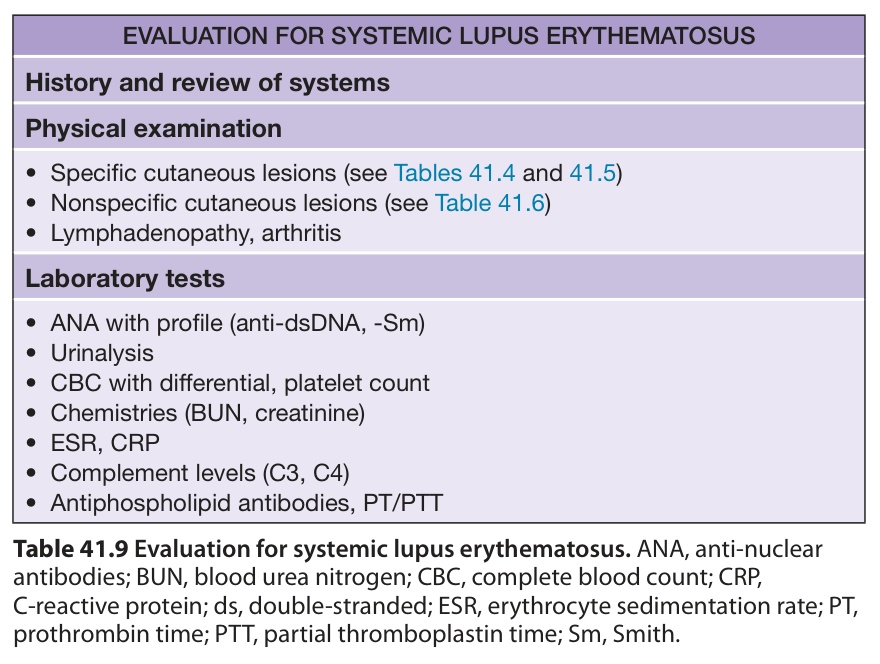
Table 41.9 Evaluation for systemic lupus erythematosus. ANA, anti-nuclear antibodies; BUN, blood urea nitrogen; CBC, complete blood count; CRP, C-reactive protein; ds, double-stranded; ESR, erythrocyte sedimentation rate; PT, prothrombin time; PTT, partial thromboplastin time; Sm, Smith.
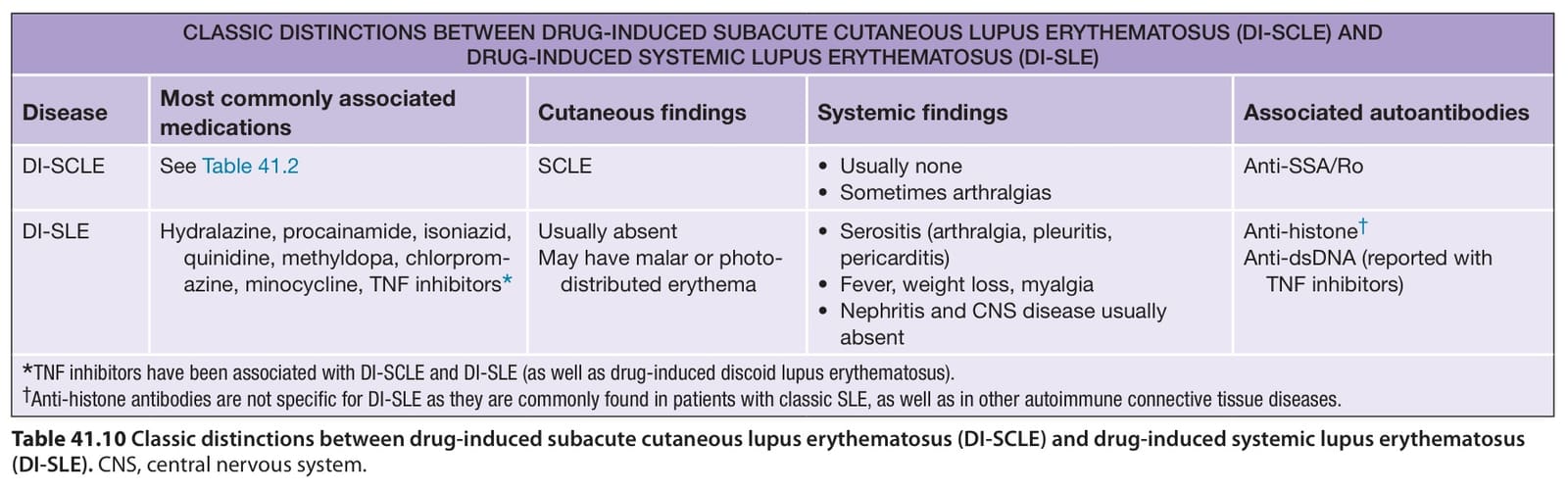
Table 41.10 Classic distinctions between drug-induced subacute cutaneous lupus erythematosus (DI-SCLE) and drug-induced systemic lupus erythematosus