INTRODUCTION
The complete sequencing of the human genome, with an estimated size of 3.2 gigabases (Gb) containing ~20 000–25 000 genes, represented a major scientific accomplishment. Detailed information on human sequence variation and advanced technologies for its detection continue to broaden our knowledge of the genetic basis of human disease. The pathogenesis of many disorders also involves epigenetics, which represent heritable changes in phenotype and/or gene expression that do not result from changes in the DNA sequence.
A wide variety of molecular biology techniques (see Ch. 3) and information-based tools provide direct access to clinically relevant genetic information. Consequently, it is important for physicians in general, and dermatologists in particular, to understand basic concepts of genetics (Table 54.1). Familiarity with new techniques and approaches to identifying disease-causing genes is essential in order to appropriately utilize and interpret the results of genetic studies in the patient care setting. The wealth of new information emphasizes the need to bridge the gap between the bench and the bedside, bringing together efforts from the clinical and research arms of dermatology.
Access to patients with genetic disorders and accurate clinical descriptions are essential for laboratory investigations aimed at the identification of disease-causing genes. Combined with functional studies and translational approaches, these findings can in turn provide benefits to affected individuals. Such insights have importance in genetic counseling and prenatal diagnosis, and they can also contribute to the identification of at-risk individuals/families, prediction of disease course and possible complications, determination of response to therapeutic interventions, and even the development of targeted treatments.
Since the early 1980s, the molecular bases of numerous cutaneous genetic disorders have been elucidated, including multiple forms of epidermolysis bullosa (EB; see Ch. 32), ectodermal dysplasia (ED; see Ch. 63), and ichthyosis (see Ch. 57). The gene-identification strategies employed for these relatively uncommon Mendelian (single-gene) disorders have provided a foundation for the study of common complex disorders such as atopic dermatitis, psoriasis, and alopecia areata. Advances in mapping and detecting human sequence variation have led to more sophisticated approaches, including genome-wide association studies (GWAS) and whole-exome or whole-genome sequencing. Functional genomic studies, e.g. comparison of the transcriptome (expressed genes) in samples from patients and unaffected individuals, have also helped to identify candidate genes for further investigation. The clinician plays a key role in enabling such research, which requires a well-characterized collection of patient samples.
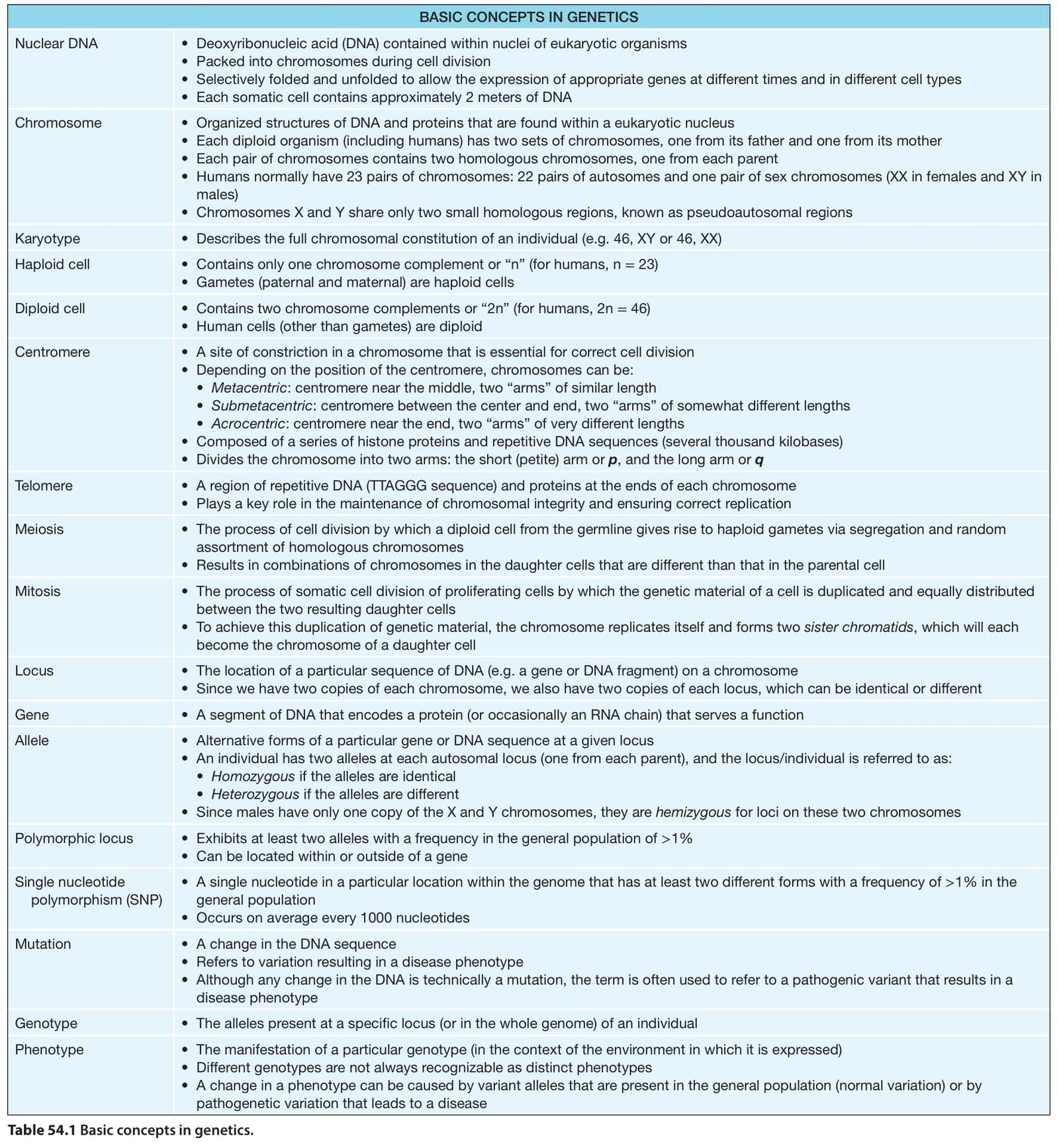
Table 54.1 Basic concepts in genetics.