GENETIC COUNSELING
Geneticists and genetic counselors can assist in educating patients and families about genetic diseases and testing, provide psychological support, and aid in decision-making processes. A typical visit includes a three-generation family history and drawn pedigree (see Fig. 54.1). Prior to proceeding with genetic analysis, its potential impact on the patient’s diagnosis, prognosis, and medical care as well as implications for family members and reproductive planning are discussed. The limitations of genetic testing and possibility of equivocal or non-informative results are also reviewed. For example, a mutation in the protein kinase, cAMP-dependent, regulatory type Iα gene (PRKAR1A) that is known to cause Carney complex (myxoma, spotty pigmentation, and endocrine overactivity) is identifiable in ~70% of patients who meet clinical criteria for this condition. Possible explanations for false-negative findings include genetic alterations not detectable by the methods utilized, mosaicism (see Ch. 62), locus heterogeneity (see above), and laboratory error.
Other topics to address with patients and families undergoing genetic testing may include confidentiality, detection of non-paternity, and (for WES or WGS) incidental findings in a gene unrelated to the disease being investigated. In the US, the Genetic Information Nondiscrimination Act (GINA) of 2008 provides protection against access to genetic information and genetic discrimination in health insurance and employment settings. However, GINA does not include all possible forms of genetic discrimination (e.g. life or disability insurance). Many state governments require documentation of consent for performance of genetic testing and disclosure of genetic information.
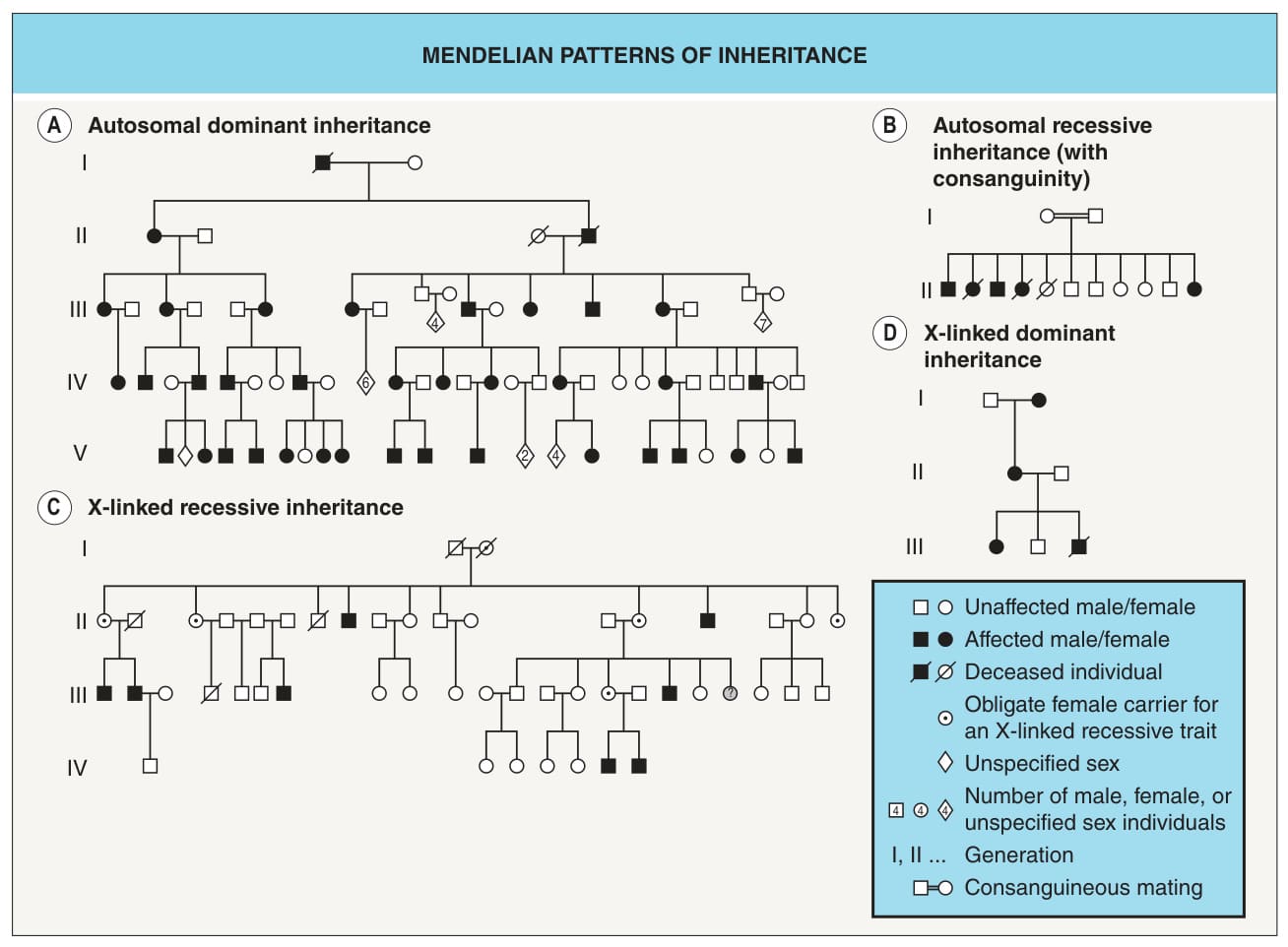
Fig. 54.1 Mendelian patterns of inheri- tance. A Autosomal dominant. Note the involvement of both sexes in multiple generations. B Autosomal recessive. C X-linked recessive. D X-linked dominant lethal, e.g incontinentia pigmenti. A, Adapted from ref. 22; B, Adapted from ref. 21; C, Adapted from ref. 46; D, Adapted from ref. 20.
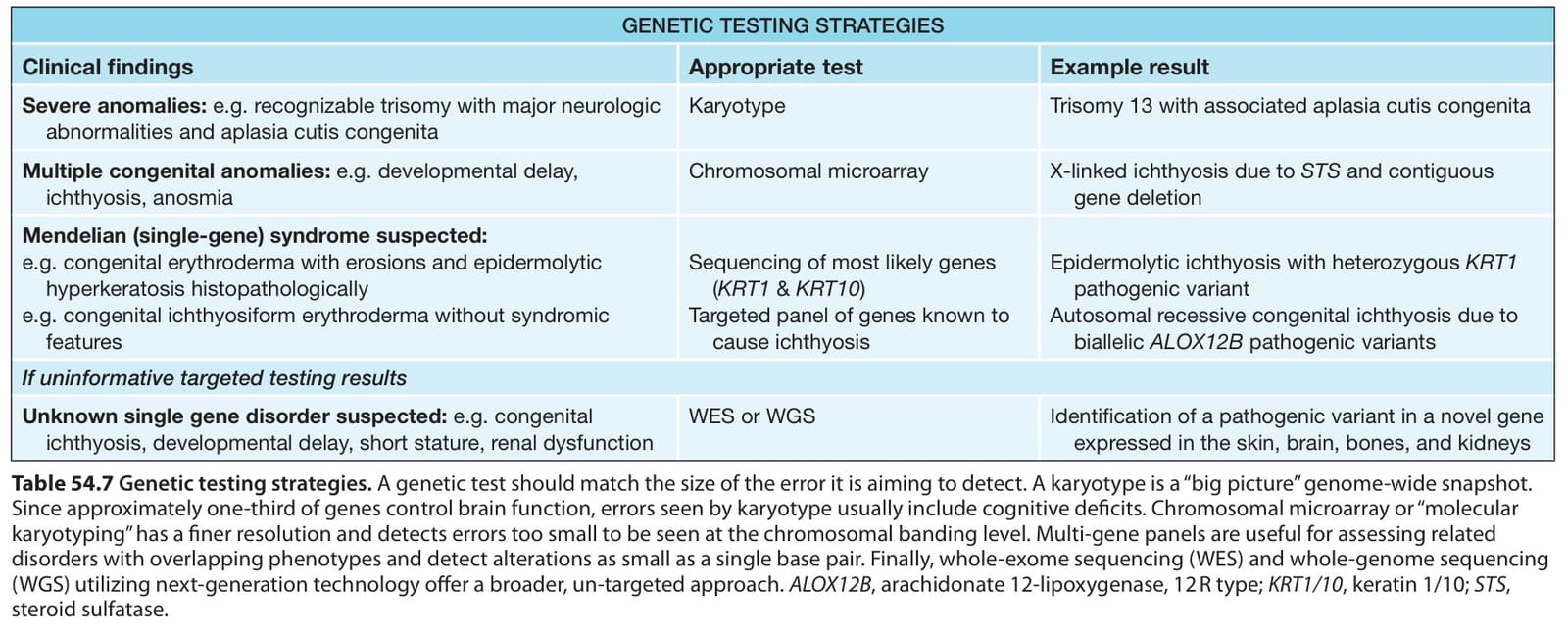
Table 54.7 Genetic testing strategies. A genetic test should match the size of the error it is aiming to detect. A karyotype is a “big picture” genome-wide snapshot. Since approximately one-third of genes control brain function, errors seen by karyotype usually include cognitive deficits. Chromosomal microarray or “molecular karyotyping” has a finer resolution and detects errors too small to be seen at the chromosomal banding level. Multi-gene panels are useful for assessing related disorders with overlapping phenotypes and detect alterations as small as a single base pair. Finally, whole-exome sequencing (WES) and whole-genome sequencing (WGS) utilizing next-generation technology offer a broader, un-targeted approach. ALOX12B, arachidonate 12-lipoxygenase, 12 R type; KRT1/10, keratin 1/10; STS, steroid sulfatase.