INTRODUCTION
In 1987, deletions in the steroid sulfatase gene were found to underlie X-linked recessive ichthyosis. This heralded an era of tremendous progress in the elucidation of the genetic bases of inherited skin disorders, made possible by rapid advances in molecular technology (including the development of next-generation massively parallel sequencing; see Fig. 3.5), utilization of animal models, and sequencing of the human genome. Better understanding of signaling pathways, molecules involved in cell–cell communication and adhesion, and mechanisms of cutaneous differentiation have also contributed to the momentum.
As a result of this explosion in research, more than 1000 genes were recognized to be responsible for a particular human phenotype by the year 2000, with approximately 300 of these conditions including cutaneous abnormalities; by 2023, these numbers had increased to nearly 5000 and 1700, respectively. Currently, the molecular genetic bases of the majority of single-gene inherited skin disorders have been established. Multigene panels as well as whole-exome (the transcribed portion of the genome) and whole-genome sequencing utilizing next-generation technology are clinically available to assist in the identification of disease-causing genes.
In the past, diagnosis of genodermatoses was complicated by the existence of multiple complex classification systems based on various combinations of clinical, histologic, radiographic, and biochemical criteria. Inconsistent nomenclature laden with descriptive terms, eponyms, and synonyms added to the confusion and potential for misdiagnosis. As the genetic bases of genodermatoses have been determined, integration of molecular and clinical data has helped to simplify disease categorization and eliminate redundant terminology. This has been successfully accomplished for disorders such as epidermolysis bullosa (EB) and ichthyoses, but it represents a work in progress, to be continually refined as additional genotype–phenotype correlations are established. In addition, grouping hereditary skin disorders according to their molecular bases (Table 55.1) can supplement traditional morphologic classification, clarifying pathomechanisms and the relationships between conditions. Groups of monogenic conditions listed in tables elsewhere in the book are noted in Table 55.2.
As the “morbid anatomy of the dermatologic genome” continues to be established, new challenges will arise and additional questions will be answered. Because of the rarity of many genodermatoses, their full clinical spectra have yet to be elucidated. However, with the increasing availability of genetic testing, dermatologists can establish the diagnosis in patients with mild or atypical presentations, thereby expanding the range of phenotypes. Continuing to decipher heritable skin disorders will require close interactions between basic scientists and clinicians. Hopefully, such research will continue to lead to better understanding of cutaneous structure and function; insights into the pathogenesis of common multifactorial disorders; and effective therapies as well as diagnostic and prognostic information, improved genetic counseling, and DNA-based prenatal/preimplantation testing for patients with genodermatoses.
McKUSICK’S MENDELIAN INHERITANCE IN MAN
McKusick’s Mendelian Inheritance in Man (MIM) database was first published in 1966 as “Catalogs of Autosomal Dominant, Autosomal Recessive and X-linked Phenotypes”. In the 1994 edition, the subtitle was changed to “A Catalog of Human Genes and Genetic Disorders”, reflecting the progress that had been made in the field. Online MIM (OMIM; https://omim.org/) has been widely available on the Internet for almost 40 years, providing immediate access to current information on human genes and genetic diseases. This database is updated continuously and can be searched by entering a constellation of clinical features as well as the name of a gene or syndrome.
A particular six-digit number (MIM number) is assigned to each OMIM entry. The first digit of the MIM number indicates the mode of inheritance of the corresponding genetic defect: 1 for autosomal dominant (entries before May 1994); 2 for autosomal recessive (entries before May 1994); 3 for X-linked; 4 for Y-linked; 5 for mitochondrial; and 6 for autosomal dominant or recessive (entries after May 1994). Phenotype entries describe the clinical and biochemical features, inheritance, mapping, and molecular genetics of a given disease or trait; a “#” is used to designate those for which the molecular basis is known (e.g. #162200). Gene entries are marked by a “*” (e.g. *613113), while gene plus phenotype entries are indicated with a “+” (e.g. +107670); both are appended with important disease-causing allelic variants (each of which is given a four-digit extension, beginning with .0001).
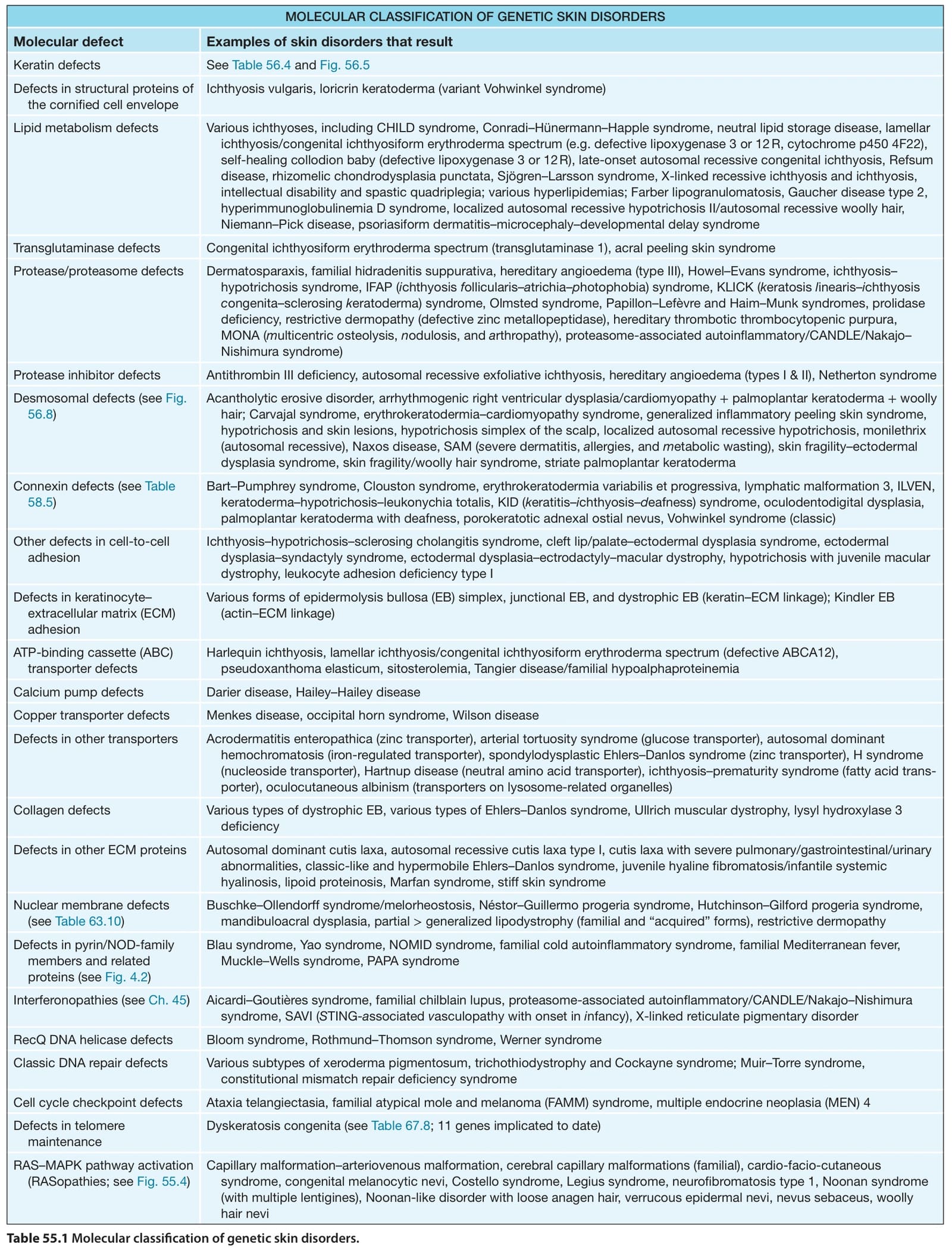
Table 55.1 Molecular classification of genetic skin disorders.
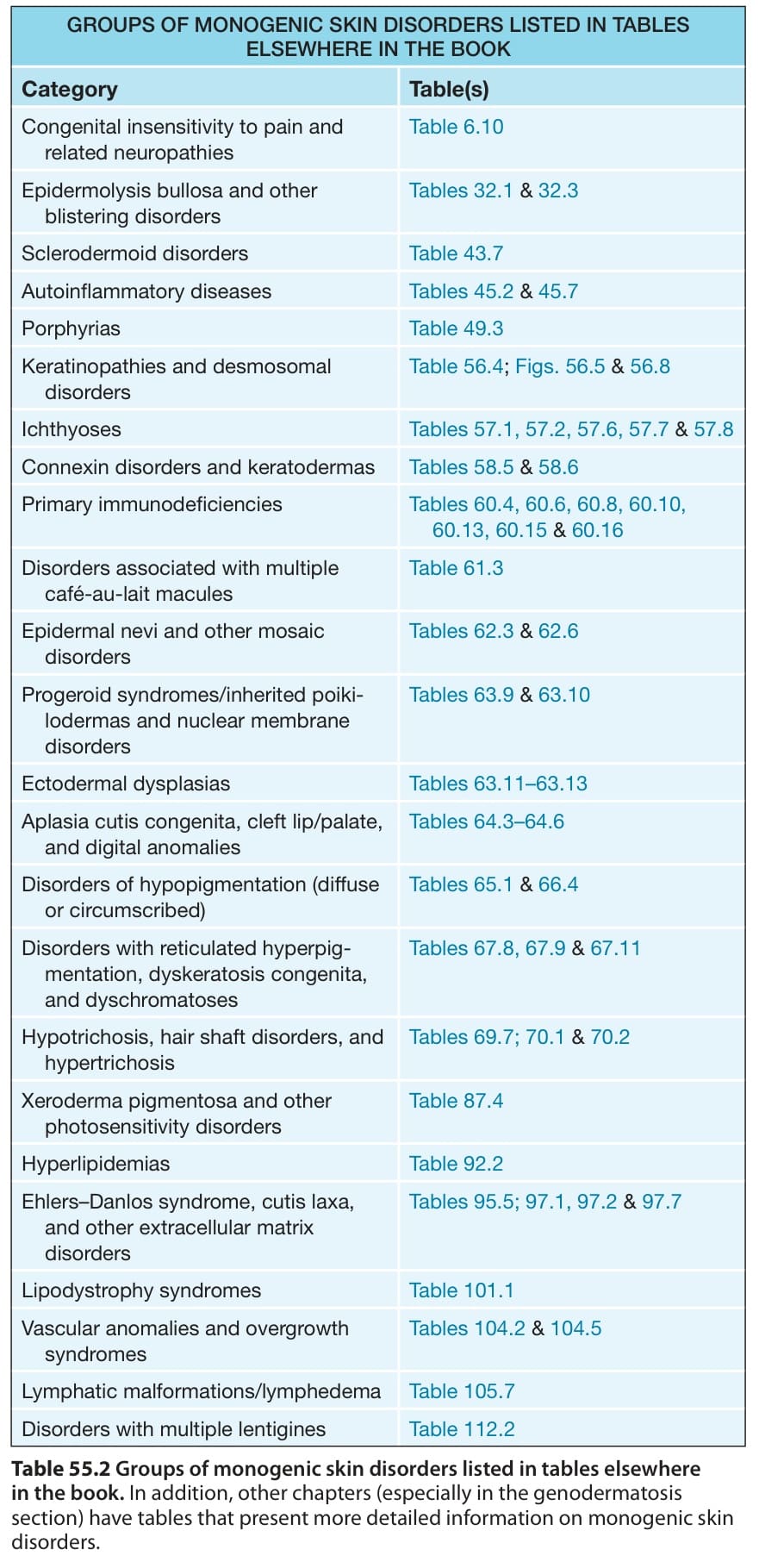
Table 55.2 Groups of monogenic skin disorders listed in tables elsewhere in the book. In addition, other chapters (especially in the genodermatosis section) have tables that present more detailed information on monogenic skin disorders.