KERATINOCYTE–MATRIX INTERACTIONS
The epidermis is separated from the underlying dermis by a basement membrane (see Ch. 28), which consists of proteins secreted by epidermal keratinocytes and dermal fibroblasts. The main components of the skin basement membrane are glycoproteins, including laminins, collagens, proteoglycans, and fibronectin. Keratinocytes are anchored to the basement membrane through integrins, transmembrane receptors for extracellular matrix proteins (Table 56.3). In addition to their structural role, integrins function by transducing signals from the extracellular matrix to the epidermal keratinocytes.
Another family of proteins required for basement membrane integrity during embryogenesis consists of Fras1, Frem1, and Frem2, three proteins that form a complex within the basement membrane. Loss-offunction mutations in any of these three genes destabilize this protein complex, causing aberrant basement membrane formation and skin blistering in mouse models. In humans, loss-of-function mutations in FRAS1 or FREM2 underlie Fraser syndrome, a multisystem autosomal recessive disorder characterized by embryonic (but not postnatal) blistering of the skin, cutaneous syndactyly, cryptophthalmos, and renal defects.
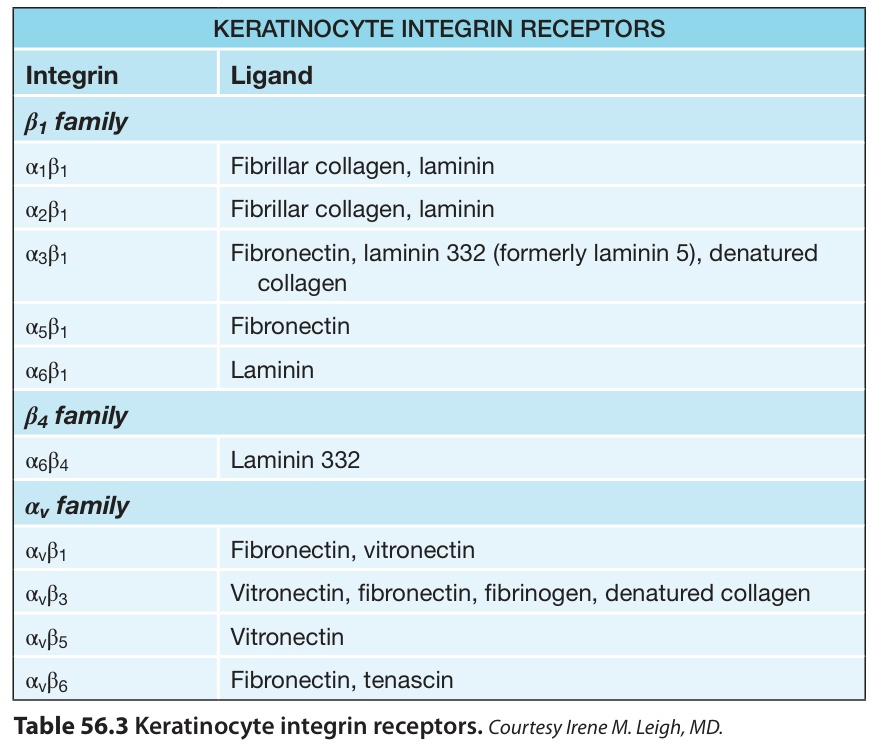
Table 56.3 Keratinocyte integrin receptors.Courtesy Irene M. Leigh, MD.