INTRODUCTION
Primary immunodeficiencies represent a heterogeneous group of inherited disorders characterized by immune system defects that result in susceptibility to infections as well as additional manifestations such as autoimmunity, allergy, and malignancy. The molecular bases have been defined for >450 monogenic primary immunodeficiency diseases, providing valuable insight into the functions of the human immune system.
Patients with genetic immunodeficiency disorders often manifest with cutaneous abnormalities. Some of these skin findings are highly characteristic of a particular disorder, while others, such as eczematous or granulomatous dermatitis, are shared by other immunodeficiencies (Table 60.1). Table 60.2 provides an overview of the current classification system for immunodeficiency disorders and lists conditions that are covered in other chapters.
In general, immunodeficiency should be suspected when patients have recurrent infections of longer duration and greater severity or caused by unusual organisms. Additional signs may include incomplete clearance of infections or a poor response to antimicrobial therapy. Screening laboratory tests for a patient with recurrent cutaneous infections that raise suspicion of a primary immunodeficiency are listed in Table 60.3. Determination of the genetic etiology, which may require multigene panels or whole-exome sequencing, can provide prognostic information and improve management.
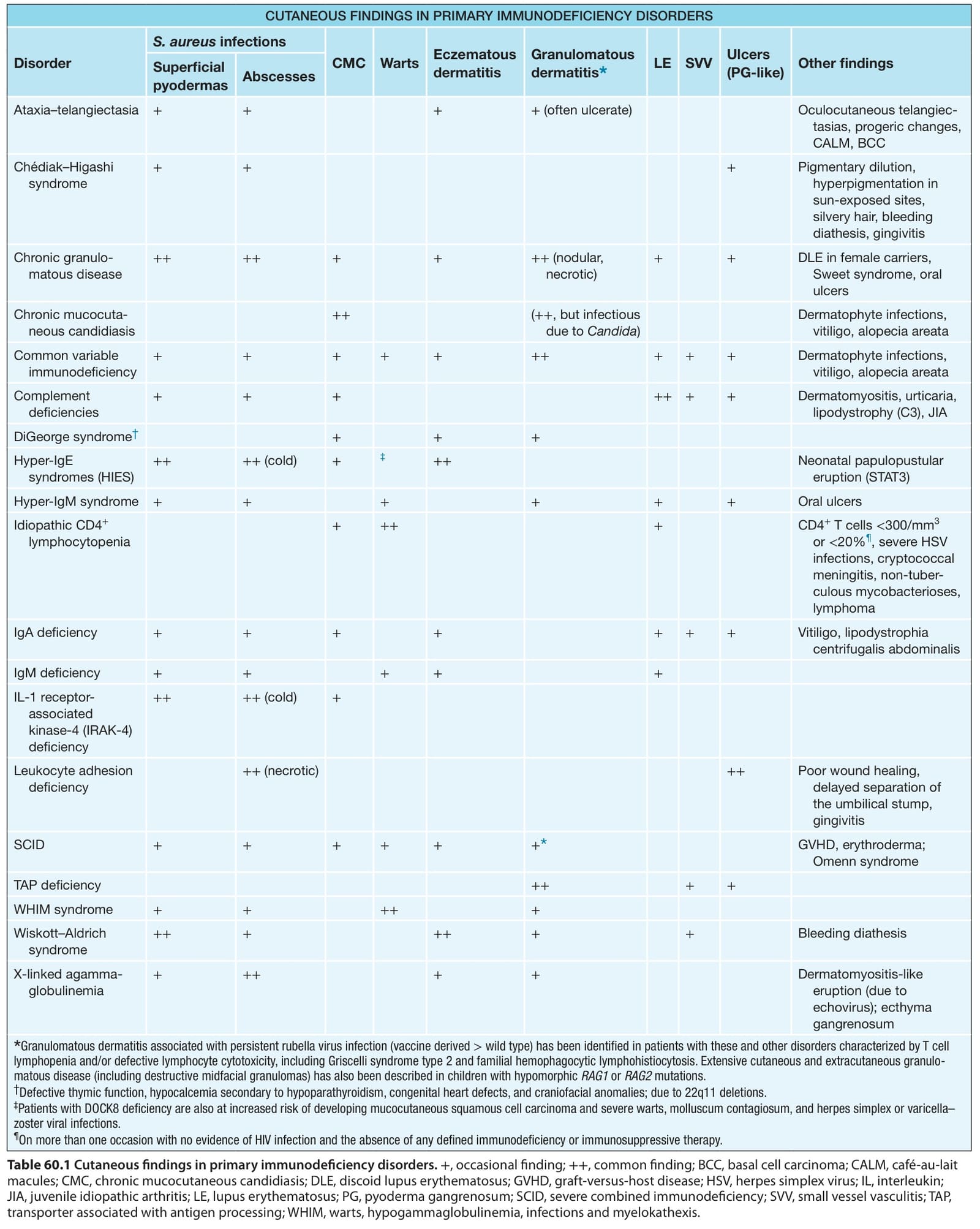
Table 60.1 Cutaneous findings in primary immunodeficiency disorders.+, occasional finding; ++, common finding; BCC, basal cell carcinoma; CALM, café-au-lait macules; CMC, chronic mucocutaneous candidiasis; DLE, discoid lupus erythematosus; GVHD, graft-versus-host disease; HSV, herpes simplex virus; IL, interleukin; JIA, juvenile idiopathic arthritis; LE, lupus erythematosus; PG, pyoderma gangrenosum; SCID, severe combined immunodeficiency; SVV, small vessel vasculitis; TAP, transporter associated with antigen processing; WHIM, warts, hypogammaglobulinemia, infections and myelokathexis.
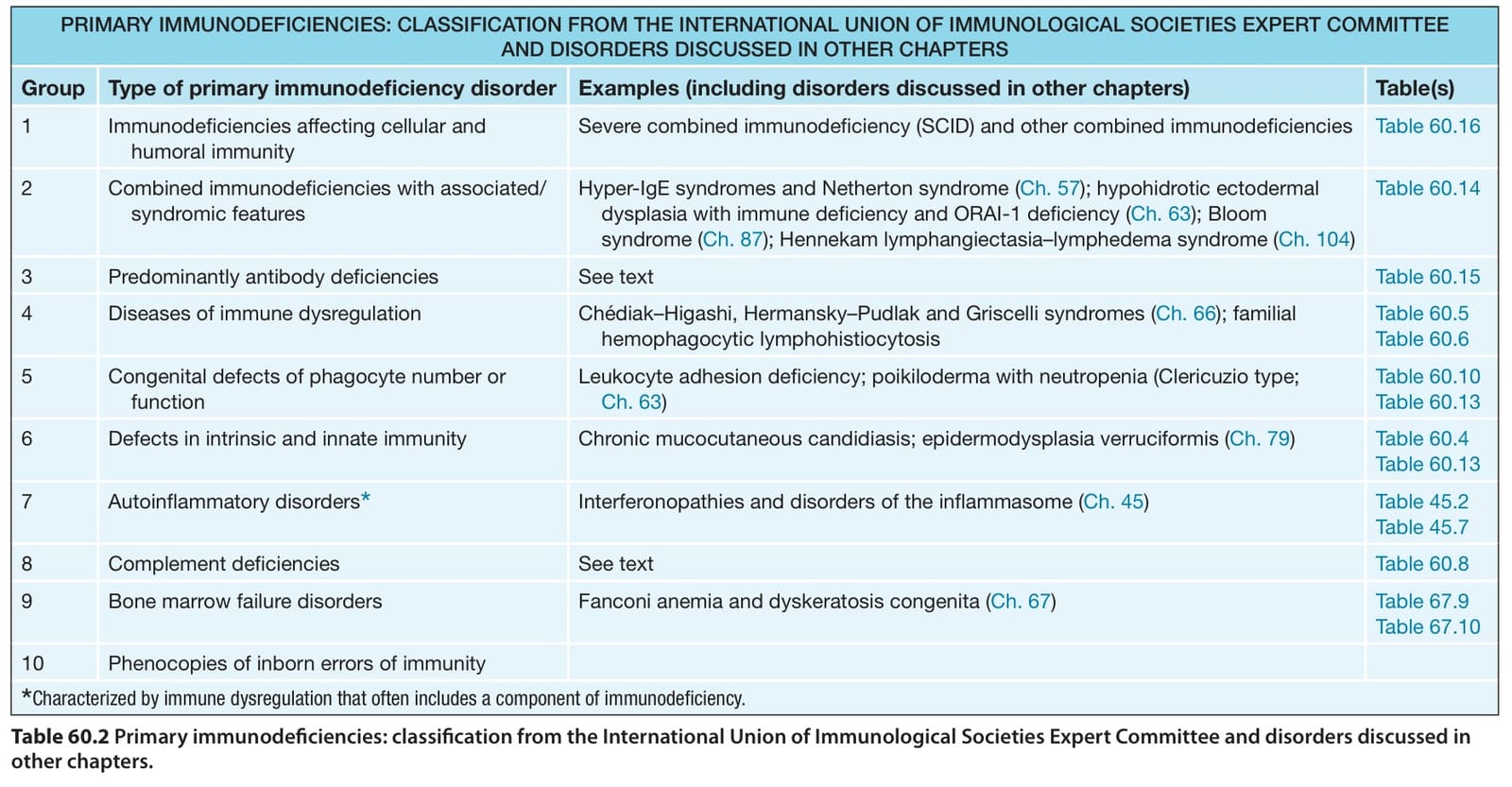
Table 60.2 Primary immunodeficiencies: classification from the International Union of Immunological Societies Expert Committee and disorders discussed in other chapters.
Table 60.3 Screening laboratory tests to assess for a primary immunodeficiency in a patient with recurrent cutaneous infections.