CHRONIC MUCOCUTANEOUS CANDIDIASIS
Key features
Heterogeneous group of conditions characterized by recurrent and progressive candidal infections of the skin, nails, and mucosae
Due to an impaired interleukin-17 response, which has a critical role in immune defense against Candida
May be associated with additional autoimmune and infectious manifestations
Introduction
Chronic mucocutaneous candidiasis (CMC) represents a heterogeneous group of disorders characterized by progressive and recurrent infections of the skin, nails, and mucous membranes with Candida spp. Affected individuals demonstrate an ineffective immune response against this organism, and patients with an earlier onset and greater severity of candidal infections typically have more severe underlying immunologic abnormalities.
Epidemiology
Autoimmune polyendocrinopathy–candidiasis–ectodermal dystrophy syndrome (APECED) has autosomal recessive inheritance, and other familial forms of CMC have autosomal dominant or recessive inheritance patterns (Table 60.4).
Pathogenesis
Patients with CMC have an abnormal immune response to Candida spp. and sometimes to other infectious organisms (Table 60.4).The immune defects that underlie selective predisposition to Candida infections in both APECED and non-APECED CMC patients involve an impaired response by T helper 17 (Th17) cells, which have a critical role in immune defense against Candida (Fig. 60.2).
APECED results from mutations in the AIRE (autoimmune regulator) gene, which encodes a transcription factor. The AIRE protein regulates
the ectopic expression of self antigens in the thymus, which allows the development of peripheral tolerance via negative selection of autoreactive T cells and the generation of antigen-specific regulatory T cells. In APECED patients, failure to delete autoreactive T cells leads to autoimmune disease. Neutralizing autoantibodies targeting Th17-associated cytokines (e.g. IL-17A/F, IL-22) have been identified in APECED patients as well as individuals with thymoma-associated CMC.
Heterozygous gain-of-function mutations in STAT1 (signal transducer and activator of transcription 1) have emerged as the most common cause of CMC. The resulting STAT1 protein activation leads to increased interferon-α/β and -γ signaling as well as repression of IL-17 production, and clinical manifestations can include predisposition to other infections, autoimmunity, and aneurysms (Fig. 60.3; see Table 60.4). Other autosomal dominant forms of CMC are caused by deficiency in IL-17F or rarely Jun N-terminal kinase 1 (JNK1); the latter leads to decreased transforming growth factor β (TGF-β) as well as IL-17 signaling, producing features of hypermobile Ehlers–Danlos syndrome (see Ch. 97). In addition, autosomal recessive forms of CMC can result from: (1) biallelic IL17RA or IL17RC mutations that disrupt function of the IL-17 receptor; or (2) TRAF3IP2 (ACT1) mutations that prevent interaction between the IL-17 receptor and its TRAF3-interacting protein 2 adaptor molecule (see Fig. 60.2).
CMC variants with autosomal recessive inheritance can also result from defects in the genes encoding dectin-1, a pattern-recognition receptor that binds to β-glucan in the Candida cell wall, and CARD9 (caspase recruitment domain family member-9), proteins that act together to activate a Th17 response (see Table 60.4). Decreased neutrophil function is also thought to contribute to invasive fungal infections in patients with CARD9 deficiency. In other types of CMC, inadequate production of IL-23 and overproduction of IL-6, which result in an inefficient IL-17 response, have been observed.
Clinical Features
The clinical severity of CMC ranges from recurrent, treatmentresistant thrush (see Fig. 60.3A) or a few erythematous scaly plaques
and dystrophic nails to severe, generalized, crusted granulomatous plaques. The cutaneous plaques occur most frequently on the scalp and in periorificial and intertriginous sites. Scalp infections may lead to scarring alopecia. Affected nails are thickened, brittle and discolored, with associated paronychia (Fig. 60.4). Although mucosal involvement is usually limited to oral thrush with hyperkeratotic plaques, chronic lesions of esophageal, genital, and laryngeal mucosae with resultant stricture formation may occur. Systemic candidiasis is rare, but cutaneous dermatophyte infections are common (see Fig. 60.3B,C). Up to 80% of patients with childhood-onset CMC develop recurrent or severe infections with organisms other than Candida, including occasional bacterial septicemia.
Subgroups of CMC in children and adolescents include those described in Table 60.4. An association of CMC with abnormalities of iron metabolism or (as noted above) thymoma has also been described in adult patients.
Laboratory Findings
Candidal organisms are confined to the stratum corneum and are demonstrable in scrapings and cultures. Approximately 70% of patients have direct evidence of an immunologic defect, including decreased lymphocyte proliferation in vitro, impaired cytokine production, and absent delayed-type hypersensitivity (DTH) in response to Candida, as well as nonspecific findings such as abnormal leukocyte chemotaxis or phagocytosis, depressed IgA levels, and complement dysfunction. These heterogeneous immune abnormalities reflect the variety of underlying etiologies. Candidal polysaccharides may act as serum factors that inhibit the immune response, and, in some patients, DTH to candidal antigens has been restored after antifungal therapy. Autoantibodies against type I interferons have been shown to represent a sensitive and specific marker for APECED.
Differential Diagnosis
Candidal infections, particularly thrush, are fairly common in infants. Recurrent thrush in young children with frequent otitis media may reflect alterations in bacterial flora caused by the administration of systemic antibiotics; this is seen much more often than CMC or other immunodeficiencies. Recurrent or recalcitrant candidal infections should prompt consideration of HIV infection. Clearance after traditional therapy helps to distinguish secondary candidal infections from mild CMC.
The IPEX (immune dysregulation, polyendocrinopathy, enteropathy, X-linked) syndrome (see below) can present with autoimmune skin conditions and endocrinopathies together with recurrent infections, but the latter are typically bacterial rather than candidal. Autoimmune endocrinopathies, enteropathy, eczematous dermatitis, and a predisposition to bacterial, viral, and fungal infections have also been described in patients with IL-2 receptor α-chain deficiency (see Table 60.6).
Treatment
Patients with CMC do not respond well to standard topical medications, and the cutaneous granulomas are especially difficult to treat. Most patients benefit from long-term therapy with systemic antifungal agents such as itraconazole and fluconazole, and alternative drugs that can be helpful in treating fluconazole-resistant Candida isolates include posaconazole, voriconazole, and echinocandins. Adjunctive therapy with granulocyte colony-stimulating factor (G-CSF) may increase IL-17 production; nail avulsion, drainage of abscesses, and debridement of thick crusted cutaneous plaques can also be beneficial. In patients with gain-of-function STAT1 mutations, JAK inhibitors such as ruxolitinib may improve associated infectious and autoimmune disease.
Patients should be evaluated at least annually for the development of endocrinopathies, particularly if they have a diagnosis or family history of APECED or other forms of CMC with autoimmune manifestations.
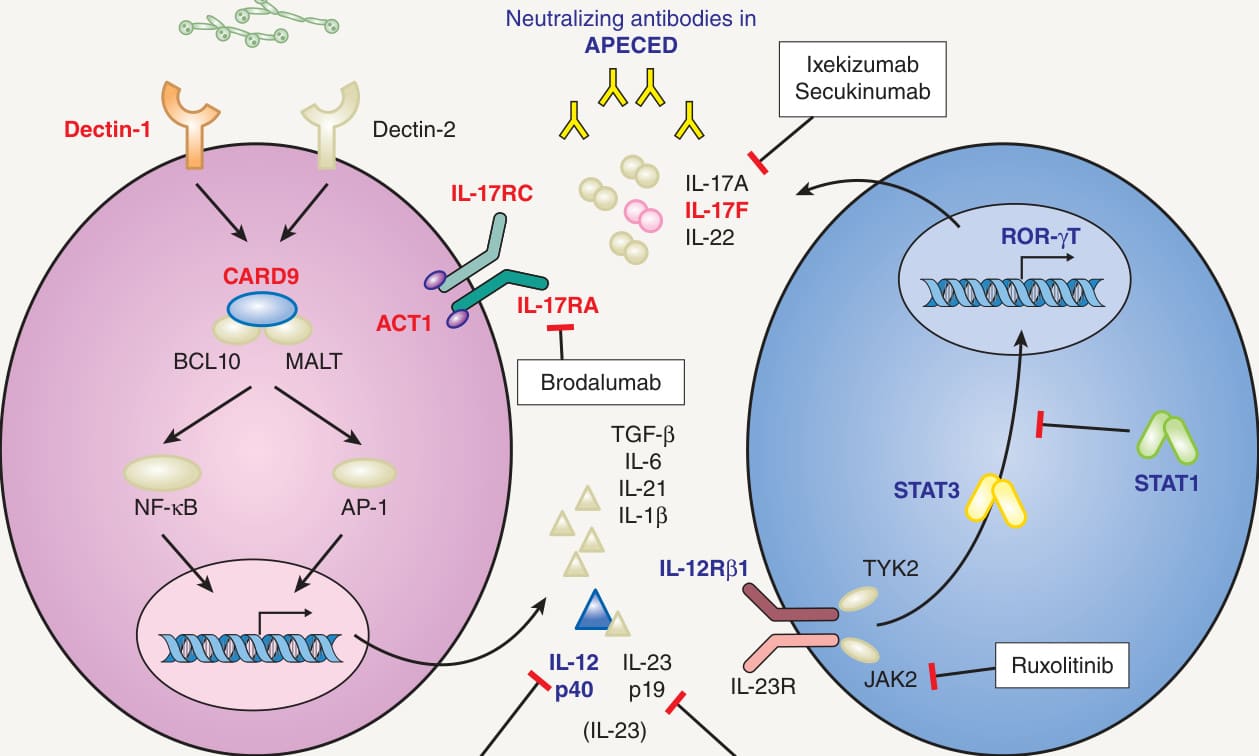
Fig. 60.2 Disruption of IL-17 immunity in chronic mucocutaneous candidiasis (CMC). Phagocytes, keratinocytes, and other epithelial cells detect C. albicans via pattern recognition receptors such as dectin-1/2 and produce proinflammatory cytokines including interleukin (IL)-6 and IL-23. This results in activation of T cells via signal transducer and activator of transcription 3 (STAT3) signaling, which upregulates expression of retinoic acid receptor-related orphan receptor γT (encoded by RORC) and leads to production of IL-17A, IL-17F, and IL-22. IL-17A/F signal via the IL-17 receptor (IL-17RA/C) and its ACT1 adaptor protein (TRAF3-interacting protein 2). Of note, STAT1 activation represses IL-17 production. In addition to genetic disorders that lead to CMC, several targeted immune modulators disrupt IL-17 immunity and can increase the risk of candidiasis, especially IL-17A and IL-17 RA inhibitors. Red: genetic defects implicated in nonsyndromic CMC (“CMC disease”). Blue: genetic defects and neutralizing antibodies implicated in syndromic CMC. See Table 60.4 for additional information on genetic forms of CMC. AP-1, activator protein 1; APECED, autoimmune polyendocrinopathy–candidiasis–ectodermal dystrophy syndrome; CARD9, caspase recruitment domain family member-9; JAK2, Janus kinase 2; TGF-β, transforming growth factor β; TYK2, tyrosine kinase 2. Adapted from Okada S, Puel A, Casanova JL, Kobayashi M. Chronic mucocutaneous candidiasis disease associated with inborn errors of IL-17 immunity. Clin Transl Immunol 2016;5:e114.
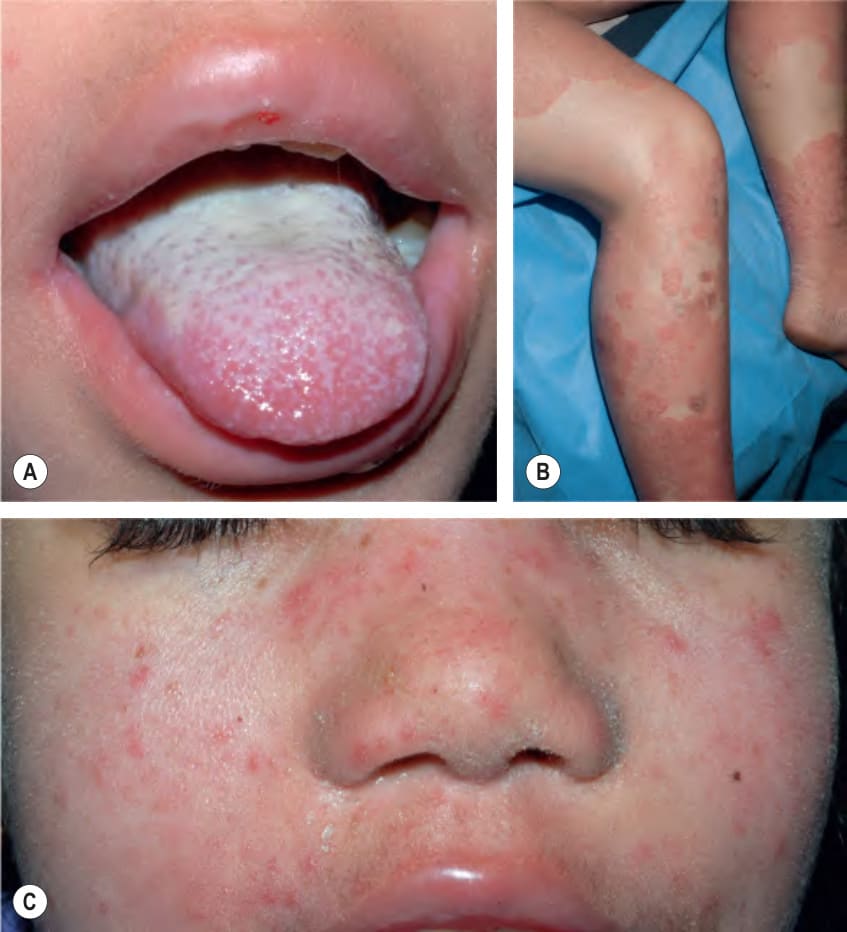
Fig. 60.3 Chronic mucocutaneous candidiasis and dermatophytosis due to increased STAT1 signaling.A Recalcitrant thrush on the tongue of a 6-year-old child. B Extensive tinea corporis with coalescing annular and polycyclic plaques on the legs. C Tinea faciei presenting as small pustules and diffuse scaling. B, Courtesy Edward Cowen, MD.
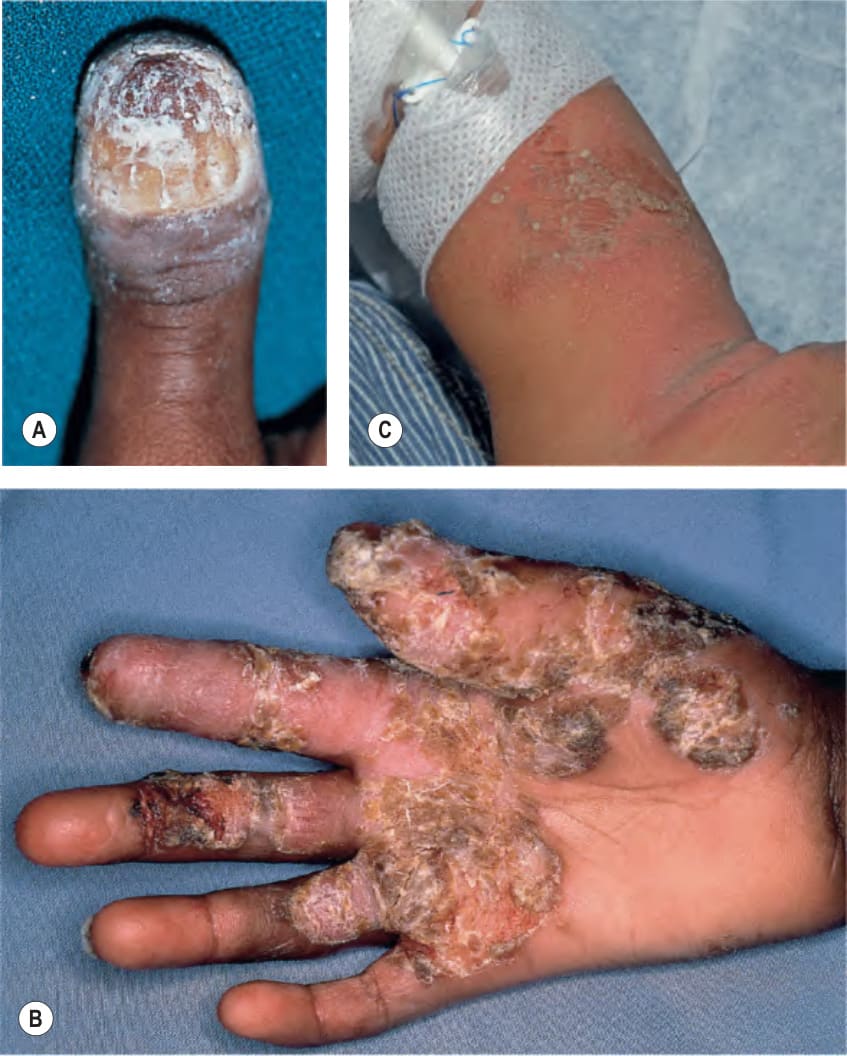
Fig. 60.4 Chronic mucocutaneous candidiasis.A, B Marked onychodystrophy with significant paronychial swelling and erythema (A) and crusted plaques on the palm (B) in patients with chronic mucocutaneous candidiasis. C Recurrent cutaneous candidiasis presenting as erythema, pustules, and scale-crust near the site of an intravenous line on the arm in an infant with DiGeorge syndrome.
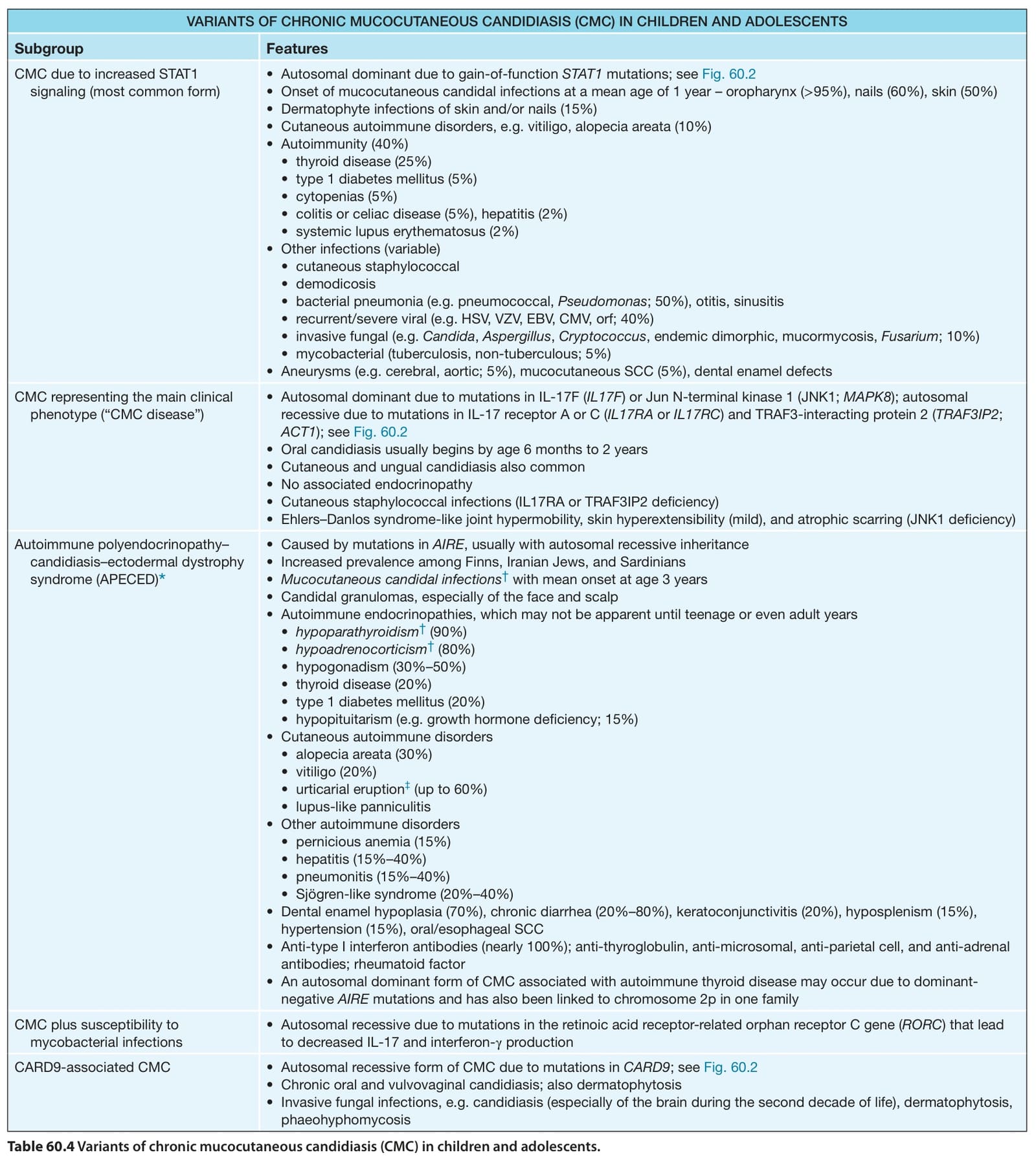
Table 60.4 Variants of chronic mucocutaneous candidiasis (CMC) in children and adolescents.
Table 60.6 Inherited disorders characterized by lymphoproliferation due to immune dysregulation. Hemophagocytic lymphohistiocytosis (HLH) results from uncontrolled T cell and macrophage activation, manifesting with fever, pancytopenia, hepatosplenomegaly (HSM), lymphadenopathy (LAN), hypertriglyceridemia, and hypofibrinogenemia. AD, autosomal dominant; AR, autosomal recessive; CTL, cytotoxic T lymphocytes; Inh, inheritance; LE, lupus erythematosus; NK, natural killer; XR, X-linked recessive.