COMPLEMENT DISORDERS
Key features
Deficiency or dysfunction of early complement components increases susceptibility to pyogenic infections caused by encapsulated bacteria and autoimmune disorders, especially systemic lupus erythematosus
Deficiency of late complement components leads to a markedly increased risk of neisserial infections
Introduction
The complement system represents an important effector of the innate immune response (see Ch. 4). An enzymatic cascade of complement activation can be triggered by three different pathways: classical, alternative, and lectin (Fig. 60.6). In addition to their roles in killing microbial pathogens, complement proteins serve as regulators of a variety of humoral and cellular immune functions (Table 60.7). As a result, clinical manifestations of complement deficiency include autoimmune diseases as well as increased susceptibility to infection.
Epidemiology
Deficiency of C2 represents the most common hereditary complement disorder. Homozygous C2 deficiency occurs in ~1 in 20 000 individuals, and 1%–2% of the population has the heterozygous form. Homozygous deficiencies of C1q, C1r, C1s, and C4 are rare, but affected individuals manifest with autoimmune disease more frequently than those with homozygous C2 deficiency. Heterozygotes usually make enough protein to ensure function and are generally asymptomatic, so most of the complement disorders are inherited as autosomal recessive traits. One exception is hereditary angioedema (HAE), an autosomal dominant condition due to deficiency or dysfunction of the C1 inhibitor (see Ch. 18).
In contrast to the low prevalence of deficiencies in components of the classical complement pathway, 5% of the population is homozygous or compound heterozygous for alleles that lead to a lack of functional mannose-binding lectin (MBL), the major recognition factor of the lectin pathway of complement activation. Although the clinical penetrance of MBL deficiency is low, it may have a substantial impact on immunity and autoimmunity at the population level. In addition, ~1 in 10 000 individuals has a homozygous deficiency in the MBL-associated serum protease (MASP) that functions in this pathway.
Pathogenesis
Deficiency of C2 can result from a defect in either protein synthesis (type 1) or secretion (type 2). Defects involving the early components of the classical complement pathway (C1, C4, C2) manifest with an increased risk of autoimmune disorders, especially systemic lupus erythematosus (SLE) (Table 60.8). The genes that encode these complement components, including four highly polymorphic genes for C4 (two each for C4A and C4B), are located within the HLA region on chromosome 6. C4-null alleles have been linked with SLE, and C4A is deleted in the HLA A1-B8-DR3 extended haplotype that is strongly associated with SLE.
The pathogenesis of SLE in the setting of complement deficiency may also be related to impaired physiologic clearance of autoantigencontaining apoptotic cells. Epidermal keratinocytes undergoing UVB-induced apoptosis preferentially display autoantigens such as SSA/Ro in plasma membrane blebs. Binding of C1q to these blebs and the nucleolus results in activation of the classical complement pathway and removal of the apoptotic cells by phagocytes; in the absence of C1q, autoantibodies have the opportunity to bind to SSA/Ro, leading to activation of B and T cells and loss of immune tolerance. Decreased MBL-mediated clearance of apoptotic debris and DNA might likewise explain the predisposition to SLE associated with MBL deficiency. Furthermore, the complement system may enhance the elimination of self-reactive B cells during lymphocyte development, with complement deficiency leading to a lack of B cell self-tolerance. Complement components are also important for handling immune complexes and regulating production of cytokines (e.g. type I interferons) that have a key role in SLE pathogenesis.
The variety of recurrent infections associated with complement deficiencies underscores the central role of complement in bacterial clearance. Patients deficient in the early classical components, especially C2, have increased susceptibility to infections with encapsulated bacteria, especially Str. pneumoniae. Opsonization of bacteria and fungi may be ineffective in disorders of the classical pathway because of the slow, inadequate formation of C3b. However, because the lectin and alternative pathways can bypass early classical components to intersect with the cascade at the level of C3 (see Table 60.7 & Fig. 60.6), these deficiencies do not usually lead to overwhelming infections. C5 deficiencies result in impaired generation of chemotactic factors, which may lead to inadequate neutrophil function.
Individuals with C5 to C9 (membrane attack complex; MAC), properdin, and factor D deficiencies develop recurrent neisserial infections in their teenage years. This underscores the importance of the bactericidal MAC complex and the alternative complement pathway (which requires properdin and factor D) in the destruction of these organisms. However, because a lack of lytic activity limits release of bacterial products (e.g. lipopolysaccharide) that stimulate a damaging cytokine response, the mortality of meningococcal infections in patients with MAC deficiency is actually lower than that in immunocompetent individuals. In contrast, patients with a properdin or factor D deficiency are unable to eradicate Neisseria spp. via opsonophagocytosis and have severe disease that is often fatal.
Clinical Features
Individuals with homozygous deficiencies in the early components of the classical complement pathway (C1, C4, C2) have a risk of SLE that ranges from >90% for C1q to 10%–20% for C2. Among those with C2 deficiency, features of lupus erythematosus (especially photosensitivity and subacute cutaneous lupus erythematosus) are most common in women, with the age at onset ranging from early childhood to adulthood (median 30 years). Other manifestations of C2 deficiency-associated SLE are presented in Table 60.9. SLE in the setting of C1q/r/s or C4 deficiency usually develops during childhood, affects boys and girls equally, and is often associated with renal disease and palmoplantar keratoses as well as photosensitivity. Other autoimmune and/or inflammatory disorders and susceptibilities to infection associated with complement deficiencies are listed in Table 60.8. C2 deficiency may coexist with common variable immunodeficiency, and the development of Hodgkin lymphoma has occasionally been reported.
MBL deficiency may confer an increased risk of acute respiratory infections in children aged 6–18 months, who no longer have maternal antibodies but are not yet able to mount an efficient antibody response to the carbohydrate antigens of encapsulated bacteria. Several studies have shown that MBL deficiency is associated with an increased risk of developing SLE or dermatomyositis and a higher incidence of infections in the setting of immunosuppressive therapy.
Pathology
The total hemolytic complement (CH50) is markedly decreased or undetectable in complement deficiencies other than hereditary angioedema. The alternative pathway lytic test (AP50) can be used to screen for deficiencies in components of this pathway, although it is less sensitive than the CH50. Immunoprecipitation assays (e.g. radial immunodiffusion, ELISA) can determine the levels of specific complement components and MBL, and functional studies of individual components may be informative when antigen levels are normal. Genetic analysis can be utilized to confirm the diagnosis.
Differential Diagnosis
Complement components may be specific targets of autoimmune responses; for example, anti-C1q antibodies are found in 30%–50% of patients with SLE (often with renal involvement) and virtually all of those with hypocomplementemic urticarial vasculitis. The “Leiner phenotype” of exfoliative dermatitis, failure to thrive, chronic diarrhea, and recurrent infections has been observed in infants with C3 or C5 deficiency or C5 dysfunction. However, this constellation of findings can also develop in patients with other disorders such as X-linked agammaglobulinemia, hyper-IgE syndrome, and severe combined immunodeficiency. Low complement levels related to bacterial and viral infections should also be differentiated from primary complement deficiencies. Of note, patients treated with the C5 inhibitors eculizumab and ravulizumab are at risk for the development of severe meningococcal infections.
Treatment
Conservative therapy is often effective for patients with autoimmune manifestations of complement deficiency. The use of topical
corticosteroids and sun protection may be sufficient to treat cutaneous lupus erythematosus in these individuals. Antimalarial drugs, systemic corticosteroids, and other immunomodulatory medications are required in more severe cases, with consideration of the increased risk of infections in patients with complement deficiencies. The use of plasma transfusions to replace the deficient components may actually activate the cascade and accelerate immune complex deposition.
Infections should be treated with early, aggressive antibiotic therapy. Pneumococcal vaccination is recommended for individuals with an early component complement deficiency and meningococcal vaccination for those with a C3, C5–C9, properdin, factor D, or factor H deficiency.
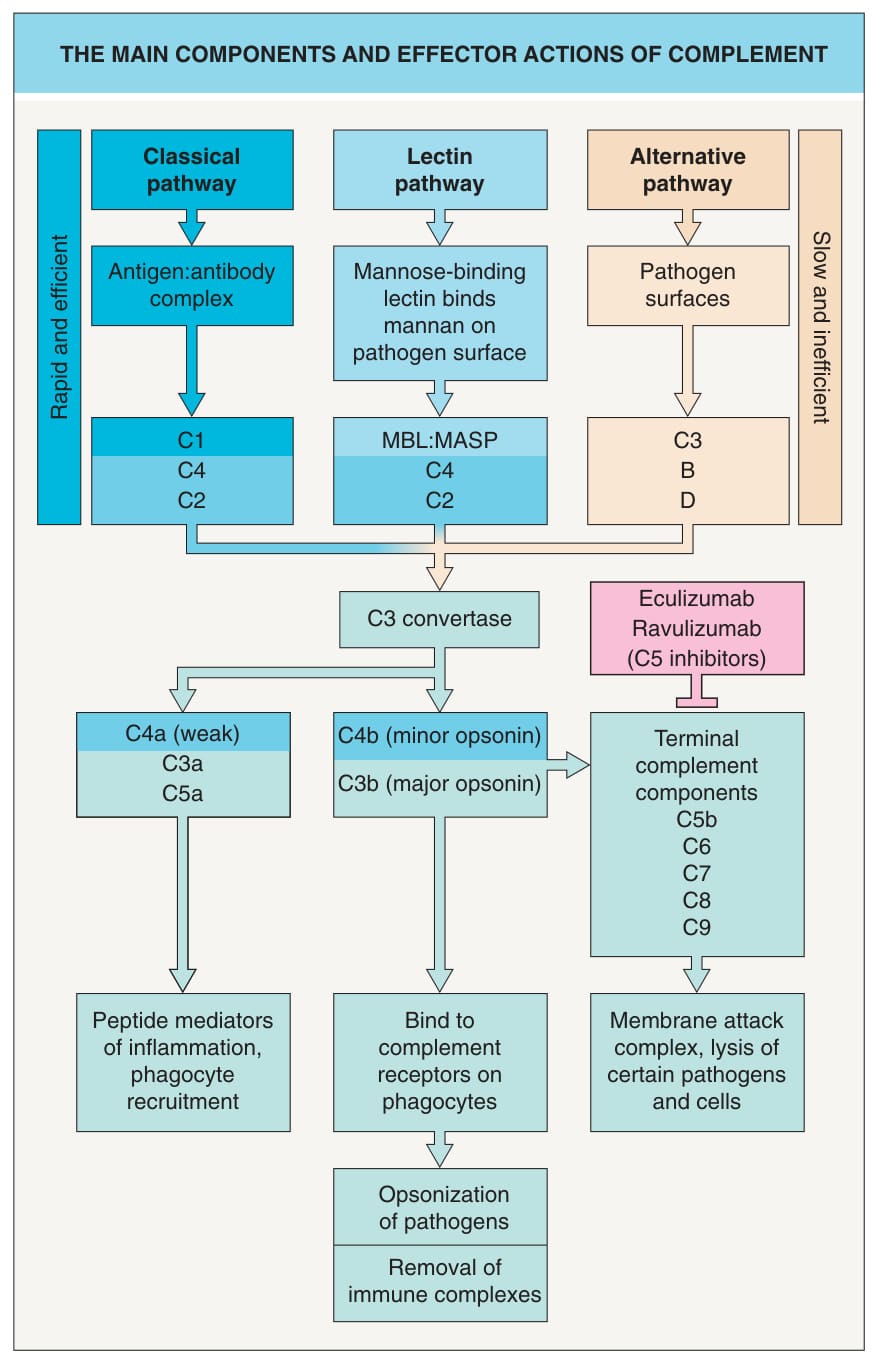
Fig. 60.6 The main components and effector actions of complement. The C3b bound to the C3 convertase binds C5, allowing the C3 convertase to generate C5b, which associates with the bacterial membrane and triggers the late events. MBL, mannose-binding lectin; MASP, MBL-associated serine protease. © 2005 from Immunobiology by Charles A. Janeway, et al. Adapted with permission of Garland Science/Taylor & Francis Books, Inc.
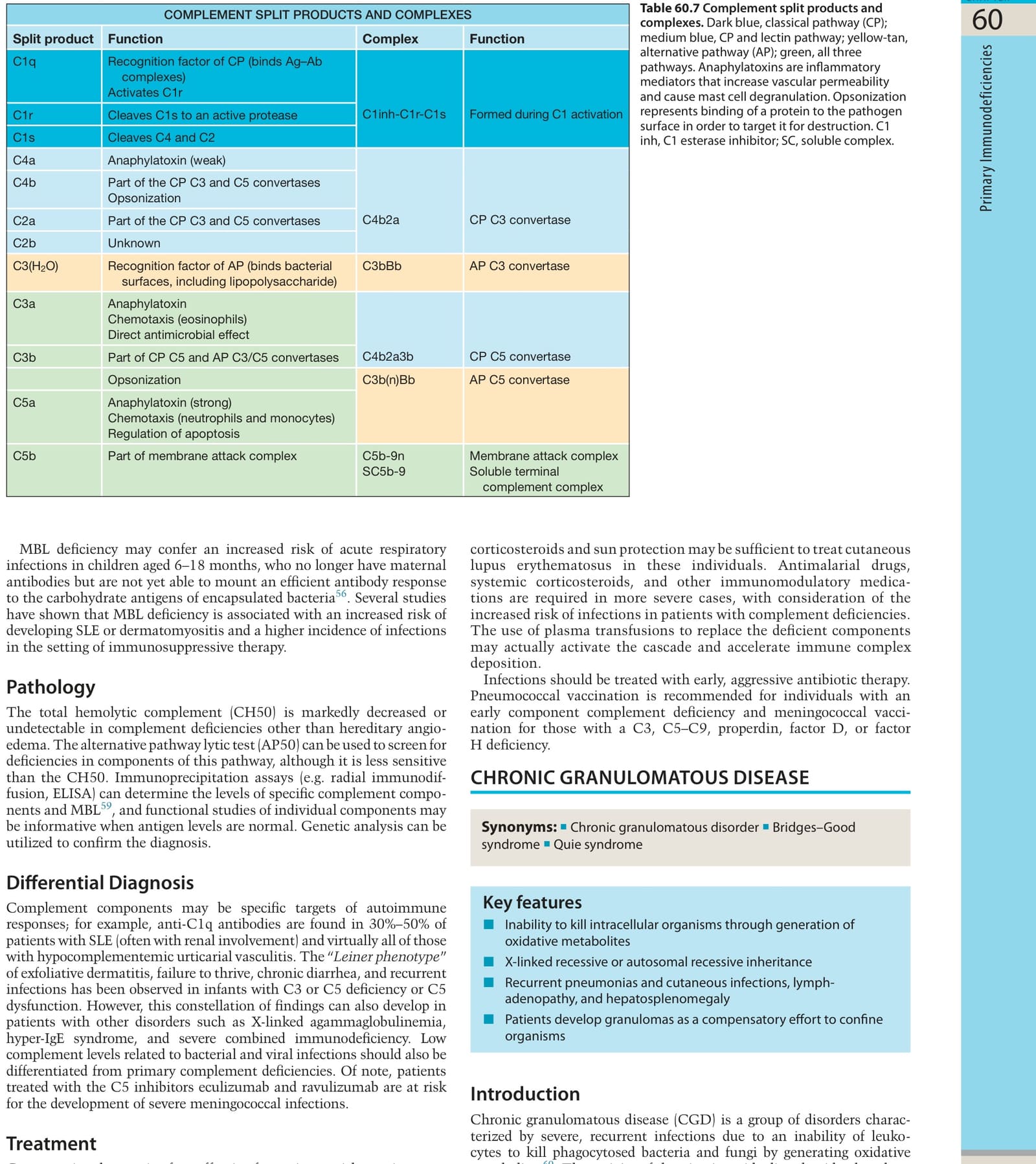
Table 60.7 Complement split products and complexes. Dark blue, classical pathway (CP); medium blue, CP and lectin pathway; yellow-tan, alternative pathway (AP); green, all three pathways. Anaphylatoxins are inflammatory mediators that increase vascular permeability and cause mast cell degranulation. Opsonization represents binding of a protein to the pathogen surface in order to target it for destruction. C1 inh, C1 esterase inhibitor; SC, soluble complex.
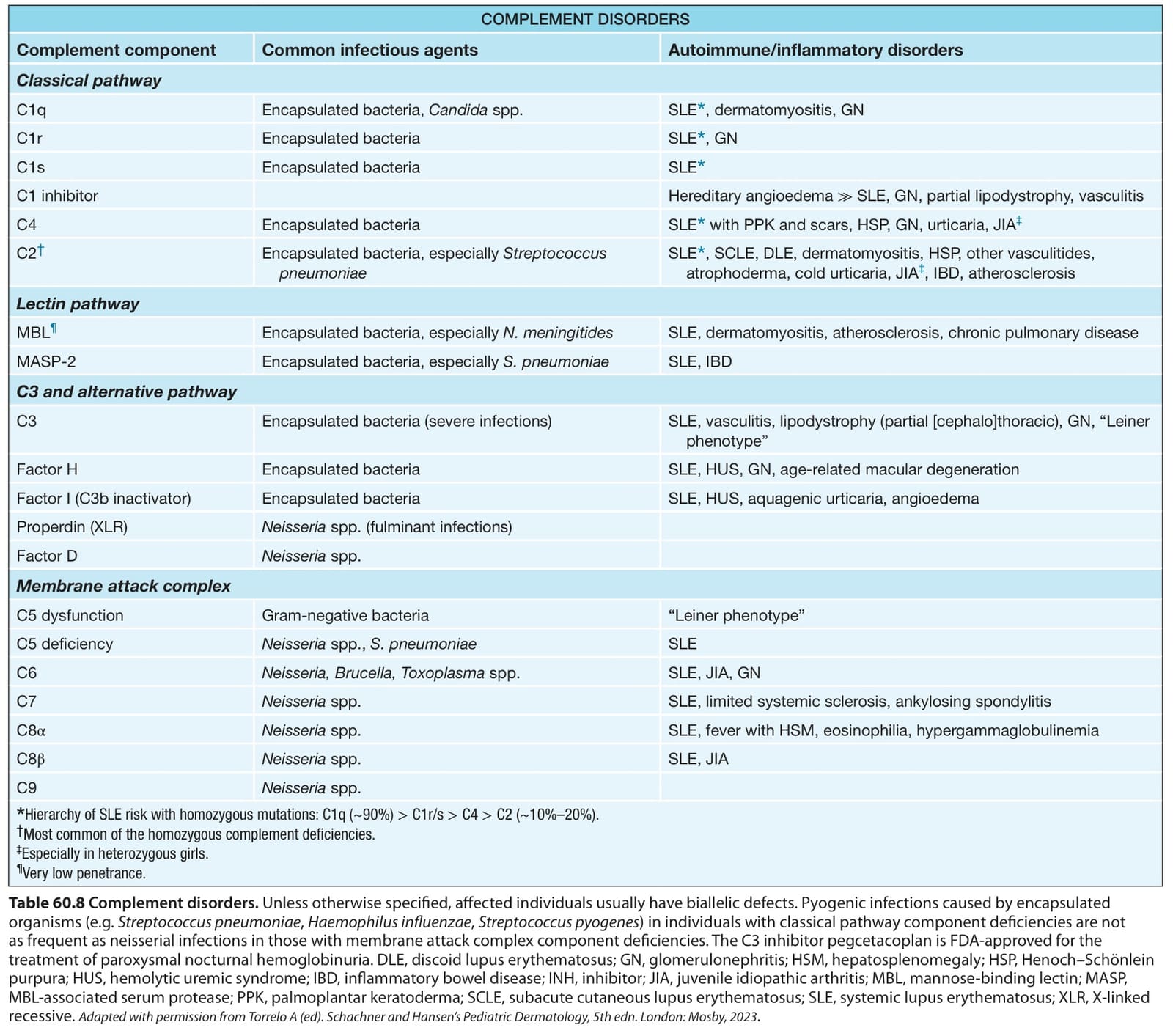
Table 60.8 Complement disorders. Unless otherwise specified, affected individuals usually have biallelic defects. Pyogenic infections caused by encapsulated organisms (e. g. Streptococcus pneumoniae, Haemophilus influenzae, Streptococcus pyogenes) in individuals with classical pathway component deficiencies are not as frequent as neisserial infections in those with membrane attack complex component deficiencies. The C3 inhibitor pegcetacoplan is FDA-approved for the treatment of paroxysmal nocturnal hemoglobinuria. DLE, discoid lupus erythematosus; GN, glomerulonephritis; HSM, hepatosplenomegaly; HSP, Henoch–Schönlein purpura; HUS, hemolytic uremic syndrome; IBD, inflammatory bowel disease; INH, inhibitor; JIA, juvenile idiopathic arthritis; MBL, mannose-binding lectin; MASP, MBL-associated serum protease; PPK, palmoplantar keratoderma; SCLE, subacute cutaneous lupus erythematosus; SLE, systemic lupus erythematosus; XLR, X-linked recessive. Adapted with permission from Torrelo A (ed). Schachner and Hansen’s Pediatric Dermatology, 5th edn. London: Mosby, 2023
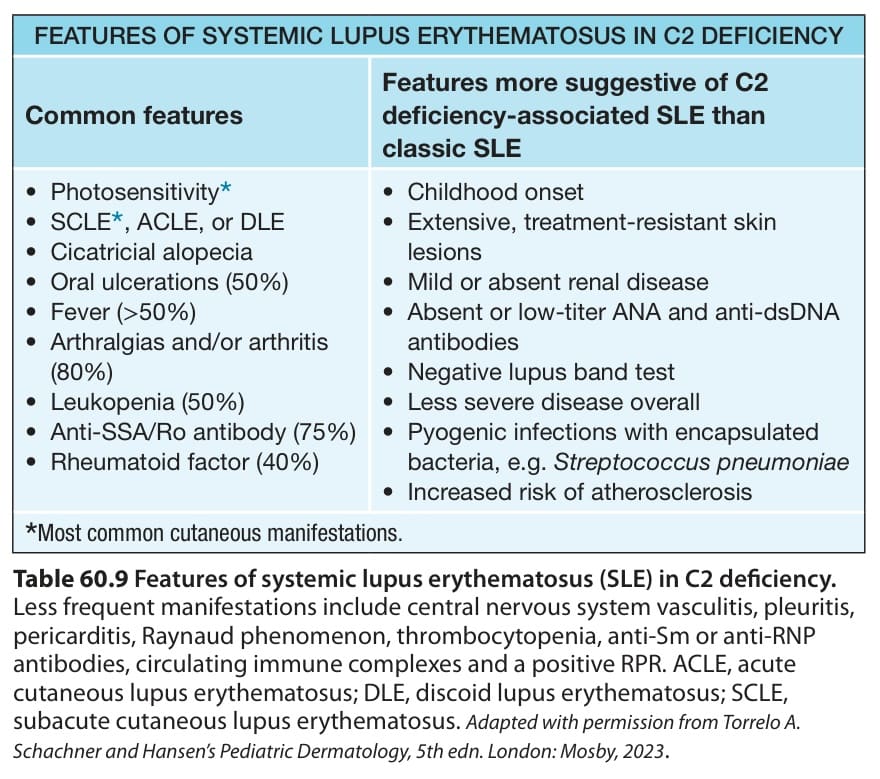
Table 60.9 Features of systemic lupus erythematosus (SLE) in C2 deficiency.