MULTIPLE ENDOCRINE NEOPLASIA
Multiple endocrine neoplasia (MEN) refers to a group of disorders marked by the presence of neoplasia or hyperplasia in two or more
Encarna Guillén-Navarro and Virginia P. Sybert
endocrine organs, often in association with mucocutaneous findings. Three major MEN syndromes with mucocutaneous findings – termed types 1, 2A, and 2B – have been clinically and genetically defined and are described in Table 63.2.
Mucocutaneous features are most prominent in MEN types 1 and 2B. In MEN1, multiple facial angiofibromas and collagenomas are present in the majority of affected individuals (Fig. 63.1), and lipomas are another common finding. Compared to those in tuberous sclerosis, facial angiofibromas in MEN1 tend to be smaller and fewer in number, and they are more likely to arise on the upper lip and its vermilion border in addition to the nose and medial cheeks. Although melanoma has been reported in patients with MEN1 and there is evidence that MEN1 expression is frequently lost in sporadic melanomas, it remains unclear whether individuals with this syndrome have an increased risk of melanoma.
MEN2B is notable for multiple mucosal neuromas, especially of the conjunctivae, lips, and anterior tongue (Fig. 63.2). These lesions, which may be evident at birth or develop during early childhood, represent a relatively specific marker that can enable timely diagnosis and thyroidectomy, as medullary thyroid cancer typically develops during the first few years of life in patients with MEN2B. However, mucosal neuromas are also occasionally observed in patients with the PTEN hamartoma tumor syndrome (PHTS; see below). Cutaneous neuromas are rare in MEN2B and when present are usually in a perinasal location.
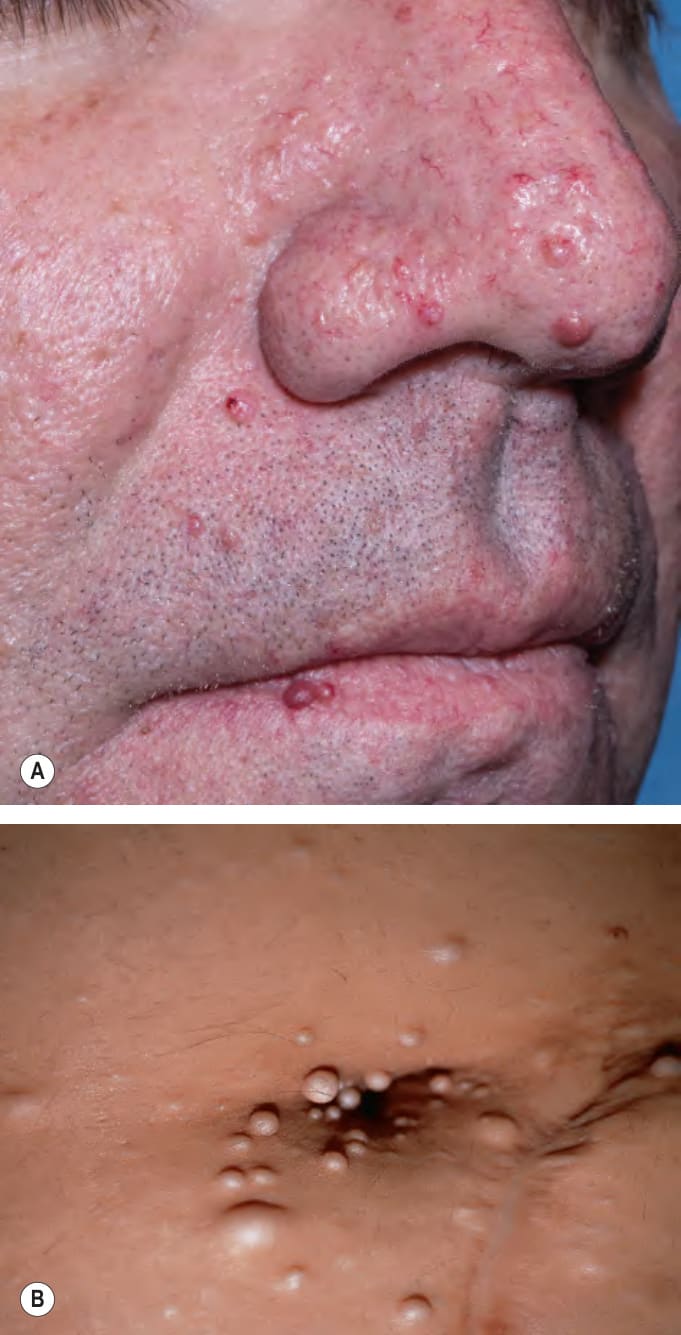
Fig. 63.1 Multiple endocrine neoplasia type 1.A Multiple large angiofibromas are a characteristic finding, including on the lips. B Multiple collagenomas are present on the abdomen. A, Courtesy Edward Cowen, MD.

Fig. 63.2 Multiple endocrine neoplasia type 2B. Enlarged lips and multiple neuromas on the tip of the tongue.
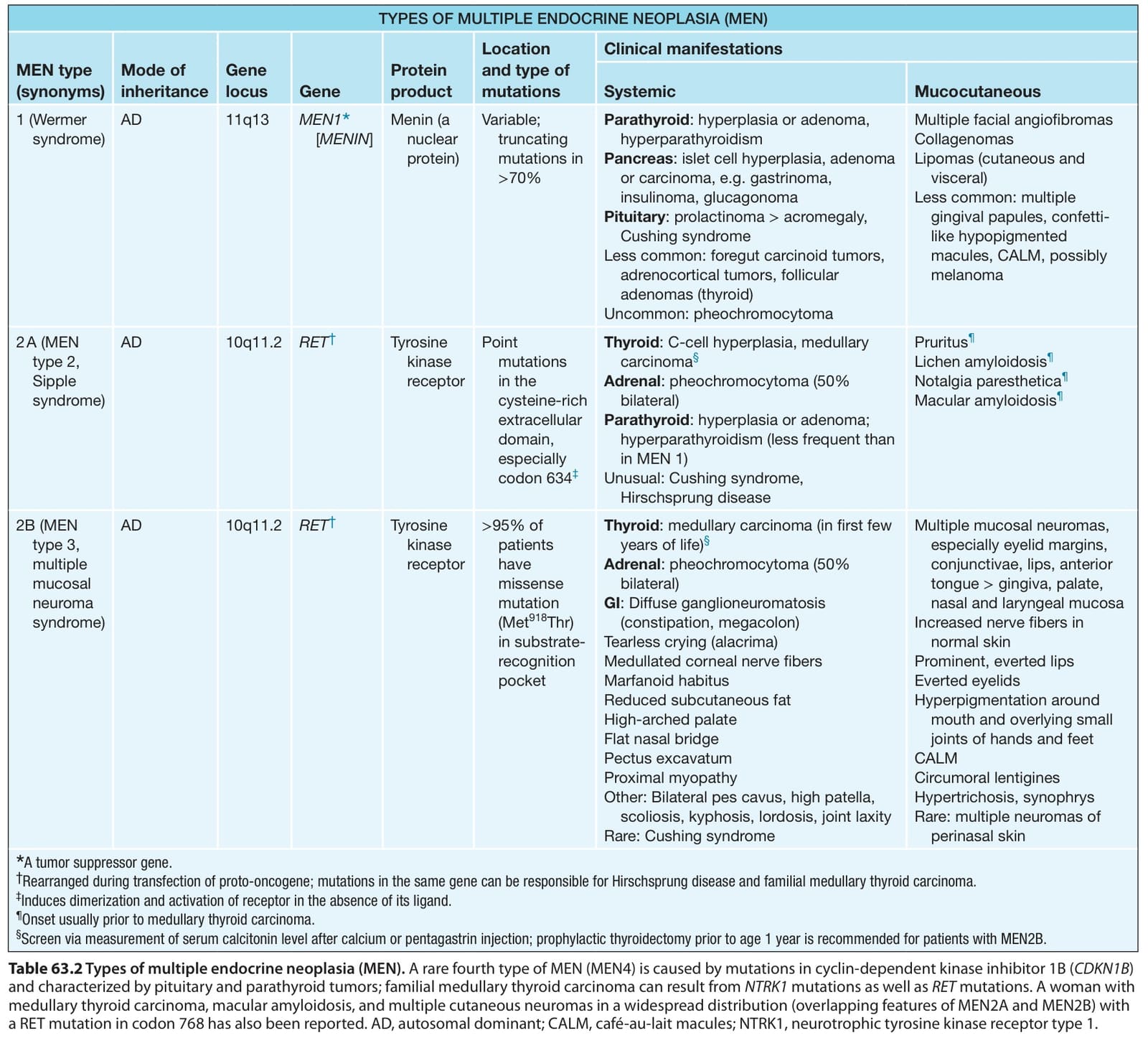
Table 63.2 Types of multiple endocrine neoplasia (MEN). A rare fourth type of MEN (MEN4) is caused by mutations in cyclin-dependent kinase inhibitor 1B (CDKN1B) and characterized by pituitary and parathyroid tumors; familial medullary thyroid carcinoma can result from NTRK1 mutations as well as RET mutations. A woman with medullary thyroid carcinoma, macular amyloidosis, and multiple cutaneous neuromas in a widespread distribution (overlapping features of MEN2A and MEN2B) with a RET mutation in codon 768 has also been reported. AD, autosomal dominant; CALM, café-au-lait macules; NTRK1, neurotrophic tyrosine kinase receptor type 1.