MITOCHONDRIAL DISORDERS
Synonyms: Respiratory chain defects Oxidative phosphorylation defects
Key features
Marked phenotypic and genotypic heterogeneity
5%–10% of patients have pigmentary changes, alopecia, hypertri- chosis, or hair shaft anomalies
Myopathy, encephalopathy, cardiomyopathy, and visual impairment are frequent manifestations
Mitochondrial disorders represent a clinically and biochemically heterogeneous group of metabolic conditions characterized by impairment of the mitochondrial respiratory chain, which generates most of the adenosine triphosphate (ATP) required for cellular functioning. The mitochondrial genome contains 37 genes and they encode subunits of the respiratory chain as well as the transfer and ribosomal RNAs (tRNAs and rRNAs) that translate mitochondrial DNA (mtDNA). However, some of the genes that encode respiratory chain components and other mitochondrial proteins are encoded by nuclear DNA. Mitochondrial disorders can therefore result from either maternal inheritance of mtDNA mutations or Mendelian inheritance of nuclear DNA mutations. The respiratory chain is organized into five enzyme complexes (I–V), the activity of which can be measured in muscle or other tissues to aid in the diagnosis of mitochondrial disorders. Although some mitochondrial syndromes are characterized by a particular constellation of clinical findings, there is often poor correlation between the enzyme complex involved and the clinical phenotype.
Mitochondrial disorders can present at any age and may potentially affect any organ system, but with a predilection for cells with high energy requirements such as neurons and muscle. Common manifestations include developmental delay, seizures, stroke, weakness, hypotonia, and cardiomyopathy. Visual impairment, hearing loss, proximal renal tubular defects, hepatic dysfunction, poor growth, and fatigue are other frequent findings. The clinical course and progression are highly variable, even in patients with similar biochemical abnormalities.
A wide range of hair and skin abnormalities has been described in association with mitochondrial disorders (Table 63.8). These manifestations have been reported in about 5%–10% of patients with documented mitochondrial disorders and may develop early in the disease course. When such findings are noted in conjunction with seemingly unrelated abnormalities in other organ systems, the possibility of a mitochondrial disorder should be considered.
Biochemical and/or molecular genetic confirmation of the diagnosis of a mitochondrial disorder is rarely straightforward. Measurement of plasma
lactate, plasma amino acids, and urine organic acids can be helpful in assessing mitochondrial function. Other components of the evaluation may include exercise testing, neuroimaging, muscle biopsy for histologic/ histochemical evaluation, assays of respiratory chain enzyme complexes in muscle tissue or cultured skin fibroblasts, and genetic analysis.
Treatment of patients with mitochondrial disorders is largely symptomatic. A variety of dietary modifications have been tried and may be helpful for some patients. Coenzyme Q, L-carnitine, resveratrol, curcumin, sulforaphane, and riboflavin supplementation may also have some benefit.
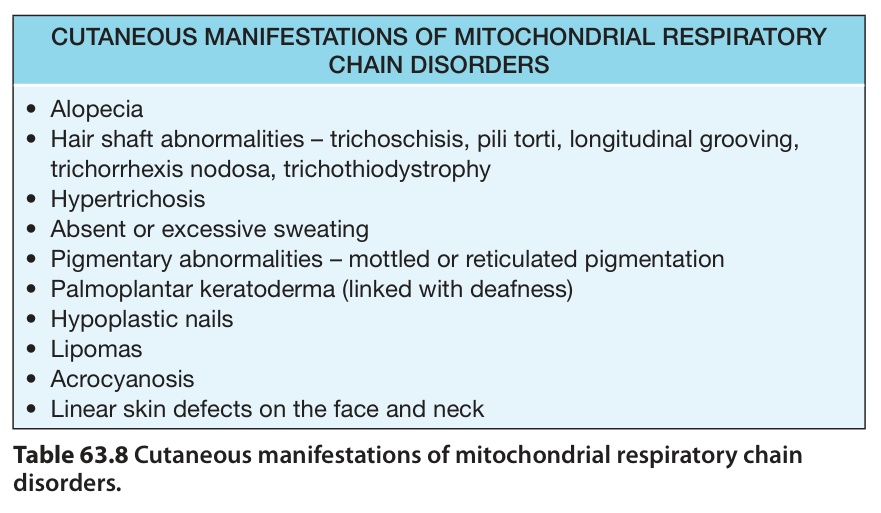
Table 63.8 Cutaneous manifestations of mitochondrial respiratory chain disorders.