Rudimentary Polydactyly
Synonym: Rudimentary supernumerary digits
Rudimentary polydactyly represents duplication of digital soft tissue, but without a skeletal component. It is typically found on the lateral surface of a digit, more often the ulnar side of the fifth finger (postaxial) than the radial side of the thumb (preaxial). Rudimentary polydactyly is present in ~0.5–1 per 1000 White neonates and ~3–10 per 1000 Black neonates. It usually occurs as an isolated malformation with autosomal dominant inheritance; underlying mutations have been identified in GLI3 (GLI family zinc finger 3) and other genes. The stump remaining after intrauterine amputation of a larger structure is sometimes referred to as an amputation neuroma. Rudimentary polydactyly lesions are frequently bilateral and range from small, fleshy or wart-like papules (Fig. 64.24) to larger, often pedunculated nodules that may contain cartilage or a vestigial nail. Congenital ectopic nails located on the tips of the fifth fingers are regarded as a separate entity.
Histologically, rudimentary supernumerary digits often show fascicles of nerve fibers in a pattern similar to that of an acquired neuroma (see Ch. 115). When removal is desired, surgical excision is the method of choice. Removal via ligation with suture material increases the risk of infection and often leaves a residual papule, which may result in a painful neuroma later in life.
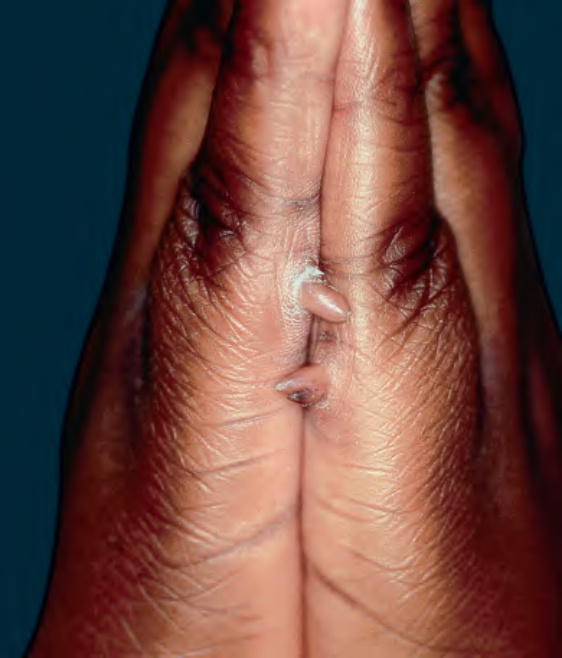
Fig. 64.24 Bilateral rudimentary super numerary digits.